Hades
God
Hades (; Ancient Greek: ᾍδης, romanised: Hā́idēs, Attic Greek: [háːi̯dεːs], later [háːdeːs]), in the ancient Greek religion and mythology, is the god of the dead and riches and the King of the underworld, with which his name became synonymous. Hades was the eldest son of Cronus and Rhea, although this also made him the last son to be regurgitated by his father.
Explore on the graph- Mentions
- 38
- Connected characters
- 9
- Books
- 16


Mentions in the Iliad
A. T. Murray, Loeb Classical Library, Harvard University Press, 1924 · Homer, Iliad with an English Translation · CC BY-SA 3.0 US
“The wrath sing, goddess, of Peleus' son, Achilles, that destructive wrath which brought countless woes upon the Achaeans, and sent forth to Hades many valiant souls of heroes, and made them themselves spoil for dogs and every bird; thus the plan of Zeus came to fulfillment,”
“Father Zeus, that rulest from Ida, most glorious, most great, whichsoever of the twain it be that brought these troubles upon both peoples, grant that he may die and enter the house of Hades, whereas to us there may come friendship and oaths of faith. So spake they, and great Hector of the flashing helm shook the helmet,”
“and I deemed that I should send him forth to Aïdoneus, yet I subdued him not; verily he is some wrathful god. And horses have I not at hand, neither car whereon I might mount—yet in Lycaon's halls, I ween, there be eleven fair chariots, new-wrought, new-furnished, with cloths spread over them;”
“And so suffered monstrous Hades even as the rest a bitter arrow, when this same man, the son of Zeus that beareth the aegis, smote him in Pylos amid the dead, and gave him over to pains. But he went to the house of Zeus and to high Olympus with grief at heart, pierced through with pains;”
“though thou be never so strong, but thou shalt be vanquished by my hand and pass the gates of Hades. And to him Sarpedon, captain of the Lycians, made answer: Tlepolemus, thy sire verily destroyed sacred Ilios through the folly of the lordly man, Laomedon,”
“put on the cap of Hades, to the end that mighty Ares should not see her. Now when Ares, the bane of mortals, was ware of goodly Diomedes, he let be huge Periphas to lie where he was, even where at the first he had slain him and taken away his life but made straight for Diomedes, tamer of horses.”
“and I will go after Paris, to summon him, if haply he will hearken to my bidding. Would that the earth might straightway gape for him! for in grievous wise hath the Olympian reared him as a bane to the Trojans and to great-hearted Priam, and the sons of Priam. If I but saw him going down to the house of Hades,”
See all 38
“and their souls have gone down to the house of Hades; therefore were it well that thou make the battle of the Achaeans to cease at daybreak, and we will gather to hale hither on carts the corpses with oxen and mules; and we will burn them a little way from the ships that each man may bear their bones home to their children,”
“send me forth to succour him. Had I but known all this in wisdom of my heart when Eurystheus sent him forth to the house of Hades the Warder, to bring from out of Erebus the hound of loathed Hades, then had he not escaped the sheer-falling waters of Styx.”
“men that shall honour him with gifts as though he were a god, and beneath his sceptre shall bring his ordinances to prosperous fulfillment. All this will I bring to pass for him, if he but cease from his wrath. Let him yield—Hades, I ween, is not to be soothed, neither overcome, wherefore he is most hated by mortals of all gods.”
“and as it shall be brought to pass, that ye sit not by me here on this side and on that and prate endlessly. For hateful in my eyes, even as the gates of Hades, is that man that hideth one thing in his mind and sayeth another. Nay, I will speak what seemeth to me to be best.”
“that never should there sit upon his knees a dear child begotten of me; and the gods fulfilled his curse, even Zeus of the nether world and dread Persephone. Then I took counsel to slay him with the sharp sword, but some one of the immortals stayed mine anger, bringing to my mind”
“By her side lay Meleager nursing his bitter anger, wroth because of his mother's curses; for she prayed instantly to the gods, being grieved for her brother's slaying; and furthermore instantly beat with her hands upon the all-nurturing earth, calling upon Hades and dread Persephone,”
“to send forth to Hades many a valiant head. And the Trojans over against them on the rising ground of the plain mustered about great Hector and peerless Polydamas and Aeneas that was honoured of the folk of the Trojans even as a god, and the three sons of Antenor, Polybus and goodly Agenor”
“and loosed his limbs; and he drew near and struck off his head over Iphidamas. There then the sons of Antenor beneath the hands of the king, the son of Atreus, fulfilled the measure of their fate, and went down to the house of Hades. But Agamemnon ranged along the ranks of the other warriors”
“shalt yield glory to me, and thy soul to Hades of the goodly steeds. He spake, and the other turned back and started to flee, but even as he turned Odysseus fixed the spear in his back between the shoulders, and drave it through his breast. And he fell with a thud, and goodly Odysseus exulted over him:”
“even as he fareth to the house of Hades, the strong warder, will he be glad at heart, for lo, I have given him one to escort him on his way! So spake he, and upon the Argives came sorrow by reason of his exulting, and beyond all did he stir the soul of wise-hearted Antilochus; howbeit, despite his sorrow, he was not unmindful of his dear comrade,”
“hath the spear leapt not in vain. Nay, one of the Argives hath got it in his flesh, and leaning thereon for a staff; methinks, will he go down into the house of Hades. So spake he, but upon the Argives came sorrow by reason of his exulting, and beyond all did he stir the soul of Aias, wise of heart,”
“Out upon it, verily strong though he be he hath spoken overweeningly, if in sooth by force and in mine own despite he will restrain me that am of like honour with himself. For three brethren are we, begotten of Cronos, and born of Rhea,—Zeus, and myself, and the third is Hades, that is lord of the dead below. And in three-fold wise are all things divided, and unto each hath been apportioned his own domain.”
“on the breast with a stone, and made me cease from my furious might? Aye, and I deemed that on this day I should behold the dead and the house of Hades, when I had gasped forth my life. Then spake to him again the lord Apollo, that worketh afar: Be now of good cheer, so mighty a helper hath the son of Cronos”
“shouldst thou yield glory to me, and thy soul to Hades of the goodly steeds. So spake he, but the valiant son of Menoetius rebuked him, saying: Meriones, wherefore dost thou, that art a man of valour, speak on this wise? Good friend, it is not for words of reviling that the Trojans will give ground from the corpse; ere that shall the earth hold many a one.”
“Even as he thus spake the end of death enfolded him; and his soul fleeting from his limbs was gone to Hades, bewailing her fate, leaving manliness and youth. And to him even in his death spake glorious Hector: Patroclus, wherefore dost thou prophesy for me sheer destruction?”
“and all her peaks, and the city of the Trojans, and the ships of the Achaeans. And seized with fear in the world below was Aidoneus, lord of the shades, and in fear leapt he from his throne and cried aloud, lest above him the earth be cloven by Poseidon, the Shaker of Earth, and his abode be made plain to view for mortals and immortals-”
“and the son of Peleus in close combat would with his sword have robbed Aeneas of life, had not Poseidon, the Shaker of Earth, been quick to see. And forthwith he spake among the immortal gods, saying: Now look you, verily have I grief for great-hearted Aeneas, who anon shall go down to the house of Hades,”
“and he spake, and addressed him with winged words: Aeneas, what god is it that thus biddeth thee in blindness of heart do battle man to man with the high-hearted son of Peleus, seeing he is a better man than thou, and therewithal dearer to the immortals? Nay, draw thou back, whensoever thou fallest in with him, lest even beyond thy doom thou enter the house of Hades. But when it shall be that Achilles hath met his death and fate, then take thou courage to fight among the foremost, for there is none other of the Achaeans that shall slay thee.”
“will we ransom them with bronze and gold, seeing there is store thereof in my house; for gifts full many did the old Altes, of glorious name, give to his daughter. But and if they be even now dead and in the house of Hades, then shall there be sorrow to my heart and to their mother, to us that gave them birth; but to the rest of the host a briefer sorrow,”
“and set therein two fates of grievous death, one for Achilles, and one for horse-taming Hector; then he grasped the balance by the midst and raised it; and down sank the day of doom of Hector, and departed unto Hades; and Phoebus Apollo left him. But unto Peleus' son came the goddess, flashing-eyed Athene,”
“valorous though thou art, at the Scaean gate. Even as he thus spake the end of death enfolded him and his soul fleeting from his limbs was gone to Hades, bewailing her fate, leaving manliness and youth. And to him even in his death spake goodly Achilles:”
“But why doth my heart thus hold converse with me? There lieth by the ships a dead man unwept, unburied, even Patroclus; him will I not forget so long as I abide among the living, and my knees are quick. Nay, if even in the house of Hades men forget their dead,”
“as for one only, sharp grief for whom will bring me down to the house of Hades—even for Hector. Ah, would he had died in my arms; then had we taken our fill of weeping and wailing, the mother that bare him to her sorrow, and myself. So spake he weeping, and thereto the townsfolk added their laments.”
“in the house of Eetion, who reared me when I was a babe, hapless father of a cruel-fated child; would God he had never begotten me. Now thou unto the house of Hades beneath the deeps of earth art departing, but me thou leavest in bitter grief, a widow in thy halls,”
“Wetted were the sands and wetted the armour of the warriors with their tears; so mighty a deviser of rout was he for whom they mourned. And among them the son of Peleus was leader in the vehement lamentation; laying his man-slaying hands upon the breast of his comrade: Hail, I bid thee, O Patroclus, even in the house of Hades,”
“Not in my life wast thou unmindful of me, but now in my death! Bury me with all speed, that I pass within the gates of Hades. Afar do the spirits keep me aloof, the phantoms of men that have done with toils, neither suffer they me to join myself to them beyond the River, but vainly I wander through the wide-gated house of Hades.”
“yet clasped him not; but the spirit like a vapour was gone beneath the earth, gibbering faintly. And seized with amazement Achilles sprang up, and smote his hands together, and spake a word of wailing: Look you now, even in the house of Hades is the spirit and phantom somewhat, albeit the mind be not anywise therein;”
“And twelve valiant sons of the great-souled Trojans slew he with the bronze—and grim was the work he purposed in his heart and thereto he set the iron might of fire, to range at large. Then he uttered a groan, and called on his dear comrade by name: Hail, I bid thee, O Patroclus, even in the house of Hades,”
“and easy they are to discern, for he lay in the midst of the pyre, while the others burned apart on the edges thereof, horses and men mingled together. Then let us place the bones in a golden urn wrapped in a double layer of fat until such time as I myself be hidden in Hades.”
“But for me, or ever mine eyes behold the city sacked and laid waste, may I go down into the house of Hades. He spake, and plying his staff went among the men, and they went forth from before the old man in his haste. Then called he aloud to his sons, chiding Helenus and Paris and goodly Agathon”
“and his comrades with him lifted it upon the polished waggon. Then he uttered a groan, and called by name upon his dear comrade: Be not thou wroth with me, Patroclus, if thou hearest even in the house of Hades that I have given back goodly Hector to his dear father, seeing that not unseemly is the ransom he hath given me.”
Connections
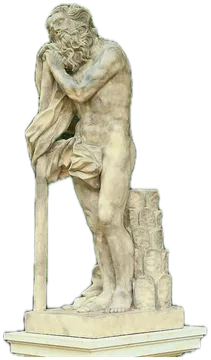
Father · Sources
Out upon it, verily strong though he be he hath spoken overweeningly, if in sooth by force and in mine own despite he will restrain me that am of like honour with himself. For three brethren are we, begotten of Cronos, and born of Rhea,—Zeus, and myself, and the third is Hades, that is lord of the dead below. And in three-fold wise are all things divided, and unto each hath been apportioned his own domain.
Il. 15.187
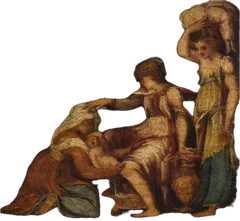
Mother · Sources
Out upon it, verily strong though he be he hath spoken overweeningly, if in sooth by force and in mine own despite he will restrain me that am of like honour with himself. For three brethren are we, begotten of Cronos, and born of Rhea,—Zeus, and myself, and the third is Hades, that is lord of the dead below. And in three-fold wise are all things divided, and unto each hath been apportioned his own domain.
Il. 15.187
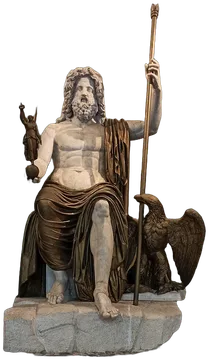
Brother · Sources
Квалификация братства/сестринства: Илиада: Общие отец и мать подтверждены. Общие родители: Рея, Кронос.
Wikidata: Рея — роль родителя · P25 Wikidata: Кронос — роль родителя · P22 Wikidata: Рея — роль родителя · P25 Wikidata: Кронос — роль родителя · P22Out upon it, verily strong though he be he hath spoken overweeningly, if in sooth by force and in mine own despite he will restrain me that am of like honour with himself. For three brethren are we, begotten of Cronos, and born of Rhea,—Zeus, and myself, and the third is Hades, that is lord of the dead below. And in three-fold wise are all things divided, and unto each hath been apportioned his own domain.
Il. 15.187–188
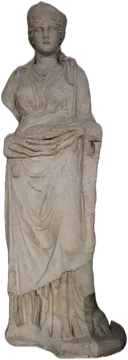
Sister through father · Sources
Братство или сестринство выведено из общего родителя: Рея, Кронос. Матери и отцы, не указанные в источнике, не предполагаются. Квалификация братства/сестринства: Илиада: Общий отец подтверждён; сведения о матерях неполны. Различие матерей не установлено. Общие родители: Кронос.
Hesiod, Theogony (H. G. Evelyn-White) · Hesiod, Theogony 453–458 Wikidata: Кронос — роль родителя · P22 Wikidata: Рея — роль родителя · P25 Wikidata: Кронос — роль родителя · P22For even though I grudge thee, and am fain to thwart their overthrow, I avail naught by my grudging, for truly thou art far the mightier. Still it beseemeth that my labour too be not made of none effect; for I also am a god, and my birth is from the stock whence is thine own, and crooked-counselling Cronos begat me as the most honoured of his daughters
Then Hera, the queenly goddess, daughter of great Cronos, went to and fro harnessing the horses of golden frontlets. and Hebe quickly put to the car on either side the curved wheels of bronze, eight-spoked, about the iron axle-tree. Of these the felloe verily is of gold imperishable,
with his fat and flesh, when he is fallen at the ships of the Achaeans. So spake she, and the goddess, white-armed Hera, failed not to hearken. She then went to and fro harnessing the horses of golden frontlets, even Hera, the queenly goddess, daughter of great Cronos; but Athene, daughter of Zeus that beareth the aegis,
Il. 4.59 · Il. 5.721 · Il. 8.383 · Il. 14.194 · Il. 14.243 · Il. 15.187
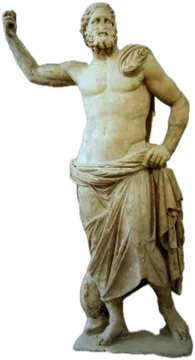
Brother · Sources
Квалификация братства/сестринства: Илиада: Общие отец и мать подтверждены. Общие родители: Рея, Кронос.
Wikidata: Рея — роль родителя · P25 Wikidata: Кронос — роль родителя · P22Out upon it, verily strong though he be he hath spoken overweeningly, if in sooth by force and in mine own despite he will restrain me that am of like honour with himself. For three brethren are we, begotten of Cronos, and born of Rhea,—Zeus, and myself, and the third is Hades, that is lord of the dead below. And in three-fold wise are all things divided, and unto each hath been apportioned his own domain.
Il. 15.187–188
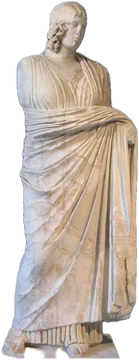
Sister · Sources
Братство или сестринство выведено из общего родителя: Рея, Кронос. Матери и отцы, не указанные в источнике, не предполагаются. Квалификация братства/сестринства: Полнота родства и линия общего родителя не установлены.
Hesiod, Theogony (H. G. Evelyn-White) · Hesiod, Theogony 453–458Out upon it, verily strong though he be he hath spoken overweeningly, if in sooth by force and in mine own despite he will restrain me that am of like honour with himself. For three brethren are we, begotten of Cronos, and born of Rhea,—Zeus, and myself, and the third is Hades, that is lord of the dead below. And in three-fold wise are all things divided, and unto each hath been apportioned his own domain.
Il. 15.187
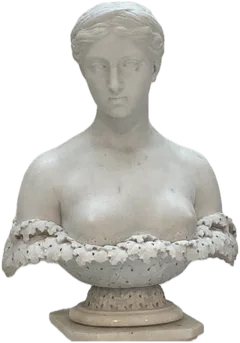
Wife · Sources
The Hymn calls Persephone Hades’ wife but explicitly says he seized her against her will; spouse status does not imply consent or a love affair.
Homeric Hymn to Demeter · Homeric Hymn to Demeter 75–85; 18–33See all 9
In art

Dolon Painter. Odysseus Tiresias Cdm Paris 422 cropped glare reduced. собрание не указано. CC0. https://commons.wikimedia.org/wiki/File%3AOdysseus_Tiresias_Cdm_Paris_422_cropped_glare_reduced.png
Photograph / reproduction: Dolon Painter
Photograph / reproduction date: circa 380 BCE
Dolon Painter. Odysseus Tiresias Cdm Paris 422 cropped glare reduced. собрание не указано. CC0. https://commons.wikimedia.org/wiki/File%3AOdysseus_Tiresias_Cdm_Paris_422_cropped_glare_reduced.png
Photograph / reproduction: Dolon Painter
Photograph / reproduction date: circa 380 BCE

Gius195. Test 3 - Versione di Apollodoro. собрание не указано. CC BY-SA 4.0. https://commons.wikimedia.org/wiki/File%3ATest_3_-_Versione_di_Apollodoro.jpg
Photograph / reproduction: Gius195
Photograph / reproduction date: 2016-08-04
Gius195. Test 3 - Versione di Apollodoro. собрание не указано. CC BY-SA 4.0. https://commons.wikimedia.org/wiki/File%3ATest_3_-_Versione_di_Apollodoro.jpg
Photograph / reproduction: Gius195
Photograph / reproduction date: 2016-08-04

Frans Francken the Younger. Orpheus in the Underworld. Musée des beaux-arts de Nîmes. Public domain. https://www.wikidata.org/wiki/Q115777502
Frans Francken the Younger. Orpheus in the Underworld. Musée des beaux-arts de Nîmes. Public domain. https://www.wikidata.org/wiki/Q115777502

Simone Pignoni. The Rape of Proserpine. Museum of Fine Arts of Nancy. Public domain. https://www.wikidata.org/wiki/Q17274289
Simone Pignoni. The Rape of Proserpine. Museum of Fine Arts of Nancy. Public domain. https://www.wikidata.org/wiki/Q17274289

Jean Restout. Orpheus in Hades Asking for Eurydice. Department of Paintings of the Louvre. Public domain. https://www.wikidata.org/wiki/Q18928730
Jean Restout. Orpheus in Hades Asking for Eurydice. Department of Paintings of the Louvre. Public domain. https://www.wikidata.org/wiki/Q18928730

Peter Paul Rubens. Orpheus leads Eurydice from Hades (Ovid, Metamorphoses, X, 1-39). Kunsthaus Zürich. Public domain. https://www.wikidata.org/wiki/Q111974202
Peter Paul Rubens. Orpheus leads Eurydice from Hades (Ovid, Metamorphoses, X, 1-39). Kunsthaus Zürich. Public domain. https://www.wikidata.org/wiki/Q111974202


Peter Paul Rubens. Сатурн, пожирающий своего сына. Museo del Prado. Public domain. https://www.wikidata.org/wiki/Q6122115
Peter Paul Rubens. Сатурн, пожирающий своего сына. Museo del Prado. Public domain. https://www.wikidata.org/wiki/Q6122115
See all 146
Sources and verification
The character is matched to the catalogue.
- Wikipedia · Hades · CC BY-SA 4.0
Excerpt; remaining sentences omitted.
Reference material remains distinct from the poem’s assertions. Characters who share a name retain separate pages.