Aeneas
Mortal man
Aeneas ( in-EE-əs; Classical Latin: [ae̯ˈneːaːs]; from Ancient Greek: Αἰνείας, romanized: Aineías) was a Trojan hero in Greco-Roman mythology, the son of the Trojan prince Anchises and the Greek goddess Aphrodite (equivalent to the Roman Venus).
Explore on the graph- Mentions
- 48
- Connected characters
- 13
- Books
- 13


Mentions in the Iliad
A. T. Murray, Loeb Classical Library, Harvard University Press, 1924 · Homer, Iliad with an English Translation · CC BY-SA 3.0 US
“There on this day did the Trojans and their allies separate their companies. The Trojans were led by great Hector of the flashing helm, the son of Priam, and with him were marshalled the greatest hosts by far and the goodliest, raging with the spear. Of the Dardanians again the valiant son of Anchises was captain,”
“and the horses he gave to his comrades to drive to the ships. But Aeneas was ware of him as he made havoc of the ranks of warriors, and went his way along the battle amid the hurtling of the spears in quest of godlike Pandarus, if so be he might anywhere find him. He found the son of Lycaon, goodly and valiant,”
“Aeneas, counsellor of the brazen-coated Trojans, to the wise-hearted son of Tydeus do I liken him in all things, knowing him by his shield and his crested helm, and when I look on his horses; yet I know not surely if he be not a god. But if he be the man I deem him, even the wise-hearted son of Tydeus,”
“if I break not this bow with my hands and cast it into the blazing fire; for worthless as wind doth it attend me. To him then spake in answer Aeneas, leader of the Trojans: Nay, speak not thus; things shall in no wise be any better before that we twain with horses and chariot”
“if again Zeus shall vouchsafe glory to Tydeus' son Diomedes. Come, therefore, take thou now the lash and the shining reins, and I will dismount to fight; or else do thou await his onset, and I will look to the horses. Then made answer to him the glorious son of Lycaon:”
“And from these a stock of six was born him in his palace; four he kept himself and reared at the stall, and the other two he gave to Aeneas, devisers of rout. Could we but take these twain, we should win us goodly renown. Thus they spake on this wise one to the other,”
“and his armour all bright and flashing clanged upon him, and the swift-footed horses swerved aside; and there his spirit and his strength were undone. But Aeneas leapt down with shield and long spear, seized with fear lest perchance the Achaeans might drag from him the dead man. Over him he strode like a lion confident in his strength, and before him he held his spear and his shield that was well balanced on every side,”
See all 47
Connections
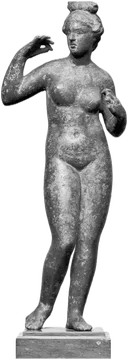
Mother · Sources
even Aeneas, whom fair Aphrodite conceived to Anchises amid the spurs of Ida, a goddess couched with a mortal man. Not alone was he; with him were Antenor's two sons, Archelochus and Acamas, well skilled in all manner of fighting. And they that dwelt in Zeleia beneath the nethermost foot of Ida,
endued with measureless strength. The one is well skilled with the bow, even Pandarus, and moreover avoweth him to be the son of Lycaon; while Aeneas avoweth himself to be born of peerless Anchises, and his mother is Aphrodite. Nay, come, let us give ground on the car, neither rage thou thus,
upon the earth; and dark night enfolded his eyes. And now would the king of men, Aeneas, have perished, had not the daughter of Zeus, Aphrodite, been quick to mark, even his mother, that conceived him to Anchises as he tended his kine. About her dear son she flung her white arms,
Il. 2.820 · Il. 5.248 · Il. 5.312–313 · Il. 5.314–318 · Il. 5.343 · Il. 5.377–378 · Il. 20.105 · Il. 20.209
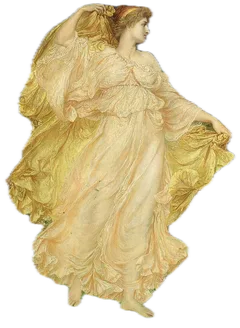
Father · Sources
There on this day did the Trojans and their allies separate their companies. The Trojans were led by great Hector of the flashing helm, the son of Priam, and with him were marshalled the greatest hosts by far and the goodliest, raging with the spear. Of the Dardanians again the valiant son of Anchises was captain,even Aeneas, whom fair Aphrodite conceived to Anchises amid the spurs of Ida, a goddess couched with a mortal man. Not alone was he; with him were Antenor's two sons, Archelochus and Acamas, well skilled in all manner of fighting. And they that dwelt in Zeleia beneath the nethermost foot of Ida,
if again Zeus shall vouchsafe glory to Tydeus' son Diomedes. Come, therefore, take thou now the lash and the shining reins, and I will dismount to fight; or else do thou await his onset, and I will look to the horses. Then made answer to him the glorious son of Lycaon:
upon the earth; and dark night enfolded his eyes. And now would the king of men, Aeneas, have perished, had not the daughter of Zeus, Aphrodite, been quick to mark, even his mother, that conceived him to Anchises as he tended his kine. About her dear son she flung her white arms,
Il. 2.819–821 · Il. 5.229 · Il. 5.312–313 · Il. 5.447 · Il. 5.468 · Il. 12.98–99 · Il. 16.536 · Il. 17.491 · Il. 17.534 · Il. 17.754 · Il. 20.80 · Il. 20.86 · Il. 20.160 · Il. 20.208 · Il. 20.240 · Il. 20.327
Sister · Sources
Братство или сестринство выведено из общего родителя: Анхиз. Матери и отцы, не указанные в источнике, не предполагаются. Квалификация братства/сестринства: Илиада: Общий родитель подтверждён; роль отца или матери не установлена. Общие родители: Анхиз.
Wikidata: Афродита — пол родителя · P21There on this day did the Trojans and their allies separate their companies. The Trojans were led by great Hector of the flashing helm, the son of Priam, and with him were marshalled the greatest hosts by far and the goodliest, raging with the spear. Of the Dardanians again the valiant son of Anchises was captain,even Aeneas, whom fair Aphrodite conceived to Anchises amid the spurs of Ida, a goddess couched with a mortal man. Not alone was he; with him were Antenor's two sons, Archelochus and Acamas, well skilled in all manner of fighting. And they that dwelt in Zeleia beneath the nethermost foot of Ida,
if again Zeus shall vouchsafe glory to Tydeus' son Diomedes. Come, therefore, take thou now the lash and the shining reins, and I will dismount to fight; or else do thou await his onset, and I will look to the horses. Then made answer to him the glorious son of Lycaon:
upon the earth; and dark night enfolded his eyes. And now would the king of men, Aeneas, have perished, had not the daughter of Zeus, Aphrodite, been quick to mark, even his mother, that conceived him to Anchises as he tended his kine. About her dear son she flung her white arms,
Il. 2.819–821 · Il. 5.229 · Il. 5.312–313 · Il. 5.447 · Il. 5.468 · Il. 12.98–99 · Il. 13.429 · Il. 13.429–430 · Il. 16.536 · Il. 17.491 · Il. 17.534 · Il. 17.754 · Il. 20.80 · Il. 20.86 · Il. 20.160 · Il. 20.208 · Il. 20.240 · Il. 20.327
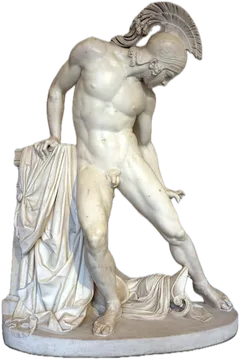
Opponent · Sources
Стихи 20.160–161: «На середине меж ратей сходились, желая сразиться, - / Сын Анхиза Эней и Пелид Ахиллес быстроногий» — прямое изображение поединка-противоборства.
even Aeneas, Anchises' son, and goodly Achilles. Aeneas first strode forth with threatening mien, his heavy hem nodding above him; his valorous shield he held before his breast, and he brandished a spear of bronze. And on the other side the son of Peleus rushed against him him like a lion,
Il. 20.160–161
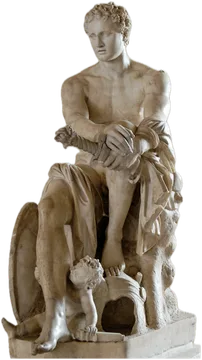
Poetic resemblance · Sources
Aeneas and Idomeneus, peers of Ares, were eager each to cleave the other's flesh with the pitiless bronze. And Aeneas first cast at Idomeneus, but he, looking steadily at him, avoided the spear of bronze, and the lance of Aeneas sank quivering down in to the earth,
Il. 13.500
Patron · Sources
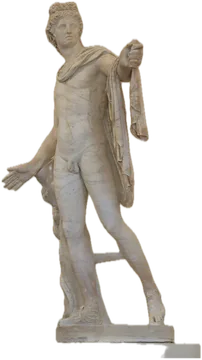
and all these things shall be the business of swift Ares and Athene. On this wise spake they one to the other; but Diomedes, good at the war-cry, leapt upon Aeneas, though well he knew that Apollo himself held forth his arms above him; yet had he no awe even of the great god, but was still eagerto slay Aeneas and strip from him his glorious armour. Thrice then he leapt upon him, furiously fain to slay him, and thrice did Apollo beat back his shining shield. But when for the fourth time he rushed upon him like a god, then with a terrible cry spake to him Apollo that worketh afar:
Aeneas then did Apollo set apart from the throng in sacred Pergamus where was his temple builded. There Leto and the archer Artemis healed him in the great sanctuary, and glorified him; but Apollo of the silver bow fashioned a wraith
Il. 5.433–435 · Il. 5.445–446
Opponent · Sources
Стихи 5.432–437: Диомед трижды бросается на Энея, чтобы убить его, и Аполлон трижды отражает удары, — прямое изображение поединка-противоборства.
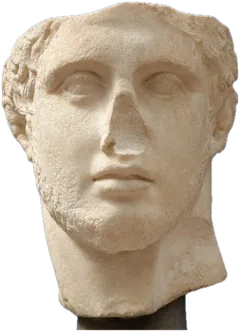
and all these things shall be the business of swift Ares and Athene. On this wise spake they one to the other; but Diomedes, good at the war-cry, leapt upon Aeneas, though well he knew that Apollo himself held forth his arms above him; yet had he no awe even of the great god, but was still eagerto slay Aeneas and strip from him his glorious armour. Thrice then he leapt upon him, furiously fain to slay him, and thrice did Apollo beat back his shining shield. But when for the fourth time he rushed upon him like a god, then with a terrible cry spake to him Apollo that worketh afar:
Il. 5.432–437
See all 13
In art

Ferdinand Bol. Achilles ontvangt van Thetis een nieuwe wapenrusting uit de smidse van Vulcanus. Rijksmuseum. CC0. https://www.wikidata.org/wiki/Q17324355
Ferdinand Bol. Achilles ontvangt van Thetis een nieuwe wapenrusting uit de smidse van Vulcanus. Rijksmuseum. CC0. https://www.wikidata.org/wiki/Q17324355

Wenceslaus Hollar. Aeneas's farewell to Andromache . State 3.. собрание не указано. Public domain. https://commons.wikimedia.org/wiki/File%3AWenceslas_Hollar_-_Aeneas%27s_farewell_to_Andromache_%28State_3%29.jpg
Photograph / reproduction: Wenceslaus Hollar
Photograph / reproduction date: Unknown date (author lived 1607-1677)

Wenceslaus Hollar. Aeneas meets Andromache . State 3.. собрание не указано. Public domain. https://commons.wikimedia.org/wiki/File%3AWenceslas_Hollar_-_Aeneas_meets_Andromache_%28State_3%29.jpg
Photograph / reproduction: Wenceslaus Hollar
Photograph / reproduction date: Unknown date (author lived 1607-1677)

Dosso Dossi. Arrival of the Trojans at the Strophades Islands and the Attack of the Harpies. Museo del Prado. Public domain. https://www.wikidata.org/wiki/Q123737311
Photograph / reproduction: Dosso Dossi
Photograph / reproduction date: 1520-1526
Dosso Dossi. Arrival of the Trojans at the Strophades Islands and the Attack of the Harpies. Museo del Prado. Public domain. https://www.wikidata.org/wiki/Q123737311
Photograph / reproduction: Dosso Dossi
Photograph / reproduction date: 1520-1526

Simon Vouet. Æneas and His Father Fleeing Troy. San Diego Museum of Art. CC0. https://www.wikidata.org/wiki/Q86856690
Simon Vouet. Æneas and His Father Fleeing Troy. San Diego Museum of Art. CC0. https://www.wikidata.org/wiki/Q86856690

Laurent Guiard. Enée sauvant Anchise et Ascagne de l'incendie de Troie - Laurent Guyard - Musée du Louvre Sculptures RF 3699. Department of Sculptures of the Louvre. CC0. https://www.wikidata.org/wiki/Q87451915
Laurent Guiard. Enée sauvant Anchise et Ascagne de l'incendie de Troie - Laurent Guyard - Musée du Louvre Sculptures RF 3699. Department of Sculptures of the Louvre. CC0. https://www.wikidata.org/wiki/Q87451915


Master of the Aeneid. The Trojans Flee the Coast of the Cyclops. Department of Decorative Arts of the Louvre. Public domain. https://www.wikidata.org/wiki/Q127342390
Master of the Aeneid. The Trojans Flee the Coast of the Cyclops. Department of Decorative Arts of the Louvre. Public domain. https://www.wikidata.org/wiki/Q127342390
See all 195
Sources and verification
The character is matched to the catalogue.
- Wikipedia · Aeneas · CC BY-SA 4.0
Excerpt; remaining sentences omitted.
Reference material remains distinct from the poem’s assertions. Characters who share a name retain separate pages.