Ares
God
Ares (; Ancient Greek: Ἄρης, Árēs [árɛːs]) is the Greek god of war and courage. He is one of the Twelve Olympians, and the son of Zeus and Hera.
Explore on the graph- Mentions
- 99
- Connected characters
- 54
- Books
- 21


Mentions in the Iliad
A. T. Murray, Loeb Classical Library, Harvard University Press, 1924 · Homer, Iliad with an English Translation · CC BY-SA 3.0 US
“And they made sacrifice one to one of the gods that are for ever, and one to another, with the prayer that they might escape from death and the toil of war. But Agamemnon, king of men, slew a fat bull of five years to the son of Cronos, supreme in might, and let call the elders, the chieftains of the Achaean host,”
“that we may with the more speed stir up sharp battle. So spake he, and the king of men, Agamemnon, failed not to hearken. Straightway he bade the clear-voiced heralds summon to battle the long-haired Achaeans. And they made summons, and the host gathered full quickly.”
“when they mingle in the pasture, so did their leaders marshal them on this side and on that to enter into the battle, and among them lord Agamemnon, his eyes and head like unto Zeus that hurleth the thunderbolt, his waist like unto Ares, and his breast unto Poseidon.”
“for he lay with her in secret. And with these were ranged thirty hollow ships. And of the Phocians Schedius and Epistrophus were captains, sons of great-souled Iphitus, son of Naubolus; these were they that held Cyparissus and rocky Pytho,”
“all these again had as leader Elephenor, scion of Ares, him that was son of Chalcodon and captain of the great-souled Abantes. And with him followed the swift Abantes, with hair long at the back, spearmen eager with outstretched ashen spears to rend the corselets about the breasts of the foemen.”
“And those from Dulichiuni and the Echinae, the holy isles, that lie across the sea, over against Elis, these again had as leader Meges, the peer of Ares, even the son of Phyleus, whom the horseman Phyleus, dear to Zeus, begat—he that of old had gone to dwell in Dulichium in wrath against his father.”
“Of all these was Idomeneus, famed for his spear, captain, and Meriones, the peer of Enyalius, slayer of men. And with these there followed eighty black ships. And Tlepolemus, son of Heracles, a valiant man and tall, led from Rhodes nine ships of the lordly Rhodians,”
See all 97
“when he had laid waste many cities of warriors fostered of Zeus. But when Tlepolemus had grown to manhood in the well-fenced palace, forthwith he slew his own father's dear uncle, Licymnius, scion of Ares, who was then waxing old. So he straightway built him ships, and when he had gathered together much people,”
“His wife, her two cheeks torn in wailing, was left in Phylace and his house but half established, while, for himself, a Dardanian warrior slew him as he leapt forth from his ship by far the first of the Achaeans. Yet neither were his men leaderless, though they longed for their leader; for Podarces, scion of Ares, marshalled them,”
“like of coat, like of age, their backs as even as a levelling line could make. These had Apollo of the silver bow reared in Pereia, both of them mares, bearing with them the panic of war. And of warriors far best was Telamonian Aias, while yet Achilles cherished his wrath; for Achilles was far the mightiest,”
“but to thy father and city and all the people a grievous bane—to thy foes a joy, but to thine own self a hanging down of the head? Wilt thou indeed not abide Menelaus, dear to Ares? Thou wouldest learn what manner of warrior he is whose lovely wife thou hast. Then will thy lyre help thee not, neither the gifts of Aphrodite,”
“Not to be flung aside, look you, are the glorious gifts of the gods, even all that of themselves they give, whereas by his own will could no man win them. But now, if thou wilt have me war and do battle, make the other Trojans to sit down and all the Achaeans, but set ye me in the midst and Menelaus, dear to Ares,”
“and himself in the midst and Menelaus, dear to Ares, to do battle for Helen and all her possessions. And whichsoever of the twain shall win, and prove him the better man, let him duly take all the wealth and the woman, and bear them to his home; but for us others, let us swear friendship and oaths of faith with sacrifice.”
“She found Helen in the hall, where she was weaving a great purple web of double fold, and thereon was broidering many battles of the horse-taming Trojans and the brazen-coated Achaeans, that for her sake they had endured at the hands of Ares. Close to her side then came Iris, swift of foot, and spake to her, saying:”
“and with speed they came to the place where were the Scaean gates. And they that were about Priam and Panthous and Thymoetes and Lampus and Clytius and Hicetaon, scion of Ares, and Ucalegon and Antenor, men of prudence both, sat as elders of the people at the Scaean gates.”
“for erstwhile on a time goodly Odysseus came hither also on an embassy concerning thee, together with Menelaus, dear to Ares; and it was I that gave them entertainment and welcomed them in my halls, and came to know the form and stature of them both and their cunning devices. Now when they mingled with the Trojans, as they were gathered together,”
“And Idomeneus over against him standeth amid the Cretans even as a god, and about him are gathered the captains of the Cretans. Full often was Menelaus, dear to Ares, wont to entertain him in our house, whenever he came from Crete. And now all the rest of the bright-eyed Achaeans do I see,”
“Rise, thou son of Laomedon, the chieftains of the horse-taming Trojans, and of the brazen-coated Achaeans, summon thee to go down into the plain, that ye may swear oaths of faith with sacrifice. But Alexander and Menelaus, dear to Ares, will do battle with long spears for the woman's sake;”
“I verily will go my way back to windy Ilios, since I can in no wise bear to behold with mine eyes my dear son doing battle with Menelaus, dear to Ares. But this, I ween, Zeus knoweth, and the other immortal gods, for which of the twain the doom of death is ordained.”
“Verily it was thy boast aforetime that thou wast a better man than Menelaus, dear to Ares, in the might of thy hands and with thy spear. But go now, challenge Menelaus, dear to Ares, again to do battle with thee, man to man. But, nay, I of myself bid thee refrain, and not war amain against fair-haired Menelaus,”
“these the worker in horn had wrought and fitted together, and smoothed all with care, and set thereon a tip of gold. This bow he bent, leaning it against the ground, and laid it carefully down; and his goodly comrades held their shields before him, lest the warrior sons of the Achaeans should leap to their feet”
“to see warlike Menelaus, son of Atreus, whom some man well skilled in archery hath smitten with an arrow, some Trojan or Lycian, compassing glory for himself but for us sorrow. So spake he, and the herald failed not to hearken, as he heard, but went his way throughout the host of the brazen-coated Achaeans,”
“Son of Atreus, what a word hath escaped the barrier of thy teeth! How sayest thou that we are slack in battle, whenso we Achaeans rouse keen war against the horse-taming Trojans? Thou shalt see, if so be thou wilt and if thou carest aught therefor, the father of Telemachus mingling with the foremost fighters”
“and bleat without ceasing as they near the voices of their lambs: even so arose the clamour of the Trojans throughout the wide host; for they had not all like speech or one language, but their tongues were mingled, and they were a folk summoned from many lands. These were urged on by Ares, and the Greeks by flashing-eyed Athene,”
“took furious Ares by the hand and spake to him, saying: Ares, Ares, thou bane of mortals, thou blood-stained stormer of walls, shall we not now leave the Trojans and Achaeans to fight, to whichsoever of the two it be that father Zeus shall vouchsafe glory? But for us twain, let us give place, and avoid the wrath of Zeus.”
“shalt thou endure; but to me hast thou granted great glory. Then with no touch of fear spake to him mighty Diomedes: Thou hast missed and not hit; but ye twain, I deem, shall not cease till one or the other of you shall have fallen and glutted with his blood Ares, the warrior with tough shield of hide.”
“Anon she found furious Ares abiding on the left of the battle, and upon a cloud was his spear leaning, and at hand were his swift horses twain. Then she fell upon her knees and with instant prayer begged for her dear brother's horses with frontlets of gold: Dear brother, save me, and give me thy horses,”
“So suffered Ares, when Otus and mighty Ephialtes, the sons of Aloeus, bound him in cruel bonds, and in a brazen jar he lay bound for thirteen months; and then would Ares, insatiate of war, have perished, had not the stepmother of the sons of Aloeus, the beauteous Eëriboea,”
“and all these things shall be the business of swift Ares and Athene. On this wise spake they one to the other; but Diomedes, good at the war-cry, leapt upon Aeneas, though well he knew that Apollo himself held forth his arms above him; yet had he no awe even of the great god, but was still eager”
“in the likeness of Aeneas' self and in armour like to his; and over the wraith the Trojans and goodly Achaeans smote the bull's-hide bucklers about one another's breasts, the round shields and fluttering targets. Then unto furious Ares spake Phoebus Apollo:”
“So spake he, and himself sate him down upon the height of Pergamus, and baneful Ares entered amid the Trojans' ranks and urged them on, in the likeness of swft Acamas, leader of the Thracians. To Priam's sons, nurtured of Zeus, he called, saying: Ye sons of Priam, the king nurtured of Zeus,”
“as the fight was joined again; and the charioteers wheeled round. The might of their hands they bare straight forward, and about the battle furious Ares drew a veil of night to aid the Trojans, ranging everywhere; so fulfilled he the behest of Phoebus Apollo of the golden sword, who bade him”
“as they saw him come to join them alive and whole and possessed of valiant courage. Howbeit they questioned him not at all, for toil of other sort forbade them, even that which he of the silver bow was stirring, and Ares the bane of mortals, and Discord that rageth without ceasing. On the other side the Aiantes twain and Odysseus and Diomedes”
“But as they fell Menelaus dear to Ares had pity for them, and strode through the foremost fighters, harnessed in flaming bronze and brandishing his spear; and Ares roused his might with intent that he might be vanquished beneath the hands of Aeneas.”
“But Hector marked them across the ranks, and rushed upon them shouting aloud, and with him followed the strong battalions of the Trojans; and Ares led them and the queen Enyo, she bringing ruthless Din of War, while Ares wielded in his hands a monstrous spear,”
“and forth from his thigh valiant Pelagon, that was his dear comrade, thrust the spear of ash; and his spirit failed him, and down over his eyes a mist was shed. Howbeit he revived, and the breath of the North Wind as it blew upon him made him to live again after in grievous wise he had breathed forth his spirit. But the Argives before the onset of Ares and Hector harnessed in bronze”
“verily it was for naught that we pledged our word to Menelaus, that not until he had sacked well-walled Ilios should he get him home, if we are to suffer baneful Ares thus to rage. Nay, come, let us twain likewise bethink us of furious valour. So spake she, and the goddess, flashing-eyed Athene, failed not to hearken.”
“Then the goddess, white-armed Hera, stayed the horses, and made question of Zeus most high, the son of Cronos, and spake to him: Father Zeus, hast thou no indignation with Ares for these violent deeds, that he hath destroyed so great and so goodly a host of the Achaeans recklessly and in no seemly wise to my sorrow;”
“but if Aphrodite the daughter of Zeus should enter the battle, her thou badest me smite with the sharp bronze. Therefore it is that I now give ground myself and have given command to all the rest of the Argives to be gathered here likewise; for I discern Ares lording it over the battle-field.”
“So saying, with her hand she drew back Sthenelus, and thrust him from the car to earth, and he speedily leapt down; and she stepped upon the car beside goodly Diomedes, a goddess eager for battle. Loudly did the oaken axle creak beneath its burden, for it bare a dread goddess and a peerless warrior.”
“Next Diomedes, good at the war-cry, drave at Ares with his spear of bronze, and Pallas Athene sped it mightily against his nethermost belly, where he was girded with his taslets. There did he thrust and smite him, rending the fair flesh, and forth he drew the spear again. Then brazen Ares bellowed”
“but rather settest her on, for that this pestilent maiden is thine own child. Now hath she set on the son of Tydeus, Diomedes high of heart, to vent his rage upon immortal gods. Cypris first he wounded with a thrust in close fight upon the hand at the wrist, and thereafter rushed upon mine own self as he had been a god.”
“planted his heel on his chest, and drew forth the ashen spear. Then Nestor shouted aloud, and called to the Argives: My friends, Danaan warriors, squires of Ares, let no man now abide behind in eager desire for spoil, that he may come to the ships bearing the greatest store;”
“But when even Bellerophon came to be hated of all the gods, then verily he wandered alone over the Aleian plain, devouring his own soul, and shunning the paths of men; and Isander his son was slain by Ares, insatiate of battle, as he fought against the glorious Solymi;”
“and pierced him through the middle with his spear, and backward was he hurled upon the earth; and Lycurgus despoiled him of the armour that brazen Ares had given him. This armour he thereafter wore himself amid the turmoil of Ares, but when Lycurgus grew old within his halls”
“and after them Idomeneus and Idomeneus' comrade Meriones, the peer of Enyalius, slayer of men, and after them Eurypylus, the glorious son of Euaemon; and upsprang Thoas, son of Andraemon, and goodly Odysseus; all these were minded to do battle with goodly Hector.”
“vouchsafe to both equal might and glory. So they spake, and Aias arrayed him in gleaming bronze. But when he had clothed about his flesh all his armour, then sped he in such wise as huge Ares goeth forth when he enters into battle amid warriors whom the son of Cronos”
“and I know how to charge into the mellay of chariots drawn by swift mares; and I know how in close fight to tread the measure of furious Ares. Yet am I not minded to smite thee, being such a one as thou art, by spying thee at unawares; but rather openly, if so be I may hit thee. He spake, and poised his far-shadowing spear, and hurled it;”
“and their souls have gone down to the house of Hades; therefore were it well that thou make the battle of the Achaeans to cease at daybreak, and we will gather to hale hither on carts the corpses with oxen and mules; and we will burn them a little way from the ships that each man may bear their bones home to their children,”
“then they took their supper throughout the host by companies, and at dawn Idaeus went his way to the hollow ships. There he found in the place of gathering the Danaans, squires of Ares, beside the stern of Agamemnon's ship; and the loud-voiced herald took his stand in the midst and spake among them:”
“huddled together: and huddled they were by Hector, Priam's son, the peer of swift Ares, now that Zeus vouchsafed him glory. And now would he have burned the shapely ships with blazing fire, had not queenly Hera put it in Agamemnon's mind himself to bestir him, and speedily rouse on the Achaeans.”
“so he fell from out the car, and upon him his armour clanged. And after him came the sons of Atreus, Agamemnon and Menelaus, and after them the Aiantes, clothed in furious valour, and after them Idomeneus and Idomeneus' comrade, Meriones, peer of Enyalius, slayer of men,”
“then beside their ships they halted and abode, calling one upon the other, and lifting up their hands to all the gods they made fervent prayer each man of them. But Hector wheeled this way and that his fair-maned horses, and his eyes were as the eyes of the Gorgon or of Ares, bane of mortals.”
“Forth hasted the sentinels in their harness around Nestor's son Thrasymedes, shepherd of the host, and Ascalaphus and Ialmenus, sons of Ares, and Meriones and Aphareus and Deïpyrus, and the son of Creon, goodly Lycomedes.”
“Hector, son of Priam, peer of Ares, the bane of mortals, set the great-souled Trojans. Himself with high heart he strode among the foremost, and fell upon the conflict like a blustering tempest, that leapeth down and lasheth to fury the violet-hued deep. Who then was first to be slain, and who last by”
“for Achilles was standing by the stern of his ship, huge of hull, gazing upon the utter toil of battle and the tearful rout. And forthwith he spake to his comrade Patroclus, calling to him from beside the ship; and he heard, and came forth from the hut like unto Ares; and this to him was the beginning of evil.”
“and thereafter we took supper throughout the host by companies, and laid us down to sleep, each man in his battlegear, about the streams of the river. But the great-souled Epeians were marshalled about the city, fain to raze it utterly; but ere that might be there appeared unto them a mighty deed of war;”
“having need himself of a goodly leech, and the other in the plain abideth the sharp battle of the Trojans. And to him again spake the valiant son of Menoetius: How may these things be? What shall we do, warrior Eurypylus? I am on my way to declare to wise-hearted Achilles a message”
“and the other Leonteus, peer of Ares the bane of men. These twain before the high gate stood firm even as oaks of lofty crest among the mountains, that ever abide the wind and rain day by day, firm fixed with roots great and long;”
“Thus did the Earth-enfolder arouse the Achaeans with his word of command, and round about the twain Aiantes their battalions took their stand, so strong in might, that not Ares might have entered in and made light of them, nor yet Athene, the rouser of hosts; for they that were the chosen bravest abode the onset of the Trojans and goodly Hector,”
“So spake he, and Meriones, the peer of swift Ares, speedily took from the hut a spear of bronze, and followed Idomeneus with high thought of battle. And even as Ares, the bane of mortals, goeth forth to war, and with him followeth Rout, his son, valiant alike and fearless,”
“would he give way, in close fight at least; but in fleetness of foot may no man vie with Achilles. But for us twain, do thou, even as thou sayest,make for the left of the host, that we may know forthwith whether we shall give glory to another or another to us. So spake he, and Meriones, the peer of swift Ares, led the way until they came to the host, at the point whither Idomeneus bade him go.”
“and clave his coat of bronze round about him, that aforetime ever warded death from his body, but now it rang harshly as it was cloven about the spear. And he fell with a thud, and the spear was fixed in his heart, that still beating made the butt thereof to quiver; howbeit, there at length did mighty Ares stay its fury.”
“Aeneas and Idomeneus, peers of Ares, were eager each to cleave the other's flesh with the pitiless bronze. And Aeneas first cast at Idomeneus, but he, looking steadily at him, avoided the spear of bronze, and the lance of Aeneas sank quivering down in to the earth,”
“but in flight his feet no longer bare him swiftly from the war. And as he drew back step by step Deïphobus cast at him with his shining spear, for verily he ever cherished a ceaseless hate against him. Howbeit this time again he missed him, and smote with his spear Ascalaphus, son of Enyalius, and through the shoulder the mighty spear held its way;”
“where also were the other immortal gods, being held aloof from the war. Then over Ascalaphus they clashed in close fight, and Deïphobus tore from Ascalaphus his shining helm, but Meriones, the peer of swift Ares, leapt upon Deïphobus and smote his arm with his spear,”
“even so the Trojans, in close array, some in the van and after them others, flashing with bronze, followed with their leaders. And Hector, son of Priam, led them, the peer of Ares, the bane of mortals. Before him he held his shield that was well-balanced upon every side, his shield thick with hides, whereon abundant bronze had been welded,”
“Even now I deem that sorrow hath been wrought for Ares, seeing that his son, dearest of men to him, hath perished in battle, even Ascalaphus, whom mighty Ares declareth to be his own. So spake she, but Ares smote his sturdy thighs with the flat of his hands, and with wailing spake, and said:”
“So spake he, and they readily hearkened and obeyed. They that were in the company of Aias and prince Idomeneus, and Teucer, and Meriones, and Meges, the peer of Ares, called to the chieftains, and marshalled the fight, fronting Hector and the Trojans,”
“And he was raging like Ares, wielder of the spear, or as when consuming fire rageth among the mountains in the thickets of a deep wood; and foam came forth about his mouth, and his two eyes blazed beneath his dreadful brows, and round about his temples terribly shook the helm of Hector as he fought;”
“then only rage invincible, whenso I enter the turmoil of Ares. But when away from the ships he hath driven war and the din of war, thea all-unscathed let him come back to the swift ships with all his arms, and his comrades that fight in close combat. So spake he in prayer, and Zeus, the counsellor, heard him,”
“But Meriones, looking steadily at him, avoided the spear of bronze; for he stooped forward, and the long spear fixed itself in the ground behind him, and the butt of the spear quivered; howbeit there at length did mighty Ares stay its fury. [And the lance of Aeneas sank quivering down into the earth,”
“then verily beyond their portion the Achaeans proved the better. Forth from out the range of darts they drew the warrior Cebriones from the battle-din of the Trojans, and stripped the armour from his shoulders; and Patroclus with fell intent leapt upon the Trojans. Thrice then leapt he upon them, the peer of swift Ares,”
“And the son of Atreus, Menelaus, dear to Ares, failed not to mark that Patroclus had been slain in battle by the Trojans, but fared amid the foremost fighters, harnessed in flaming bronze, and bestrode the dead, as over a calf standeth lowing plaintively its mother, that hath brought forth”
“Full easily then would Atreus' son have borne off the glorious armour of the son of Panthous, but that Phoebus Apollo begrudged it him, and in the likeness of a man, even of Mentes, leader of the Cicones, aroused against him Hector, the peer of swift Ares. And he spake and addressed him in winged words:”
“one that huntsmen have encountered in the forest as he leadeth his young; then he exulteth in his strength, and draweth down all his brows to cover his eyes; even so did Aias bestride the warrior Patroclus, and hard by him stood the son of Atreus, Menelaus, dear to Ares, nursing great sorrow in his breast.”
“Patroclus should become the sport of the dogs of Troy. So spake he, and swift Aias, son of Oileus, heard him clearly, and was first to come running to meet him amid the battle, and after him Idomeneus and Idomeneus' comrade, Meriones, the peer of Enyalius, slayer of men.”
“and the bronze let forth the bowels there-through; and he fell in the dust and clutched the earth in his palm. Thereat the foremost fighters and glorious Hector gave ground, and the Argives shouted aloud, and drew off the dead, even Phorcys and Hippothous, and set them to strip the armour from their shoulders. Then would the Trojans have been driven again by the Achaeans,”
“Hector, and ye other leaders of the Trojans and allies, shame verily were this, if before the Achaeans, dear to Ares, we be driven back to Ilios, vanquished in our cowardice. Howbeit even yet, declareth one of the gods that stood by my side, is Zeus, the counsellor most high, our helper in the fight.”
“and their hearts within them were full of hope, the Trojans that they might drag him to Ilios, but the Achaeans to the hollow ships; and around him the battle waxed wild, nor could even Ares, rouser of hosts, nor Athene, at sight of that strife have made light thereof, albeit their anger were exceeding great.”
“and left Aretus lying there stricken to the death. And Automedon, the peer of swift Ares, despoiled him of his armour, and exulted, saying: Verily a little have I eased mine heart of grief for the death of Menoetius' son, though it be but a worse man that I have slain.”
“And of the Trojans whoso is distressed beyond measure for his goods, let him gather them together and give them to the folk for them to feast thereon in common; better were it that they have profit thereof than the Achaeans. But in the morning, at the coming of Dawn, arrayed in our armour, let us arouse sharp battle at the hollow ships. But if in deed and in truth goodly Achilles is arisen by the ships, the worse shall it be for him, if he so will it. I verily will not flee from him out of dolorous war, but face to face will I stand against him, whether he shall win great victory, or haply I. Alike to all is the god of war, and lo, he slayeth him that would slay. So Hector addressed their gathering, and thereat the Trojans shouted aloud, fools that they were! for from them Pallas Athene took away their wits. To Hector they all gave praise in his ill advising, but Polydamas no man praised, albeit he devised counsel that was good. So then they took supper throughout the host; but the Achaeans”
“as they stood thereon, and therewithal the men that were holden of old age; but the rest were faring forth, led of Ares and Pallas Athene, both fashioned in gold, and of gold was the raiment wherewith they were clad. Goodly were they and tall in their harness, as beseemeth gods, clear to view amid the rest, and the folk at their feet were smaller.”
“even these came then to the place of gathering, because Achilles was come forth, albeit he had long kept him aloof from grievous war. Twain there were, squires of Ares, that came limping, even Tydeus' son, staunch in fight, and goodly Odysseus, leaning each on his spear, for their wounds were grievous still;”
“renounced his wrath. And among them spake the king of men, Agamemnon, even from the place where he sat, not standing forth in their midst: My friends, Danaan warriors, squires of Ares, meet is it to give ear to him that standeth to speak,”
“and together with these went Hephaestus, exulting in his might, halting, but beneath him his slender legs moved nimbly; but unto the Trojans went Ares, of the flashing helm, and with him Phoebus, of the unshorn locks, and Artemis, the archer,”
“and now upon the loud-sounding shores would she utter her loud cry. And over against her shouted Ares, dread as a dark whirlwind, calling with shrill tones to the Trojans from the topmost citadel, and now again as he sped by the shore of Simois over Callicolone. Thus did the blessed gods urge on the two hosts to”
“Thus gods went forth to meet with gods. But Achilles was fain to meet with Hector, Priam's son, above all others in the throng, for with his blood as with that of none other did his spirit bid him glut Ares, the warrior with tough shield of hide. Howbeit Aeneas did Apollo, rouser of hosts, make to go forth”
“with gods in strife. Nay, for our part let us rather go apart from the track unto some place of outlook, and sit us there, and war shall be for men. But if so be Ares or Phoebus Apollo shall make beginning of fight, or shall keep Achilles in check and suffer him not to do battle,”
“but come, let man go forth against man and be eager for the fray. Hard is it for me, how mighty soever I be, to deal with men so many, and to fight them all; not even Ares, for all he is an immortal god, nor Athene could control by dint of toil the jaws of such a fray.”
“in joy as he beheld the gods joining in strife. Then no more held they long aloof, for Ares, piercer of shields, began the fray, and first leapt upon Athene, brazen spear in hand, and spake a word of reviling: Wherefore now again, thou dog-fly,”
“So saying he smote upon her tasselled aegis—the awful aegis against which not even the lightning of Zeus can prevail—thereon blood-stained Ares smote with his long spear. But she gave ground, and seized with her stout hand a stone that lay upon the plain, black and jagged and great,”
“and her knees were loosened where she stood, and her heart melted. So the twain lay upon the bounteous earth, and vaunting over them Athene spake winged words: In such plight let all now be that are aiders of the Trojans when they fight against the mail-clad Argives,”
“let us know to which of us twain the Olympian will vouchsafe glory. So he pondered as he abode, and nigh to him came Achilles, the peer of Enyalius, warrior of the waving helm, brandishing over his right shoulder the Pelian ash, his terrible spear; and all round about the bronze flashed like the gleam”
“even so is it not possible for thee and me to be friends, neither shall there be oaths between us till one or the other shall have fallen, and glutted with his blood Ares, the warrior with tough shield of hide. Bethink thee of all manner of valour: now in good sooth it behoveth thee to quit thee as a spearman and a dauntless warrior. No more is there any escape for thee, but forthwith shall Pallas Athene”
“and whirled and flung it; and all the Achaeans laughed aloud thereat. Then in turn Leonteus, scion of Ares, made a cast; and thirdly great Telamonian Aias hurled it from his strong hand, and sent it past the marks of all. But when Polypoetes, staunch in fight,”
“Fifty I had, when the sons of the Achaeans came; nineteen were born to me of the self-same womb, and the others women of the palace bare. Of these, many as they were, furious Ares hath loosed the knees, and he that alone was left me, that by himself guarded the city and the men,”
Connections
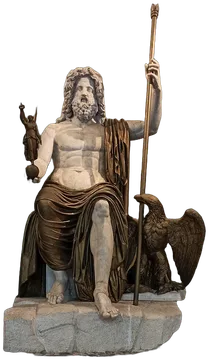
Father · Sources
took furious Ares by the hand and spake to him, saying: Ares, Ares, thou bane of mortals, thou blood-stained stormer of walls, shall we not now leave the Trojans and Achaeans to fight, to whichsoever of the two it be that father Zeus shall vouchsafe glory? But for us twain, let us give place, and avoid the wrath of Zeus.
Howbeit I will no longer endure that thou shouldest be in pain, for thou art mine offspring, and it was to me that thy mother bare thee; but wert thou born of any other god, thus pestilent as thou art, then long ere this hadst thou been lower than the sons of heaven. He spake, and bade Paeëon heal his hurt;
Il. 5.33 · Il. 5.896
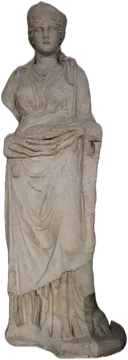
Mother · Sources
Most hateful to me art thou of all gods that hold Olympus, for ever is strife dear to thee and wars and fightings. Thou hast the unbearable, unyielding spirit of thy mother, even of Hera; her can I scarce control by my words. Wherefore it is by her promptings, meseems, that thou sufferest thus.
Fool, not even yet hast thou learned how much mightier than thou I avow me to be, that thou matchest thy strength with mine. On this wise shalt thou satisfy to the full the Avengers invoked of thy mother, who in her wrath deviseth evil against thee, for that thou hast deserted the Achaeans and bearest aid to the overweening Trojans.
Il. 5.892 · Il. 21.412
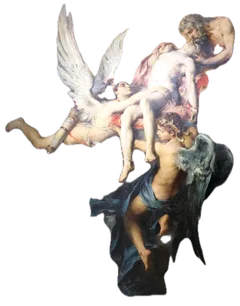
Brother through father · Sources
Братство или сестринство выведено из общего родителя: Зевс. Матери и отцы, не указанные в источнике, не предполагаются. Квалификация братства/сестринства: Илиада: Общий отец подтверждён; сведения о матерях неполны. Различие матерей не установлено. Общие родители: Зевс.
Wikidata: Гера — роль родителя · P25 Wikidata: Зевс — роль родителя · P22 Wikidata: Зевс — пол родителя · P21took furious Ares by the hand and spake to him, saying: Ares, Ares, thou bane of mortals, thou blood-stained stormer of walls, shall we not now leave the Trojans and Achaeans to fight, to whichsoever of the two it be that father Zeus shall vouchsafe glory? But for us twain, let us give place, and avoid the wrath of Zeus.
And when they were come near as they advanced one against the other, the son and grandson of Zeus the cloud-gatherer, then Tlepolemus was first to speak, saying: Sarpedon, counsellor of the Lycians, why must thou be skulking here, that art a man unskilled in battle?They speak but a lie that say thou art sprung from Zeus that beareth the aegis, seeing thou art inferior far to those warriors that were sprung from Zeus in the days of men of old. Of other sort, men say, was mighty Heracles, my father, staunch in fight, the lionhearted,
And Tlepolemus smote Sarpedon upon the left thigh with his long spear, and the point sped through furiously and grazed the bone; howbeit his father as yet warded from him destruction. Then his goodly companions bare godlike Sarpedon forth from out the fight, and the long spear burdened him sore,as it trailed, but no man marked it or thought in their haste to draw forth from his thigh the spear of ash, that he might stand upon his feet; such toil had they in tending him. And on the other side the well-greaved Achaeans bare Tlepolemus from out the fight, and goodly Odysseusof the enduring soul was ware of it, and his spirit waxed furious within him; and he pondered then in heart and soul whether he should pursue further after the son of Zeus that thundereth aloud, or should rather take the lives of more Lycians. But not for great-hearted Odysseus was it ordained
Il. 5.33 · Il. 5.634–635 · Il. 5.662–672 · Il. 5.675 · Il. 5.896 · Il. 6.198–199 · Il. 12.292 · Il. 12.402–403 · Il. 15.67 · Il. 16.522
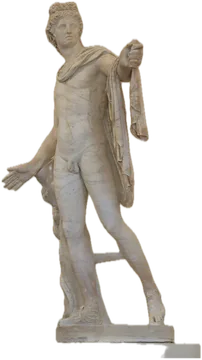
Paternal half-brother · Sources
Братство или сестринство выведено из общего родителя: Зевс. Матери и отцы, не указанные в источнике, не предполагаются. Квалификация братства/сестринства: Илиада: Общий отец; разные матери подтверждены. Общие родители: Зевс.
Wikidata: Гера — роль родителя · P25 Wikidata: Зевс — роль родителя · P22 Wikidata: Лето — роль родителя · P25 Wikidata: Зевс — роль родителя · P22from the time when first they parted in strife Atreus' son, king of men, and brilliant Achilles. Who then of the gods was it that brought these two together to contend? The son of Leto and Zeus; for he in anger against the king roused throughout the host an evil pestilence, and the people began to perish,
took furious Ares by the hand and spake to him, saying: Ares, Ares, thou bane of mortals, thou blood-stained stormer of walls, shall we not now leave the Trojans and Achaeans to fight, to whichsoever of the two it be that father Zeus shall vouchsafe glory? But for us twain, let us give place, and avoid the wrath of Zeus.
Howbeit I will no longer endure that thou shouldest be in pain, for thou art mine offspring, and it was to me that thy mother bare thee; but wert thou born of any other god, thus pestilent as thou art, then long ere this hadst thou been lower than the sons of heaven. He spake, and bade Paeëon heal his hurt;
Il. 1.9 · Il. 5.33 · Il. 5.896 · Il. 7.23 · Il. 15.236 · Il. 20.103 · Il. 21.229 · Il. 22.302
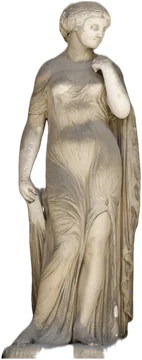
Paternal half-sister · Sources
Братство или сестринство выведено из общего родителя: Зевс. Матери и отцы, не указанные в источнике, не предполагаются. Квалификация братства/сестринства: Илиада: Общий отец; разные матери подтверждены. Общие родители: Зевс.
Гомер, Илиада — роль родителя · Ил. 3.236–238 Wikidata: Зевс — роль родителя · P22 Wikidata: Гера — роль родителя · P25 Wikidata: Зевс — роль родителя · P22His battle-gear lieth upon the bounteous earth, but himself he rangeth like the bell-wether of a herd through the ranks of warriors. Like a ram he seemeth to me, a ram of thick fleece, that paceth through a great flock of white ewes. To him made answer Helen, sprung from Zeus:
and hate thee, even as now I love thee wondrously; and lest I devise grievous hatred between both, Trojans alike and Danaans; then wouldst thou perish of an evil fate. So spake she, and Helen, sprung from Zeus, was seized with fear; and she went, wrapping herself in her bright shining mantle,
took furious Ares by the hand and spake to him, saying: Ares, Ares, thou bane of mortals, thou blood-stained stormer of walls, shall we not now leave the Trojans and Achaeans to fight, to whichsoever of the two it be that father Zeus shall vouchsafe glory? But for us twain, let us give place, and avoid the wrath of Zeus.
Il. 3.199 · Il. 3.418 · Il. 5.33 · Il. 5.896
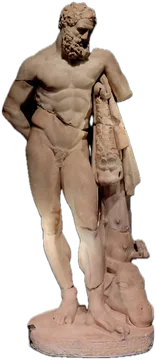
Paternal half-brother · Sources
Братство или сестринство выведено из общего родителя: Зевс. Матери и отцы, не указанные в источнике, не предполагаются. Квалификация братства/сестринства: Илиада: Общий отец; разные матери подтверждены. Общие родители: Зевс.
Wikidata: Гера — роль родителя · P25 Wikidata: Зевс — роль родителя · P22 Wikidata: Зевс — пол родителя · P21took furious Ares by the hand and spake to him, saying: Ares, Ares, thou bane of mortals, thou blood-stained stormer of walls, shall we not now leave the Trojans and Achaeans to fight, to whichsoever of the two it be that father Zeus shall vouchsafe glory? But for us twain, let us give place, and avoid the wrath of Zeus.
And so suffered monstrous Hades even as the rest a bitter arrow, when this same man, the son of Zeus that beareth the aegis, smote him in Pylos amid the dead, and gave him over to pains. But he went to the house of Zeus and to high Olympus with grief at heart, pierced through with pains;
Howbeit I will no longer endure that thou shouldest be in pain, for thou art mine offspring, and it was to me that thy mother bare thee; but wert thou born of any other god, thus pestilent as thou art, then long ere this hadst thou been lower than the sons of heaven. He spake, and bade Paeëon heal his hurt;
Il. 5.33 · Il. 5.396 · Il. 5.896 · Il. 8.363–365 · Il. 14.266 · Il. 14.324
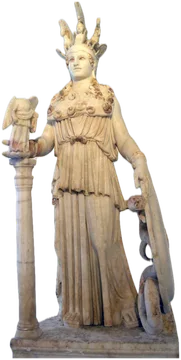
Sister through father · Sources
Братство или сестринство выведено из общего родителя: Зевс. Матери и отцы, не указанные в источнике, не предполагаются. Квалификация братства/сестринства: Илиада: Общий отец подтверждён; сведения о матерях неполны. Различие матерей не установлено. Общие родители: Зевс.
Wikidata: Гера — роль родителя · P25 Wikidata: Зевс — роль родителя · P22 Wikidata: Зевс — роль родителя · P22Then he addressed her with winged words, and said: Why now, daughter of aegis-bearing Zeus, have you come? Is it so that you might see the arrogance of Agamemnon, son of Atreus? One thing I will tell you, and I think this will be brought to pass: through his own excessive pride shall he presently lose his life.
And with him there followed forty black ships. And they that held Athens, the well-built citadel, the land of great-hearted Erechtheus, whom of old Athene, daughter of Zeus, fostered, when the earth, the giver of grain, had borne him; and she made him to dwell in Athens, in her own rich sanctuary,
So would many a one of Achaeans and Trojans speak. But Athene entered the throng of the Trojans in the guise of a man, even of Laodocus, son of Antenor, a valiant spearman, in quest of god-like Pandarus, if haply she might find him. And she found Lycaon's son, peerless and stalwart,
Il. 1.202 · Il. 2.548 · Il. 4.87 · Il. 4.128 · Il. 4.515 · Il. 5.33 · Il. 5.115 · Il. 5.421 · Il. 5.714 · Il. 5.733 · Il. 5.815 · Il. 5.875–880 · Il. 5.896 · Il. 6.303–304 · Il. 6.312 · Il. 7.24 · Il. 8.39 · Il. 8.352 · Il. 8.384 · Il. 8.427 · Il. 10.278 · Il. 10.284 · Il. 10.553 · Il. 19.342 · Il. 21.416 · Il. 22.178
See all 54
In art

Internet Archive Book Images. Zeus - a study in ancient religion (1914) (14802445683). собрание не указано. No restrictions. https://commons.wikimedia.org/wiki/File%3AZeus_-_a_study_in_ancient_religion_%281914%29_%2814802445683%29.jpg
Photograph / reproduction: Internet Archive Book Images
Photograph / reproduction date: 1914

Antonio Raffaele Calliano. Protected by Ares, Achilles Overwhelms Hector. собрание не указано. CC BY-SA 4.0. https://commons.wikimedia.org/wiki/File%3AProtected_by_Ares%2C_Achilles_Overwhelms_Hector.png
Photograph / reproduction: Antonio Raffaele Calliano
Photograph / reproduction date: 1815
Antonio Raffaele Calliano. Protected by Ares, Achilles Overwhelms Hector. собрание не указано. CC BY-SA 4.0. https://commons.wikimedia.org/wiki/File%3AProtected_by_Ares%2C_Achilles_Overwhelms_Hector.png
Photograph / reproduction: Antonio Raffaele Calliano
Photograph / reproduction date: 1815

Diego Velázquez. Mars Resting. Museo del Prado. Public domain. https://www.wikidata.org/wiki/Q1133875
Diego Velázquez. Mars Resting. Museo del Prado. Public domain. https://www.wikidata.org/wiki/Q1133875

Arthur Bowen Davies. Girdle of Ares. Metropolitan Museum of Art. CC0. https://www.wikidata.org/wiki/Q20176052
Arthur Bowen Davies. Girdle of Ares. Metropolitan Museum of Art. CC0. https://www.wikidata.org/wiki/Q20176052

Jacopo Tintoretto. Венера, Вулкан и Марс. Bavarian State Painting Collections. Public domain. https://www.wikidata.org/wiki/Q2393412
Jacopo Tintoretto. Венера, Вулкан и Марс. Bavarian State Painting Collections. Public domain. https://www.wikidata.org/wiki/Q2393412

Lambert Sustris. Венера и Амур (картина Сустриса). Department of Paintings of the Louvre. Public domain. https://www.wikidata.org/wiki/Q2513064
Lambert Sustris. Венера и Амур (картина Сустриса). Department of Paintings of the Louvre. Public domain. https://www.wikidata.org/wiki/Q2513064


Piero di Cosimo. Венера, Марс и Амур. Gemäldegalerie Berlin. Public domain. https://www.wikidata.org/wiki/Q4009550
Piero di Cosimo. Венера, Марс и Амур. Gemäldegalerie Berlin. Public domain. https://www.wikidata.org/wiki/Q4009550
See all 139
Sources and verification
The character is matched to the catalogue.
- Wikipedia · Ares · CC BY-SA 4.0
Excerpt; remaining sentences omitted.
Reference material remains distinct from the poem’s assertions. Characters who share a name retain separate pages.