Poseidon
God
Poseidon (; Ancient Greek: Ποσειδῶν, romanised: Poseidôn) is one of the twelve Olympians in ancient Greek religion and mythology, presiding over the sea, storms, earthquakes and horses. He was the protector of seafarers and the guardian of many Hellenic cities and colonies.
Explore on the graph- Mentions
- 55
- Connected characters
- 12
- Books
- 14


Mentions in the Iliad
A. T. Murray, Loeb Classical Library, Harvard University Press, 1924 · Homer, Iliad with an English Translation · CC BY-SA 3.0 US
“But you came, goddess, and freed him from his bonds, when you had quickly called to high Olympus him of the hundred hands, whom the gods call Briareus, but all men Aegaeon; for he is mightier than his father. He sat down by the side of the son of Cronos, exulting in his glory,”
“when they mingle in the pasture, so did their leaders marshal them on this side and on that to enter into the battle, and among them lord Agamemnon, his eyes and head like unto Zeus that hurleth the thunderbolt, his waist like unto Ares, and his breast unto Poseidon.”
“And among them Poseidon, the Shaker of Earth, was first to speak: Father Zeus, is there now anyone of mortals on the face of the boundless earth, that will any more declare to the immortals his mind and counsel? Seest thou not that now again the long-haired Achaeans have builded them a wall to defend their ships, and about it have drawn a trench,”
“Ah me, thou Shaker of Earth, wide of sway, what a thing thou hast said! Another of the gods might haply fear this device, whoso was feebler far than thou in hand and might; whereas thy fame shall of a surety reach as far as the dawn spreadeth. Go to now, when once the long-haired Achaeans have gone with their ships to their dear native land,”
“and to the mighty god Poseidon she spake, saying: Ah me, thou Shaker of Earth, wide of sway, not even hath the heart in thy breast pity of the Danaans that are perishing. Yet in thine honour do they bring to Helice and Aegae offerings many and gracious and hitherto thou didst wish them victory.”
“For did we but will, all we that are aiders of the Danaans, to drive back the Trojans and to withhold Zeus whose voice is borne afar, then, in vexation of spirit, would he sit alone there upon Ida. Then, his heart sore troubled, the lord, the Shaker of Earth, spake to her: Hera, reckless in speech, what a word hast thou spoken!”
“And for him the famed Shaker of Earth both unyoked his horses and set the car upon a stand, and spread thereover a cloth; and Zeus, whose voice is borne afar, himself sat upon his throne of gold, and beneath his feet great Olympus quaked. Only Athene and Hera”
See all 54
“laid straight command upon them with many a glance at each, and chiefly upon Odysseus, that they should make essay to persuade the peerless son of Peleus. So the twain went their way along the shore of the loud-resounding sea, with many an instant prayer to the god that holdeth the earth and shaketh it, that they might easily persuade the great heart of the son of Aeacus.”
“Thence with all speed, arrayed in our armour, we came at midday to the sacred stream of Alpheius. There we sacrificed goodly victims to Zeus, supreme in might, and a bull to Alpheius, and a bull to Poseidon, but to flashing-eyed Athene a heifer of the herd;”
“And now had I slain the two Moliones, of the blood of Actor, but that their father, the wide-ruling Shaker of Earth, saved them from war, and shrouded them in thick mist. Then Zeus vouchsafed great might to the men of Pylos, for so long did we follow through the wide plain,”
“and the city of Priam was sacked in the tenth year, and the Argives had gone back in their ships to their dear native land, then verily did Poseidon and Apollo take counsel to sweep away the wall, bringing against it the might of all the rivers that flow forth from the mountains of Ida to the sea—”
“and for nine days' space he drave their flood against the wall; and Zeus rained ever continually, that the sooner he might whelm the wall in the salt sea. And the Shaker of Earth, bearing his trident in his hands, was himself the leader, and swept forth upon the waves all the foundations of beams and stones, that the Achaeans had laid with toil,”
“But the lord, the Shaker of Earth, kept no blind watch, for he sat marvelling at the war and the battle, high on the topmost peak of wooded Samothrace, for from thence all Ida was plain to see; and plain to see were the city of Priam, and the ships of the Achaeans.”
“right swiftly sped they on, and the axle of bronze was not wetted beneath; and unto the ships of the Achaeans did the prancing steeds bear their lord. There is a wide cavern in the depths of the deep mere, midway between Tenedos and rugged Imbros. There Poseidon,the Shaker of Earth, stayed his horses,”
“Hector, son of Priam, with loud shouts and cries, and they deemed that they would take the ships of the Achaeans, and slay thereby all the bravest. Howbeit Poseidon, the Enfolder and Shaker of Earth, set him to urge on the Argives, when he had come forth from the deep sea,”
“But in the hearts of you twain may some god put it, here to stand firm yourselves, and to bid others do the like; so might ye drive him back from the swift-faring ships, despite his eagerness, aye, even though the Olympian himself be urging him on. Therewith the Enfolder and Shaker of Earth”
“Hector, Priam's son, that rageth incessantly. On this wise spake they one to the other, rejoicing in the fury of fight which the god put in their hearts; and meanwhile the Enfolder of Earth roused the Achaeans that were in the rear beside the swift ships, and were refreshing their hearts.”
“Thus did the Earth-enfolder arouse the Achaeans with his word of command, and round about the twain Aiantes their battalions took their stand, so strong in might, that not Ares might have entered in and made light of them, nor yet Athene, the rouser of hosts; for they that were the chosen bravest abode the onset of the Trojans and goodly Hector,”
“and it fell in the dust before the feet of Hector. Then verily Poseidon waxed mightily wroth at heart when his son's son fell in the dread conflict, and he went his way along the huts and ships of the Achaeans to arouse the Danaans; but for the Trojans was he fashioning woes.”
“and the lord, the Shaker of Earth, spake to him, likening his voice to that of Andraemon's son Thoas, that in all Pleuron and steep Calydon was lord over the Aetolians, and was honoured of the folk even as a god: Idomeneus, thou counsellor of the Cretans, where now I pray thee,”
“but was fain only to give glory to Thetis and to her son, strong of heart. But Poseidon went among the Argives and urged them on, stealing forth secretly from the grey sea; for it vexed him that they were being overcome by the Trojans, and against Zeus was he exceeding wroth. Both the twain verily were of one stock and of one parentage,”
“whom her father and queenly mother heartily loved in their hall, for that she excelled all maidens of her years in comeliness, and in handiwork, and in wisdom; wherefore the best man in wide Troy had taken her to wife—this Alcathous did Poseidon subdue beneath Idomeneus,”
“But Antilochus leapt upon him and set him to strip the armour from off his shoulders, looking warily around the while; for the Trojans encircled him and thrust from this side and from that upon his broad, shining shield; howbeit they prevailed not to pierce through and graze the tender flesh of Antilochus with the pitiless bronze; for mightily did Poseidon, the Shaker of Earth,”
“But as he was aiming amid the throng he was not unmarked of Adamas, son of Asius, who smote him full upon the shield with a thrust of the sharp bronze, setting upon him from nigh at hand. But the spear-point was made of none avail by Poseidon, the dark-haired god,”
“that on the left of the ships his hosts were being slain by the Argives; and soon would the Achaeans have gotten them glory, of such might was the Enfolder and Shaker of Earth that urged on the Argives and withal aided them by his own strength. Nay, Hector pressed on where at the first he had leapt within the gate and the wall,”
“as he went busily about in the battle where men win glory, her own brother and her lord's withal; and she was glad at heart. And Zeus she marked seated on the topmost peak of many-fountained Ida, and hateful was he to her heart. Then she took thought, the ox-eyed, queenly Hera,”
“to bear word to the Enfolder and Shaker of Earth. And he came up to him, and spake winged words, saying: With a ready heart now, Poseidon, do thou bear aid to the Danaans, and vouchsafe them glory, though it be for a little space, while yet Zeus sleepeth; for over him have I shed soft slumber,”
“and Hera hath beguiled him to couch with her in love. So spake he and departed to the glorious tribes of men, but Poseidon he set on yet more to bear aid to the Danaans. Forthwith then he leapt forth amid the foremost, and cried aloud: Argives, are we again in good sooth to yield victory to Hector,”
“even the son of Tydeus, and Odysseus, and Atreus' son Agamemnon. And going throughout all the host, they made exchange of battle-gear. In good armour did the good warrior harness him, and to the worse they gave the worse. Then when they had clothed their bodies in gleaming bronze, they set forth, and Poseidon, the Shaker of Earth, led them,”
“when once the famed Shaker of Earth had turned the battle. Aias verily was first, the son of Telamon. He smote Hyrtius, the son of Gyrtius, leader of the Mysians stalwart of heart; and Antilochus stripped the spoils from Phalces and Mermerus, and Meriones slew Morys and Hippotion,”
“on the peaks of Ida beside Hera of the golden throne. Then he sprang up, and stood, and saw Trojans alike and Achaeans, these in rout, and the Argives driving them on from the rear, and amid them the lord Poseidon. And Hector he saw lying on the plain, while about him sat his comrades,”
“whereby I verily would never forswear myself —not by my will doth Poseidon, the Shaker of Earth, work harm to the Trojans and Hector, and give succour to their foes. Nay, I ween, it is his own soul that urgeth and biddeth him on, and he hath seen the Achaeans sore-bested by their ships and taken pity upon them.”
“thy thought hereafter were to be one with my thought as thou sittest among the immortals, then would Poseidon, how contrary soever his wish might be, forthwith bend his mind to follow thy heart and mine. But if verily thou speakest in frankness and in truth, go thou now among the tribes of gods and call”
“and at sight of them his heart waxed nowise wroth, for that they had speedily obeyed the words of his dear wife. And to Iris first he spake winged words: Up, go, swift Iris; unto the lord Poseidon bear thou all these tidings, and see thou tell him true.”
“Out upon it, verily strong though he be he hath spoken overweeningly, if in sooth by force and in mine own despite he will restrain me that am of like honour with himself. For three brethren are we, begotten of Cronos, and born of Rhea,—Zeus, and myself, and the third is Hades, that is lord of the dead below. And in three-fold wise are all things divided, and unto each hath been apportioned his own domain.”
“Then answered her again Poseidon, the Shaker of Earth: Goddess Iris, this word of thine is right fitly spoken; and a good thing verily is this, when a messenger hath an understanding heart. But herein dread grief cometh upon my heart and soul, whenso any is minded to upbraid with angry words”
“and of Hera, and Hermes, and lord Hephaestus, he shall spare steep Ilios, and shall be minded not to lay it waste, neither to give great might to the Argives, let him know this, that between us twain shall be wrath that naught can appease. So saying, the Shaker of Earth left the host of the Achaeans, and fared to the sea and plunged therein; and the Achaean warriors missed him sore.”
“And being come to the house of Zeus they sate them down within the polished colonnades which for father Zeus Hephaestus had builded with cunning skill. Thus were they gathered within the house of Zeus; nor did the Shaker of Earth fail to heed the call of the goddess, but came forth from the sea to join their company;”
“So spake the son of Cronos, and roused war unabating. And the gods went their way into the battle, being divided in counsel: Hera gat her to the gathering of the ships, and with her Pallas Athene, and Poseidon, the Shaker of Earth, and the helper Hermes, that was beyond all in the cunning of his mind;”
“clash in battle, and amid them made grievous strife to burst forth. Then terribly thundered the father of gods and men from on high; and from beneath did Poseidon cause the vast earth to quake, and the steep crests of the mountains. All the roots of many-fountained Ida were shaken,”
“Consider within your hearts, ye twain, O Poseidon and Athene, how these things are to be. Lo, here is Aeneas, gone forth, harnessed in flaming bronze, to face the son of Peleus, and it is Phoebus Apollo that hath set him on.”
“he shall have dread hereafter when some god shall come against him in battle; for hard are the gods to look upon when they appear in manifest presence. Then Poseidon, the Shaker of Earth, answered her: Hera, be not thou wroth beyond what is wise; thou needest not at all. I verily were not fain to make gods clash”
“and the son of Peleus in close combat would with his sword have robbed Aeneas of life, had not Poseidon, the Shaker of Earth, been quick to see. And forthwith he spake among the immortal gods, saying: Now look you, verily have I grief for great-hearted Aeneas, who anon shall go down to the house of Hades,”
“Shaker of Earth, of thine own self take counsel in thine heart as touching Aeneas, whether thou wilt save him or suffer him to be slain for all his valour by Achilles, Peleus' son. We twain verily, even Pallas Athene and I,”
“have sworn oaths full many among the immortals never to ward off from the Trojans the day of evil, nay, not when all Troy shall burn in the burning of consuming fire, and the warlike sons of the Achaeans shall be the burners thereof. Now when Poseidon, the Shaker of Earth, heard this, he went his way amid the battle and the hurtling of spears,”
“So saying he left him there, when he had told him all. Then quickly from Achilles' eyes he scattered the wondrous mist; and he stared hard with his eyes, and mightily moved spake unto his own great-hearted spirit: Now look you, verily a great marvel is this that mine eyes behold.”
“was scattered about within; so stayed he him in his fury. Hippodamas thereafter, as he leapt down from his car and fled before him, he smote upon the back with a thrust of his spear. And as he breathed forth his spirit he gave a bellowing cry, even as a bull that is dragged belloweth, when young men drag him about the altar of the lord of Helice;”
“then had a brave man been the slayer, and a brave man had he slain. But now by a miserable death was it appointed me to be cut off, pent in the great river, like a swine-herd boy whom a torrent sweepeth away as he maketh essay to cross it in winter. So spake he, and forthwith Poseidon and Pallas Athene”
“But unto Apollo spake the lord Poseidon, the Shaker of Earth: Phoebus, wherefore do we twain stand aloof? It beseemeth not, seeing others have begun. Nay, it were the more shameful, if without fighting we should fare back to Olympus, to the house of Zeus with threshold of bronze. Begin, since thou art the younger;”
“in utter ruin with their children and their honoured wives. Then spake unto him lord Apollo, that worketh afar: Shaker of Earth, as nowise sound of mind wouldest thou count me, if I should war with thee for the sake of mortals, pitiful creatures, that like unto leaves”
“surely it were I that should win the first prize, and bear it to my hut; for ye know how far my horses twain surpass in excellence, seeing they are immortal, and it was Poseidon that gave them to my father Peleus, and he gave them to me. Howbeit I verily will abide, I and my single-hooved horses,”
“to him for his profit — a wise man to one that himself had knowledge. Antilochus, for all thou art young, yet have Zeus and Poseidon loved thee and taught thee all manner of horsemanship; wherefore to teach thee is no great need, for thou knowest well how to wheel about the turning-post; yet are thy horses slowest in the race: therefore I deem there will be sorry work for thee. The horses of the others are swifter, but the men know not how to devise more cunning counsel than thine own self. Wherefore come, dear son, lay thou up in thy mind cunning of every sort, to the end that the prizes escape thee not.”
“none other of the Danaans shall reproach me, for my judgement shall be just. Antilochus, fostered of Zeus, up, come thou hither and, as is the appointed way, stand thou before thy horses and chariot, and take in hand the slender lash with which aforetimethou wast wont to drive, and laying thy hand on thy horses swear by him that holdeth and shaketh the earth”
“And the thing was pleasing unto all the rest, yet not unto Hera or Poseidon or the flashing-eyed maiden, but they continued even as when at the first sacred Ilios became hateful in their eyes and Priam and his folk, by reason of the sin of Alexander, for that he put reproach upon those goddesses when they came to his steading,”
Connections
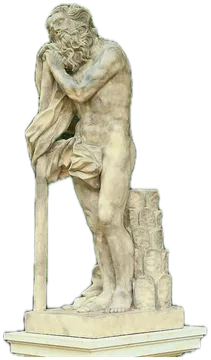
Father · Sources
Говорит Посейдон: «Трое нас братьев»; в следующем стихе — «Зевс и я, а третий — Аид».
Out upon it, verily strong though he be he hath spoken overweeningly, if in sooth by force and in mine own despite he will restrain me that am of like honour with himself. For three brethren are we, begotten of Cronos, and born of Rhea,—Zeus, and myself, and the third is Hades, that is lord of the dead below. And in three-fold wise are all things divided, and unto each hath been apportioned his own domain.I verily, when the lots were shaken, won for my portion the grey sea to be my habitation for ever, and Hades won the murky darkness, while Zeus won the broad heaven amid the air and the clouds; but the earth and high Olympus remain yet common to us all. Wherefore will I not in any wise walk after the will of Zeus; nay in quiet
Il. 15.185–192
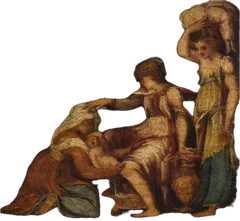
Mother · Sources
Говорит Посейдон: «Трое нас братьев»; в следующем стихе — «Зевс и я, а третий — Аид».
Out upon it, verily strong though he be he hath spoken overweeningly, if in sooth by force and in mine own despite he will restrain me that am of like honour with himself. For three brethren are we, begotten of Cronos, and born of Rhea,—Zeus, and myself, and the third is Hades, that is lord of the dead below. And in three-fold wise are all things divided, and unto each hath been apportioned his own domain.I verily, when the lots were shaken, won for my portion the grey sea to be my habitation for ever, and Hades won the murky darkness, while Zeus won the broad heaven amid the air and the clouds; but the earth and high Olympus remain yet common to us all. Wherefore will I not in any wise walk after the will of Zeus; nay in quiet
Il. 15.185–192
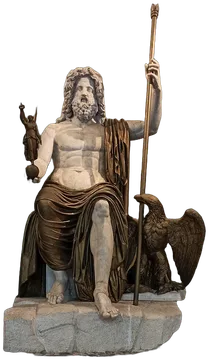
Brother · Sources
Квалификация братства/сестринства: Илиада: Общие отец и мать подтверждены. Общие родители: Рея, Кронос.
Wikidata: Рея — роль родителя · P25 Wikidata: Кронос — роль родителя · P22Квалификация братства/сестринства: Илиада: Общие отец и мать подтверждены. Общие родители: Рея, Кронос.
Wikidata: Рея — роль родителя · P25 Wikidata: Кронос — роль родителя · P22but was fain only to give glory to Thetis and to her son, strong of heart. But Poseidon went among the Argives and urged them on, stealing forth secretly from the grey sea; for it vexed him that they were being overcome by the Trojans, and against Zeus was he exceeding wroth. Both the twain verily were of one stock and of one parentage,but Zeus was the elder born and the wiser. Therefore it was that Poseidon avoided to give open aid, but secretly sought ever to rouse the Argives throughout the host, in the likeness of a man. So these twain knotted the ends of the cords of mighty strife and evil war, and drew them taut over both armies,
Out upon it, verily strong though he be he hath spoken overweeningly, if in sooth by force and in mine own despite he will restrain me that am of like honour with himself. For three brethren are we, begotten of Cronos, and born of Rhea,—Zeus, and myself, and the third is Hades, that is lord of the dead below. And in three-fold wise are all things divided, and unto each hath been apportioned his own domain.
Il. 13.354–355 · Il. 15.187–188
Claim of seniority and greater strength · Sources
Bid him cease from war and battle, and go to join the tribes of gods, or into the bright sea. And if so be he will not obey my words, but shall set them at naught, let him bethink him then in mind and heart, lest, how strong soever he be, he have no hardihood to abide my on-coming;for I avow me to be better far than he in might, and the elder born. Yet his heart counteth it but a little thing to declare himself the peer of me of whom even the other gods are adread. So spake he, and wind-footed, swift Iris failed not to hearken, but went down from the hills of Ida to sacred Ilios.
Il. 15.164–167
Connection · Sources
it were not meet for me, seeing I am the elder-born and know the more. Fool, how witless is the heart thou hast! Neither rememberest thou all the woes that we twain alone of all the gods endured at Ilios, what time we came
Il. 21.443
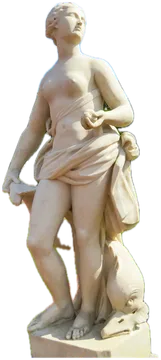
Wife · Sources
Apollodorus identifies Amphitrite as a Nereid and explicitly says Poseidon wedded her.
Apollodorus, Library · Apollodorus, Library 1.2.7; 1.4.4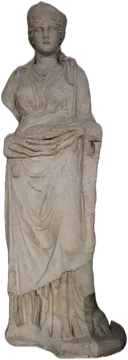
Sister through father · Sources
Квалификация братства/сестринства: Илиада: Общий отец подтверждён; сведения о матерях неполны. Различие матерей не установлено. Общие родители: Кронос.
Wikidata: Кронос — роль родителя · P22as he went busily about in the battle where men win glory, her own brother and her lord's withal; and she was glad at heart. And Zeus she marked seated on the topmost peak of many-fountained Ida, and hateful was he to her heart. Then she took thought, the ox-eyed, queenly Hera,
Il. 14.155
Brother · Sources
Квалификация братства/сестринства: Илиада: Общие отец и мать подтверждены. Общие родители: Рея, Кронос.
Wikidata: Рея — роль родителя · P25 Wikidata: Кронос — роль родителя · P22Out upon it, verily strong though he be he hath spoken overweeningly, if in sooth by force and in mine own despite he will restrain me that am of like honour with himself. For three brethren are we, begotten of Cronos, and born of Rhea,—Zeus, and myself, and the third is Hades, that is lord of the dead below. And in three-fold wise are all things divided, and unto each hath been apportioned his own domain.
Il. 15.187–188
Sister · Sources
Братство или сестринство выведено из общего родителя: Рея, Кронос. Матери и отцы, не указанные в источнике, не предполагаются. Квалификация братства/сестринства: Полнота родства и линия общего родителя не установлены.
Hesiod, Theogony (H. G. Evelyn-White) · Hesiod, Theogony 453–458Out upon it, verily strong though he be he hath spoken overweeningly, if in sooth by force and in mine own despite he will restrain me that am of like honour with himself. For three brethren are we, begotten of Cronos, and born of Rhea,—Zeus, and myself, and the third is Hades, that is lord of the dead below. And in three-fold wise are all things divided, and unto each hath been apportioned his own domain.I verily, when the lots were shaken, won for my portion the grey sea to be my habitation for ever, and Hades won the murky darkness, while Zeus won the broad heaven amid the air and the clouds; but the earth and high Olympus remain yet common to us all. Wherefore will I not in any wise walk after the will of Zeus; nay in quiet
Il. 15.185–192
See all 12
In art

Noël Hallé. Musée Baron-Martin 024. Department of Paintings of the Louvre. CC BY-SA 4.0. https://www.wikidata.org/wiki/Q106640735
Noël Hallé. Musée Baron-Martin 024. Department of Paintings of the Louvre. CC BY-SA 4.0. https://www.wikidata.org/wiki/Q106640735

Félix Boisselier. La mort de Démosthène. Department of Paintings of the Louvre. Public domain. https://www.wikidata.org/wiki/Q29864468
Félix Boisselier. La mort de Démosthène. Department of Paintings of the Louvre. Public domain. https://www.wikidata.org/wiki/Q29864468

Bon Boullogne. Triumph of Neptune. Musée des Beaux-Arts de Tours. Public domain. https://www.wikidata.org/wiki/Q58237571
Bon Boullogne. Triumph of Neptune. Musée des Beaux-Arts de Tours. Public domain. https://www.wikidata.org/wiki/Q58237571

Laomedon Refusing Payment to Poseidon and Apollo. Hunterian Museum and Art Gallery. Public domain. https://www.wikidata.org/wiki/Q104872325
Laomedon Refusing Payment to Poseidon and Apollo. Hunterian Museum and Art Gallery. Public domain. https://www.wikidata.org/wiki/Q104872325

Constantin Hansen. Pallas Athene, followed by the god of victory Nike, disputes with Poseidon.. Public domain. https://www.wikidata.org/wiki/Q116192820
Constantin Hansen. Pallas Athene, followed by the god of victory Nike, disputes with Poseidon.. Public domain. https://www.wikidata.org/wiki/Q116192820

Jan Gossaert. Нептун и Амфитрита. Gemäldegalerie Berlin. Public domain. https://www.wikidata.org/wiki/Q12133475
Jan Gossaert. Нептун и Амфитрита. Gemäldegalerie Berlin. Public domain. https://www.wikidata.org/wiki/Q12133475

Edvard Weie. Poseidon Rushing over the Sea Surrounded by Nereids and Tritons. Statens Museum for Kunst. Public domain. https://www.wikidata.org/wiki/Q20386894
Edvard Weie. Poseidon Rushing over the Sea Surrounded by Nereids and Tritons. Statens Museum for Kunst. Public domain. https://www.wikidata.org/wiki/Q20386894
See all 203
Sources and verification
The character is matched to the catalogue.
- Wikipedia · Poseidon · CC BY-SA 4.0
Excerpt; remaining sentences omitted.
Reference material remains distinct from the poem’s assertions. Characters who share a name retain separate pages.