Odysseus
Mortal man
In Greek and Roman mythology, Odysseus ( , US also ; Ancient Greek: Ὀδυσσεύς, Ὀδυσεύς, romanized: Odysseús, Odyseús, IPA: [o.dy(s̠).s̠ěu̯s̠]), also known by the Latin variant Ulysses (, UK also ; Latin: Ulysses, Ulixes), is a legendary Greek king of Ithaca and the hero of Homer's epic poem, the Odyssey. Odysseus also plays a key role in Homer's Iliad and other works in that same epic cycle.
Explore on the graph- Mentions
- 90
- Connected characters
- 30
- Books
- 15


Mentions in the Iliad
A. T. Murray, Loeb Classical Library, Harvard University Press, 1924 · Homer, Iliad with an English Translation · CC BY-SA 3.0 US
“suiting it to my mind, so that it will be worth just as much—but if they do not, I myself will come and take your prize, or that of Aias, or that of Odysseus I will seize and bear away. Angry will he be, to whomever I come. But these things we will consider hereafter.”
“and Odysseus of many wiles went on board to take command. So these embarked and sailed over the watery ways; but the son of Atreus bade the people purify themselves. And they purified themselves, and cast the defilement into the sea, and offered to Apollo perfect hecatombs”
“came to Chryse bringing the holy hecatomb. When they had arrived within the deep harbour, they furled the sail, and stowed it in the black ship, and the mast they lowered by the forestays and brought it to the crutch with speed, and rowed her with oars to the place of anchorage.”
“So saying he placed her in his arms, and he joyfully took his dear child; but they made haste to set in array for the god the holy hecatomb around the well-built altar, and then they washed their hands and took up the barley grains. Then Chryses lifted up his hands, and prayed aloud for them:”
“neither suffer them to draw into the sea their curved ships. So spake she, and the goddess, flashing-eyed Athene, failed not to hearken. Down from the peaks of Olympus she went darting, and speedily came to the swift ships of the Achaeans. There she found Odysseus, the peer of Zeus in counsel,”
“But himself he went straight to Agamemnon, son of Atreus, and received at his hand the staff of his fathers, imperishable ever, and therewith went his way along the ships of the brazen-coated Achaeans. Whomsoever he met that was a chieftain or man of note, to his side would he come and with gentle words seek to restrain him, saying:”
“Hateful was he to Achilles above all, and to Odysseus, for it was they twain that he was wont to revile; but now again with shrill cries he uttered abuse against goodly Agamemnon. With him were the Achaeans exceeding wroth, and had indignation in their hearts. Howbeit with loud shoutings he spake and chid Agamemnon:”
See all 88
“for he hath taken away, and keepeth his prize by his own arrogant act. Of a surety there is naught of wrath in the heart of Achilles; nay, he heedeth not at all; else, son of Atreus, wouldest thou now work insolence for the last time. So spake Thersites, railing at Agamemnon, shepherd of the host. But quickly to his side came goodly Odysseus,”
“But the Achaeans, sore vexed at heart though they were, broke into a merry laugh at him, and thus would one speak with a glance at his neighbour: Out upon it! verily hath Odysseus ere now wrought good deeds without number as leader in good counsel and setting battle in army, but now is this deed far the best that he hath wrought among the Argives,”
“in the likeness of a herald, bade the host keep silence, that the sons of the Achaeans, both the nearest and the farthest, might hear his words, and lay to heart his counsel. He with good intent addressed their gathering and spake among them: Son of Atreus, now verily are the Achaeans minded to make thee, O king,”
“as they praised the words of godlike Odysseus. And there spake among them the horseman, Nestor of Gerenia: Now look you; in very truth are ye holding assembly after the manner of silly boys that care no whit for deeds of war. What then is to be the end of our compacts and our oaths?”
“Nestor, first of all, and king Idomeneus, and thereafter the twain Aiantes and the son of Tydeus, and as the sixth Odysseus, the peer of Zeus in counsel. And unbidden came to him Menelaus, good at the war-cry, for he knew in his heart wherewith his brother was busied.”
“And with Meges there followed forty black ships. And Odysseus led the great-souled Cephallenians that held Ithaca and Neritum, covered with waving forests, and that dwelt in Crocyleia and rugged Aegilips; and them that held Zacynthus, and that dwelt about Samos,”
“and held the mainland and dwelt on the shores over against the isles. Of these was Odysseus captain, the peer of Zeus in counsel. And with him there followed twelve ships with vermilion prows. And the Aetolians were led by Thoas, Andraemon's son, even they that dwelt in Pleuron and Olenus and Pylene and Chalcis, hard by the sea, and rocky Calydon. For the sons of great-hearted Oeneus were no more, neither did he himself still live, and fair-haired Meleager was dead, to whom had commands been given that he should bear full sway among the Aetolians. And with Thoas there followed forty black ships.”
“Howbeit not even they were as many as are the bright-eyed Achaeans. And next the old man saw Odysseus, and asked: Come now, tell me also of yonder man, dear child, who he is. Shorter is he by a head than Agamemnon, son of Atreus, but broader of shoulder and of chest to look upon.”
“for erstwhile on a time goodly Odysseus came hither also on an embassy concerning thee, together with Menelaus, dear to Ares; and it was I that gave them entertainment and welcomed them in my halls, and came to know the form and stature of them both and their cunning devices. Now when they mingled with the Trojans, as they were gathered together,”
“they stepped forth from the chariot upon the bounteous earth, and went into the midst of the Trojans and Achaeans. Straightway then rose up Agamemnon, king of men, and Odysseus of many wiles, and the lordly heralds brought together the offerings for the holy oaths of the gods, and mixed the wine in the bowl,”
“So spake the godlike man, and let place the lambs in his chariot, and himself mounted, and drew back the reins, and by his side Antenor mounted the beauteous car; and the twain departed back to Ilios. But Hector, Priam's son, and goodly Odysseus”
“who are more youthful than I and have confidence in their strength. So spake he, and the son of Atreus passed on glad at heart. He found Menestheus, driver of horses, son of Peteos, as he stood, and about him were the Athenians, masters of the war-cry. And hard by stood Odysseus of many wiles,”
“Then are ye glad to eat roast meat and drink cups of honey-sweet wine as long as ye will. But now would ye gladly behold it, aye if ten serried battalions of the Achaeans were to fight in front of you with the pitiless bronze. Then with an angry glance from beneath his brows Odysseus of many wiles addressed him:”
“for I know that the heart in thy breast knoweth kindly thoughts, seeing thou art minded even as I am. Nay, come, these things will we make good hereafter, if any harsh word hath been spoken now; and may the gods make all to come to naught. So saying he left them there and went to others.”
“cast with his sharp spear amid the throng. Him he missed, but smote in the groin Odysseus' goodly comrade, Leucus, as he was drawing the corpse to the other side; so he fell upon it, and the body slipped from his grasp. For his slaying waxed Odysseus mightily wroth at heart,”
“and strode amid the foremost warriors, harnessed in flaming bronze; close to the foe he came and took his stand, and glancing warily about him hurled with his bright spear; and back did the Trojans shrink from the warrior as he cast. Not in vain did he let fly his spear, but smote Priam's bastard son Democoon,”
“as they saw him come to join them alive and whole and possessed of valiant courage. Howbeit they questioned him not at all, for toil of other sort forbade them, even that which he of the silver bow was stirring, and Ares the bane of mortals, and Discord that rageth without ceasing. On the other side the Aiantes twain and Odysseus and Diomedes”
“of the enduring soul was ware of it, and his spirit waxed furious within him; and he pondered then in heart and soul whether he should pursue further after the son of Zeus that thundereth aloud, or should rather take the lives of more Lycians. But not for great-hearted Odysseus was it ordained”
“and Odysseus with his spear of bronze laid low Pidytes of Percote, and Teucer goodly Aretaon. And Antilochus, son of Nestor, slew Ablerus with his bright spear, and the king of men, Agamemnon, slew Elatus that dwelt in steep Pedasus by the banks of fair-flowing Satnioeis.”
“and after them Idomeneus and Idomeneus' comrade Meriones, the peer of Enyalius, slayer of men, and after them Eurypylus, the glorious son of Euaemon; and upsprang Thoas, son of Andraemon, and goodly Odysseus; all these were minded to do battle with goodly Hector.”
“even Hector. And now would the old man here have lost his life, had not Diomedes, good at the war-cry, been quick to see; and he shouted with a terrible shout, urging on Odysseus: Zeus-born son of Laërtes, Odysseus of many wiles, whither fleest thou with thy back turned, like a coward in the throng?”
“So he went his way along the huts and ships of the Achaeans, bearing his great purple cloak in his stout hand, and took his stand by Odysseus' black ship, huge of hull, that was in the midst so that a shout could reach to either end, both to the huts of Aias, son of Telamon,”
“Come, therefore, let us send forth chosen men to go forthwith to the hut of Peleus' son, Achilles. Nay, rather, whomsoever I shall choose, let them consent. First of all let Phoenix, dear to Zeus, lead the way, and after him great Aias and goodly Odysseus;”
“and Patroclus alone sat over against him in silence, waiting until Aeacus' son should cease from singing. But the twain came forward and goodly Odysseus led the way, and they took their stand before his face; and Achilles leapt up in amazement with the lyre in his hand, and left the seat whereon he sat;”
“Patroclus took bread and dealt it forth on the table in fair baskets, while Achilles dealt the meat. Himself he sate him down over against godlike Odysseus, by the other wall, and bade Patroclus, his comrade, offer sacrifice to the gods;”
“and Patroclus cast burnt-offering into the fire. So they put forth their hands to the good cheer lying ready before them. But when they had put from them the desire of food and drink, Aias nodded to Phoenix; and goodly Odysseus was ware thereof, and filling a cup with wine he pledged Achilles:”
“His prayer is that with all speed sacred Dawn may appear, for he declareth that he will hew from the ships' sterns the topmost ensigns, and burn the very hulls with consuming fire, and amidst them make havoc of the Achaeans, distraught by reason of the smoke. This then is the great fear of my heart, lest the gods fulfill for him his boastings, and it be our fate to”
“and put from thee thy bitter wrath. To thee Agamemnon offereth worthy gifts, so thou wilt cease from thine anger. Nay come, hearken thou to me, and I will tell the tale of all the gifts that in his hut Agamemnon promised thee: seven tripods, that the fire hath not touched, and ten talents of gold”
“in his baneful rage, for he deemeth there is no man like unto him among the Danaans that the ships brought hither. Then in answer to him spake swift-footed Achilles: Zeus-born son of Laërtes, Odysseus of many wiles, needs must I verily speak my word outright, even as I am minded,”
“let him not tempt me that know him well; he shall not persuade me. Nay, Odysseus, together with thee and the other princes let him take thought to ward from the ships consuming fire. Verily full much hath he wrought without mine aid; lo, he hath builded a wall and digged a ditch hard by,”
“He spake and to Patroclus nodded his brow in silence that he should spread for Phoenix a thick couch, that the others might forthwith bethink them to depart from the hut. But among them Aias, the godlike son of Telamon, spake, saying: Zeus—born son of Laërtes, Odysseus of many wiles,”
“I deem that Hector will be stayed, eager though he be for battle. So spake he, but they took each man a two handled cup, and when they had made libation went their way along the lines of ships, and Odysseus led. But Patroclus bade his comrades and the handmaids spread forthwith a thick couch for Phoenix;”
“the sons of the Achaeans stood up on this side and that and pledged them in cups of gold, and questioned them, and the king of men, Agamemnon, was the first to ask: Come, tell me now, Odysseus, greatly to be praised, thou great glory of the Achaeans, is he minded to ward off consuming fire from the ships,”
“But the old man Phoenix laid him down there to rest, for so Achilles bade, that he may follow with him on his ships to his dear native land on the morrow, if he will, but perforce will he not take him. So spake he, and they all became hushed in silence marvelling at his words; for full masterfully did he address their gathering.”
“even all that now he thinketh; nay methinks he shall labour amid troubles yet more than ours, if so be Achilles shall turn his heart from grievous anger. Howbeit with thee will I gladly follow, but let us moreover arouse others also, both the son of Tydeus, famed for his spear, and Odysseus,”
“And he grasped a mighty spear, tipped with sharp bronze, and went his way among the ships of the brazen-coated Achaeans. Then Odysseus first, the peer of Zeus in counsel, did the horseman, Nestor of Gerenia, awaken out of sleep with his voice, and forthwith the call rang all about his mind”
“be not thou wroth, for great sorrow hath overmastered the Achaeans. Nay, follow, that we may arouse another also, whomsoever it behoveth to take counsel, whether to flee or to fight. So spake he, and Odysseus of many wiles went to the hut and cast about his shoulders a shield richly dight, and followed after them.”
“fain was the son of Atreus, Menelaus, famed for his spear, and fain too was the stead-fast Odysseus to steal into the throng of the Trojans, for ever daring was the spirit in his breast. Then among them spake the king of men, Agamemnon: Diomedes, son of Tydeus, dear to my heart,”
“So said he, since he feared for the sake of fair-haired Menelaus. But among them spake again Diomedes, good at the war-cry: If of a truth ye bid me of myself choose me a comrade, how should I then forget godlike Odysseus, whose heart and proud spirit are beyond all others eager”
“And Meriones gave to Odysseus a bow and a quiver and a sword, and about his head he set a helm wrought of hide, and with many a tight-stretched thong was it made stiff within, while without the white teeth of a boar of gleaming tusks were set thick on this side and that,”
“and spake to Diomedes: Yonder, Diomedes, cometh some man from the camp, I know not whether as a spy upon our ships, or with intent to strip one or another of the corpses of the dead. But let us suffer him at the first to pass by us on the plain”
“And as when two sharp-fanged hounds,—skilled in the hunt, press hard on a doe or a hare in a wooded place, and it ever runneth screaming before them; even so did the son of Tydeus, and Odysseus, sacker of cities, cut Dolon off from the host and ever pursue hard after him.”
“thereof would my father grant you ransom past counting, should he hear that I am alive at the ships of the Achaeans. Then in answer to him spake Odysseus of many wiles: Be of good cheer, and let not death be in thy thoughts. But come, tell me this, and declare it truly.”
“Then smiling upon him Odysseus of many wiles made answer: Verily now on great rewards was thy heart set, even the horses of the wise-hearted son of Aeacus, but hard are they for mortal men to master or to drive, save only for Achilles whom an immortal mother bare.”
“where they be by the ships afar, or to withdraw again to the city, seeing they have worsted the Achaeans? Then made answer to him Dolon, son of Eumedes: Verily now will I frankly tell thee all. Hector with all them that are counsellors”
“and these things did goodly Odysseus hold aloft in his hand to Athene, the driver of the spoil, and he made prayer, and spake, saying: Rejoice, goddess, in these, for on thee, first of all the immortals in Olympus, will we call; but send thou us on against the horses and the sleeping-places of the Thracian warriors.”
“And even as a lion cometh on flocks unshepherded, on goats or on sheep, and leapeth upon them with fell intent, so up and down amid the Thracian warriors went the son of Tydeus until he had slain twelve. But whomsoever the son of Tydeus drew nigh and smote with the sword,”
“smiting them with his bow, for he had not thought to take in his hands the bright whip from the richly dight car; and he whistled to give a sign to goodly Diomedes. But he tarried and pondered what most reckless deed he might do, whether to take the chariot, where lay the war-gear richly dight,”
“to the hollow ships, lest thou go thither in full flight, and haply some other god rouse up the Trojans. So spake she, and he knew the voice of the goddess as she spoke, and swiftly mounted the horses; and Odysseus smote them with his bow, and they sped toward the swift ships of the Achaeans.”
“The sound of swift-footed horses strikes upon mine ears. I would that Odysseus and the valiant Diomedes may even thus speedily have driven forth from among the Trojans single-hooved horses; but wondrously do I fear at heart lest those bravest of the Argives have suffered some ill through the battle din of the Trojans.”
“And on the stern of his ship did Odysseus place the bloody spoils of Dolon until they should make ready a sacred offering to Athene. But for themselves they entered the sea and washed away the abundant sweat from shins and necks and thighs. And when the wave of the sea had washed the abundant sweat”
“And she took her hand by Odysseus' black ship, huge of hull, that was in the midst so that a shout could reach to either end, both to the huts of Aias, son of Telamon, and to those of Achilles; for these had drawn up their shapely ships at the furthermost ends, trusting in their valour and the strength of their hands.”
“had come on an embassage with godlike Odysseus, bade slay him then and there, neither suffer him to return to the Achaeans, now of a surety shall ye pay the price of your father's foul outrage. He spake, and thrust Peisander from his chariot to the ground, smiting him with his spear upon the breast, and backward was he hurled upon the earth.”
“Then had ruin come, and deeds beyond remedy been wrought, and now would the Achaeans in flight have flung themselves upon their ships, had not Odysseus called to Diomedes, son of Tydeus: Tydeus' son, what has come over us that we have forgotten our furious valour? Nay, come thou hither, good friend, and take thy stand by my side, for verily shame”
“will it be if Hector of the flashing helm shall take the ships. Then in answer to him spake mighty Diomedes: Of a surety will I abide and endure, howbeit but for scant space shall be our profit, for Zeus, the cloud-gatherer, plainly willeth to give victory to the Trojans rather than to us.”
“At sight of him Diomedes, good at the war-cry, shuddered, and forthwith spake to Odysseus that was near: On us twain is this ruin rolling, even mighty Hector; but come, let us stand, and ward off his onset abiding where we are. He spake and poised his far-shadowing spear, and hurled it, nor missed he the mark at which he aimed, but smote him on the head, on the top of the helmet, but the bronze was turned aside by bronze, and reached not his fair flesh, for it was stayed by the threefold crested helm, which Phoebus Apollo had bestowed upon him. But Hector sprang back a wondrous way, and mingled with the throng,”
“rotteth away, more birds than women around him. So spake he, and to him did Odysseus, famed for his spear, draw nigh, and take his stand before him, and Diomedes sat down behind him, and drew forth the sharp arrow from his foot, and a sore pang shot through his flesh. Then leapt he upon his chariot and bade his charioteer”
“and he cometh forth from the deep thicket, whetting his white tusks in his curving jaws, and they charge upon him on either side, and thereat ariseth the sound of the gnashing of tusks; but forthwith they abide his onset, how dread soever he be; even so then around Odysseus, dear to Zeus, did the Trojans press.”
“Through the bright shield went the mighty spear, and through the corselet, richly dight, did it force its way, and all the flesh it tore from his side; but Pallas Athene suffered it not to pierce the bowels of the warrior. And Odysseus knew that the spear had in no wise lighted on a fatal spot,”
“whereas to me, if I die, the goodly Achaeans shall give burial. So saying he drew the mighty spear of wise-hearted Socus forth from his flesh and from his bossed shield, and when it was drawn out the blood gushed forth and distressed his spirit. But the great-souled Trojans, when they beheld the blood of Odysseus,”
“I fear lest some evil befall him, alone mid the Trojans, valiant though he be, and great longing for him come upon the Danaans. So saying he led the way, and Aias followed, a godlike man. Then found they Odysseus, dear to Zeus and round about the Trojans beset him, as tawny jackals in the mountains”
“Smitten is the son of Tydeus, mighty Diomedes, wounded with spearthrust is Odysseus, famed for his spear, and Agamemnon, and smitten is Eurypylus too with an arrow in the thigh, and this man beside have I but now borne forth from the war smitten with an arrow from the string. Yet Achilles,”
“Ah, friend, of a surety Menoetius thus laid charge upon thee on the day when he sent thee forth from Phthia to Agamemnon. And we twain were within, I and goodly Odysseus, and in the halls we heard all things, even as he gave thee charge. For we had come to the well-builded house of Peleus,”
“and he set out to run along the line of the ships to Achilles, son of Aeacus. But when in his running Patroclus was come to the ships of godlike Odysseus, where was their place of gathering and of the giving of dooms, whereby also were builded their altars of the gods, there Eurypylus met him,”
“and about their bodies rang the stubborn bronze, as they thrust one at the other with swords and two-edged spears. And Nestor was met by the kings, fostered of Zeus, as they went up from the ships, even all they that had been smitten with the bronze, the son of Tydeus, and Odysseus, and Atreus' son, Agamemnon.”
“For in sooth I count it not shame to flee from ruin, nay, not though it be by night. Better it is if one fleeth from ruin and escapeth, than if he be taken. Then with an angry glance from beneath his brows Odysseus of many wiles addressed him: Son of Atreus, what a word hath escaped the barrier of thy teeth! Doomed man that thou art, would that thou wert in command of some other, inglorious army,”
“will not maintain their fight once the ships are drawn down to the sea, but will ever be looking away, and will withdraw them from battle. Then will thy counsel prove our bane, thou leader of hosts. To him then made answer, Agamemnon, king of men: Odysseus, in good sooth thou hast stung my heart with harsh reproof;”
“even the son of Tydeus, and Odysseus, and Atreus' son Agamemnon. And going throughout all the host, they made exchange of battle-gear. In good armour did the good warrior harness him, and to the worse they gave the worse. Then when they had clothed their bodies in gleaming bronze, they set forth, and Poseidon, the Shaker of Earth, led them,”
“Smitten is the son of Tydeus, mighty Diomedes, wounded with spear-thrust is Odysseus, famed for his spear, and Agamemnon, and smitten, too, is Eurypylus with an arrow in the thigh. About these the leeches, skilled in many simples, are busied, seeking to heal their wounds; but with thee may no man deal, Achilles.”
“even these came then to the place of gathering, because Achilles was come forth, albeit he had long kept him aloof from grievous war. Twain there were, squires of Ares, that came limping, even Tydeus' son, staunch in fight, and goodly Odysseus, leaning each on his spear, for their wounds were grievous still;”
“Gifts am I here ready to offer thee, even all that goodly Odysseus promised thee yesternight, when he had come to thy hut. Or, if thou wilt, abide a while, eager though thou be for war, and the gifts shall squires take and bring thee from my ship, to the end that thou mayest see that I will give what will satisfy thy heart. Then swift-footed Achilles answered him, and said:”
“neither to make delay, for yet is a great work undone—to the end that many a one may again behold Achilles amid the foremost laying waste with his spear of bronze the battalions of the men of Troy. Thereon let each one of you take thought as he fighteth with his man. Then Odysseus of many wiles answered him and said:”
“Glad am I, son of Laertes, to hear thy words, for duly hast thou set forth the whole matter, an told the tale thereof. This oath am I ready to swear, and my heart biddeth me thereto, nor shall I forswear myself before the god. But let Achilles abide here the while, eager though he be for war,”
“Then Odysseus of many wiles answered him, and said: O Achilles, son of Peleus, far the mightiest of the Achaeans, better art thou than I and mightier not a little with the spear, howbeit in counsel might I surpass thee by far, seeing I am the elder-born and know the more;”
“and forth they speedily led women skilled in goodly handiwork; seven they were, and the eighth was fair-cheeked Briseis. Then Odysseus weighed out ten talents of gold in all, and led the way and with him the other youths of the Achaeans bare the gifts. These then they set in the midst of the place of gathering, and Agamemnon”
“But now go ye to your meal, that we may join in battle. So spake he, and hastily brake up the gathering. Then the others scattered, each to his own ship, but the great-hearted Myrmidons busied themselves about the gifts, and bare them forth to the ship of godlike Achilles.”
“but the two sons of Atreus abode, and goodly Odysseus, and Nestor and Idomeneus and the old man Phoenix, driver of chariots, seeking to comfort him in his exceeding sorrow; but no whit would his heart be comforted until he entered the mouth of bloody war. And as he thought thereon he heaved a heavy sigh and spake, saying:”
“of manifold skill in handiwork, and they prized her at the worth of four oxen. And he stood up and spake among the Argives saying: Up now, ye twain that will make essay likewise in this contest. So spake he, and thereat arose great Telamonian Aias, and up stood Odysseus of many wiles, he of guileful mind.”
“and the sweat flowed down in streams; and many a weal, red with blood, sprang up along their ribs and shoulders; and ever they strove amain for victory, to win the fashioned tripod. Neither might Odysseus avail to trip Aias and throw him to the ground,”
“and Odysseus of many wiles, and after them Antilochus, Nestor's son, for he surpassed all the youths in swiftness of foot. Then took they their places in a row, and Achilles showed them the goal, and a course was marked out for them from the turning-point. Then speedily the son of Oïleus forged to the front, and close after him sped goodly Odysseus;”
“where was strewn the filth from the slaying of the loud bellowing bulls that swift-footed Achilles had slain in honour of Patroclus; and with the filth of the bulls were his mouth and nostrils filled. So then much-enduring, goodly Odysseus took up the bowl, seeing he came in the first, and glorious Aias took the ox.”
Connections
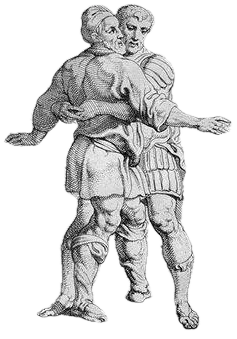
Father · Sources
as he stood. He laid no hand upon his benched, black ship, for that grief had come upon his heart and soul; and flashing-eyed Athene stood near him, and said: Son of Laërtes, sprung from Zeus, Odysseus of many wiles, is it thus indeed that ye will fling yourselves
This again is Laertes' son, Odysseus of many wiles, that was reared in the land of Ithaca, rugged though it be, and he knoweth all manner of craft and cunning devices. Then to her again made answer Antenor, the wise: Lady, this verily is a true word that thou hast spoken,
of the horse-taming Trojans. This that thou sayest is as empty wind. Then lord Agamemnon spake to him with a smile, when he knew that he was wroth, and took back his words: Zeus-born son of Laertes, Odysseus of many wiles, neither do I chide thee overmuch nor urge thee on,
Il. 2.173 · Il. 3.200 · Il. 4.358 · Il. 8.93 · Il. 9.307 · Il. 9.624 · Il. 10.144 · Il. 10.544 · Il. 10.570 · Il. 11.316
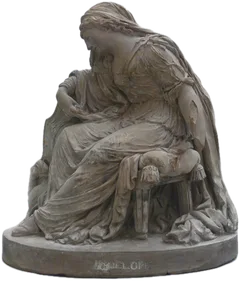
Wife · Sources
Odyssey calls Penelope Odysseus’ wife; external epic/reference evidence, not an Iliad passage.
Homer, Odyssey 23 · Homer, Odyssey 23.231–262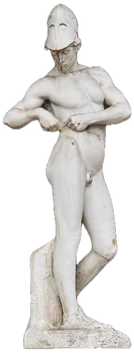
Son · Sources
Son of Atreus, what a word hath escaped the barrier of thy teeth! How sayest thou that we are slack in battle, whenso we Achaeans rouse keen war against the horse-taming Trojans? Thou shalt see, if so be thou wilt and if thou carest aught therefor, the father of Telemachus mingling with the foremost fighters
Il. 4.354
Ancestor · Sources
Описание прямо называет родство с Одиссеем; сохранённый внешний снимок (enwiki, со ссылкой на «Одиссею») подтверждает деда по матери.
Autolycus · English Wikipedia, 'Autolycus' (revision snapshot)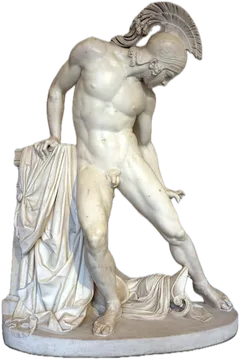
Friend · Sources
Hail, O Achilles, of the equal feast have we no stinting, either in the hut of Agamemnon, son of Atreus, or now in thine; for here is abundance that satisfies the heart to feast withal. Yet matters of the delicious feast are not in our thoughts, nay, Zeus-nurtured one, it is utter ruin that we behold, and are afraid;
Il. 9.225
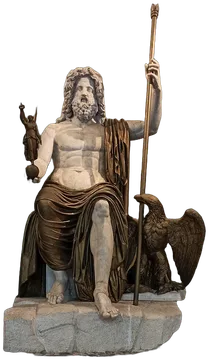
Poetic resemblance · Sources
neither suffer them to draw into the sea their curved ships. So spake she, and the goddess, flashing-eyed Athene, failed not to hearken. Down from the peaks of Olympus she went darting, and speedily came to the swift ships of the Achaeans. There she found Odysseus, the peer of Zeus in counsel,
Nestor, first of all, and king Idomeneus, and thereafter the twain Aiantes and the son of Tydeus, and as the sixth Odysseus, the peer of Zeus in counsel. And unbidden came to him Menelaus, good at the war-cry, for he knew in his heart wherewith his brother was busied.
and held the mainland and dwelt on the shores over against the isles. Of these was Odysseus captain, the peer of Zeus in counsel. And with him there followed twelve ships with vermilion prows. And the Aetolians were led by Thoas, Andraemon's son, even they that dwelt in Pleuron and Olenus and Pylene and Chalcis, hard by the sea, and rocky Calydon. For the sons of great-hearted Oeneus were no more, neither did he himself still live, and fair-haired Meleager was dead, to whom had commands been given that he should bear full sway among the Aetolians. And with Thoas there followed forty black ships.
Il. 2.169 · Il. 2.407 · Il. 2.636
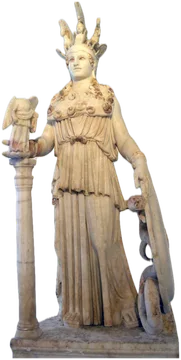
Connection · Sources
in all manner of toils; and Pallas Athene loveth him. If he but follow with me, even out of blazing fire might we both return, for wise above all is he in understanding. Then spake unto him much enduring goodly Odysseus: Son of Tydeus, praise me not over-much, neither blame me in aught:
Il. 10.245
Ally · Sources
Hear me, goddess, and come a goodly helper to my feet. So spake he in prayer, and Pallas Athene heard him, and made his limbs light, his feet and his hands above. But when they were now about to dart forth to win the prize, then Aias slipped as he ran—for Athene hampered him—
Il. 23.771–772
See all 30
In art

Odysseus (statue), Vathy. CC BY-SA 3.0. https://www.wikidata.org/wiki/Q114140399
Odysseus (statue), Vathy. CC BY-SA 3.0. https://www.wikidata.org/wiki/Q114140399

Jean-Auguste-Dominique Ingres. The Ambassadors of Agamemnon in the tent of Achilles. Beaux-Arts de Paris. Public domain. https://www.wikidata.org/wiki/Q16020875
Photograph / reproduction: Jean-Auguste-Dominique Ingres
Photograph / reproduction date: 1801
Jean-Auguste-Dominique Ingres. The Ambassadors of Agamemnon in the tent of Achilles. Beaux-Arts de Paris. Public domain. https://www.wikidata.org/wiki/Q16020875
Photograph / reproduction: Jean-Auguste-Dominique Ingres
Photograph / reproduction date: 1801

Jan Boeckhorst. Ulysses discovers Achilles dressed up as a girl. собрание не указано. Public domain. https://commons.wikimedia.org/wiki/File%3AJan_Boeckhorst_Ulysses_discovers_Achilles_dressed_up_as_a_girl.jpg
Photograph / reproduction: Jan Boeckhorst
Photograph / reproduction date: circa 1650
Jan Boeckhorst. Ulysses discovers Achilles dressed up as a girl. собрание не указано. Public domain. https://commons.wikimedia.org/wiki/File%3AJan_Boeckhorst_Ulysses_discovers_Achilles_dressed_up_as_a_girl.jpg
Photograph / reproduction: Jan Boeckhorst
Photograph / reproduction date: circa 1650

After Nicolas Poussin. The Return of Odysseus .. собрание не указано. Public domain. https://commons.wikimedia.org/wiki/File%3APoussin_Odyseus.JPG
Photograph / reproduction: After Nicolas Poussin
Photograph / reproduction date: 1650s
After Nicolas Poussin. The Return of Odysseus .. собрание не указано. Public domain. https://commons.wikimedia.org/wiki/File%3APoussin_Odyseus.JPG
Photograph / reproduction: After Nicolas Poussin
Photograph / reproduction date: 1650s

Guidoccio Cozzarelli. Guidoccio Cozzarelli Heimkehr des Odysseus. собрание не указано. Public domain. https://commons.wikimedia.org/wiki/File%3AGuidoccio_Cozzarelli_Heimkehr_des_Odysseus.jpg
Photograph / reproduction: Guidoccio Cozzarelli
Photograph / reproduction date: before 1517
Guidoccio Cozzarelli. Guidoccio Cozzarelli Heimkehr des Odysseus. собрание не указано. Public domain. https://commons.wikimedia.org/wiki/File%3AGuidoccio_Cozzarelli_Heimkehr_des_Odysseus.jpg
Photograph / reproduction: Guidoccio Cozzarelli
Photograph / reproduction date: before 1517

Angelika Kauffmann. Angelica Kauffmann (1741-1807) - Ulysses Discovering Achilles - 872174 - National Trust. собрание не указано. Public domain. https://commons.wikimedia.org/wiki/File%3AAngelica_Kauffmann_%281741-1807%29_-_Ulysses_Discovering_Achilles_-_872174_-_National_Trust.jpg
Photograph / reproduction: Angelika Kauffmann
Photograph / reproduction date: 1770/1771


Richard Geiger. Geiger Richárd - görög népek 017 Odüsszeusz beszél anyja árnyával az alivilágban. собрание не указано. Public domain. https://commons.wikimedia.org/wiki/File%3AGeiger_Rich%C3%A1rd_-_g%C3%B6r%C3%B6g_n%C3%A9pek_017_Od%C3%BCsszeusz_besz%C3%A9l_anyja_%C3%A1rny%C3%A1val_az_alivil%C3%A1gban.jpg
Photograph / reproduction: Richard Geiger
Photograph / reproduction date: 1900
See all 397
Sources and verification
The character is matched to the catalogue.
- Wikipedia · Odysseus · CC BY-SA 4.0
Excerpt; remaining sentences omitted.
Reference material remains distinct from the poem’s assertions. Characters who share a name retain separate pages.