Nestor
Mortal man
In Greek mythology, Nestor of Gerenia (Ancient Greek: Νέστωρ Γερήνιος, romanized: Nestōr Gerēnios) was a legendary king of Pylos. He is a prominent secondary character in Homer's Iliad and Odyssey, where he appears as an elderly warrior who frequently offers advice to the other characters.
Explore on the graph- Mentions
- 81
- Connected characters
- 15
- Books
- 18


Mentions in the Iliad
A. T. Murray, Loeb Classical Library, Harvard University Press, 1924 · Homer, Iliad with an English Translation · CC BY-SA 3.0 US
“the staff studded with golden nails, and himself sat down, while over against him the son of Atreus continued to vent his wrath. Then among them arose Nestor, sweet of speech, the clear-voiced orator of the Pylians, from whose tongue flowed speech sweeter than honey. Two generations of mortal men had passed away in his lifetime,”
“Mightiest were these of men reared upon the earth; mightiest were they, and with the mightiest they fought, the mountain-dwelling centaurs, and they destroyed them terribly. With these men I had fellowship, when I came from Pylos, from a distant land far away; for they themselves called me.”
“All these things, old man, to be sure, you have spoken as is right. But this man wishes to be above all others; over all he wishes to rule and over all to be king, and to all to give orders; in this, I think, there is someone who will not obey. If the gods who exist for ever made him a spearman,”
“So he took his stand above his head, in the likeness of the son of Neleus, even Nestor, whom above all the elders Agamemnon held in honour; likening himself to him, the Dream from heaven spake, saying: Thou sleepest, son of wise-hearted Atreus, the tamer of horses. To sleep the whole night through beseemeth not a man that is a counsellor,”
“but Agamemnon bade the clear-voiced heralds summon to the place of gathering the long-haired Achaeans. And they made summons, and the men gathered full quickly. But the king first made the council of the great-souled elders to sit down beside the ship of Nestor, the king Pylos-born.”
“but do you from this side and from that bespeak them, and strive to hold them back. So saying, he sate him down, and among them uprose Nestor, that was king of sandy Pylos. He with good intent addressed their gathering and spake among them: My friends, leaders and rulers of the Argives,”
“as they praised the words of godlike Odysseus. And there spake among them the horseman, Nestor of Gerenia: Now look you; in very truth are ye holding assembly after the manner of silly boys that care no whit for deeds of war. What then is to be the end of our compacts and our oaths?”
See all 81
“But do thou, O King, thyself take good counsel, and hearken to another; the word whatsoever I speak, shalt thou not lightly cast aside. Separate thy men by tribes, by clans, Agamemnon, that clan may bear aid to clan and tribe to tribe. If thou do thus, and the Achaeans obey thee,”
“thou wilt know then who among thy captains is a coward, and who among thy men, and who too is brave; for they will fight each clan for itself. So shalt thou know whether it is even by the will of heaven that thou shalt not take the city, or by the cowardice of thy folk and their witlessness in war. Then in answer to him spake the king, Agamemnon:”
“Nestor, first of all, and king Idomeneus, and thereafter the twain Aiantes and the son of Tydeus, and as the sixth Odysseus, the peer of Zeus in counsel. And unbidden came to him Menelaus, good at the war-cry, for he knew in his heart wherewith his brother was busied.”
“Then, when they had ceased from their labour and had made ready the meal, they feasted, nor did their hearts lack aught of the equal feast. But when they had put from them the desire of food and drink, among them the horseman, Nestor of Gerenia, was first to speak, saying: Most glorious son of Atreus, Agamemnon, king of men,”
“Only Nestor could vie with him, for he was the elder. And with him there followed fifty black ships. And Aias led from Salamis twelve ships, and stationed them where the battalions of the Athenians stood. And they that held Argos and Tiryns, famed for its walls,”
“and took from him his wondrous song, and made him forget his minstrelsy;—all these folk again had as leader the horseman, Nestor of Gerenia. And with him were ranged ninety hollow ships. And they that held Arcadia beneath the steep mountain of Cyllene, beside the tomb of Aepytus, where are warriors that fight in close combat;”
“then would the city of king Priam forthwith bow her head, taken and laid waste beneath our hands. So saying, he left them there and went to others. Then found he Nestor, the clear-voiced orator of the Pylians, arraying his comrades and urging them to fight,”
“So was the old man urging them on, having knowledge of battles from of old. At sight of him lord Agamemnon waxed glad, and he spake, and addressed him with winged words: Old Sir, I would that even as is the spirit in thy breast, so thy limbs might obey, and thy strength be firm.”
“who are more youthful than I and have confidence in their strength. So spake he, and the son of Atreus passed on glad at heart. He found Menestheus, driver of horses, son of Peteos, as he stood, and about him were the Athenians, masters of the war-cry. And hard by stood Odysseus of many wiles,”
“But Antilochus, son of great-souled Nestor, beheld him, and strode through the foremost fighters; for greatly did he fear for the shepherd of the host, lest aught befall him, and he utterly thwart them of their toil. Now the twain were holding forth their hands and their sharp spears each against the other, fain to do battle,”
“and Odysseus with his spear of bronze laid low Pidytes of Percote, and Teucer goodly Aretaon. And Antilochus, son of Nestor, slew Ablerus with his bright spear, and the king of men, Agamemnon, slew Elatus that dwelt in steep Pedasus by the banks of fair-flowing Satnioeis.”
“planted his heel on his chest, and drew forth the ashen spear. Then Nestor shouted aloud, and called to the Argives: My friends, Danaan warriors, squires of Ares, let no man now abide behind in eager desire for spoil, that he may come to the ships bearing the greatest store;”
“So spake the warrior and turned his brother's mind, for he counselled aright; and Menelaus obeyed. Then with gladness his squires took his armour from his shoulders; and Nestor rose up and spake amid the Argives: Fie upon you! In good sooth is great grief come upon the land of Achaea.”
“he gave it to Ereuthalion, his dear squire, to wear. And wearing this armour did Ereuthalion challenge all the bravest; but they trembled sore and were afraid, nor had any man courage to abide him. But me did my enduring heart set on to battle with him in my hardihood, though in years I was youngest of all. So fought I with him, and Athene gave me glory.”
“even ye are not minded with a ready heart to meet Hector face to face. So the old man chid them, and there stood up nine in all. Upsprang far the first the king of men, Agamemnon, and after him Tydeus' son, mighty Diomedes, and after them the Aiantes, clothed in furious valour,”
“or else on the king himself of Mycene rich in gold. So spake they, and the horseman, Nestor of Gerenia, shook the helmet, and forth therefrom leapt the lot that themselves desired, even the lot of Aias. And the herald bare it everywhither throughout the throng, and showed it from left to right to all the chieftains of the Achaeans;”
“even Nestor, whose rede had of old ever seemed the best. He with good intent addressed their gathering and spake among them: Son of Atreus and ye other princes of the hosts of Achaea, lo, full many long-haired Achaeans are dead, whose dark blood keen Ares hath now spilt about fair-flowing Scamander,”
“that through them may be a way for the driving of chariots; and without let us dig a deep ditch hard by, which shall intervene and keep back chariots and footmen, lest ever the battle of the lordly Trojans press heavily upon us. So spake he, and all the kings assented thereto.”
“only Nestor of Gerenia abode, the warder of the Achaeans, and he nowise of his own will, but his horse was sore wounded, seeing goodly Alexander, lord of fair-haired Helen, had smitten him with an arrow upon the crown of the head where the foremost hairs of horses grow upon the skull, and where is the deadliest spot.”
“So, stung with agony the horse leapt on high as the arrow sank into his brain, and he threw into confusion horses and car as he writhed upon the bronze. And while the old man sprang forth and with his sword was cutting away the traces, meanwhile the swift horses of Hector came on through the tumult, bearing a bold charioteer,”
“shall thou and I drive straight against the horse-taming Trojans, that Hector too may know whether my spear also rageth in my hands. So spake he, and the horseman, Nestor of Gerenia, failed not to hearken. So the mares of Nestor were tended by the two squires, valiant Sthenelus and Eurymedon the kindly;”
“and a terrible flame arose of burning sulphur, and the two horses, seized with terror, cowered beneath the car. Then from the hands of Nestor slipped the shining reins, and he waxed afraid at heart, and spake to Diomedes: Son of Tydeus, come now, turn thou in flight thy single-hooved horses.”
“sooner than for me, that avow me to be her stalwart husband. Nay, haste ye in pursuit, that we may take the shield of Nestor, the fame whereof now reacheth unto heaven, that it is all of gold, the rods alike and the shield itself; and may take moreover from the shoulders of horse-taming Diomedes”
“So spake he, and all the sons of the Achaeans shouted aloud, applauding the word of Diomedes, tamer of horses. Then uprose and spake among them the horseman Nestor: Son of Tydeus, above all men art thou mighty in battle,”
“the wisest counsel. And sore need have all the Achaeans of counsel both good and prudent, seeing that foemen hard by the ships are kindling their many watchfires; what man could rejoice thereat? This night shall either bring to ruin or save our host. So spake he, and they readily hearkened to him and obeyed.”
“He with good intent addressed their gathering and spake among them: Most glorious son of Atreus, Agamemnon, king of men, with thee will I begin and with thee make an end, for that thou art king over many hosts, and to thee Zeus hath vouchsafed the sceptre and judgements, that thou mayest take counsel for thy people.”
“and upon a man most mighty, whom the very immortals honoured, didst thou put dishonour; for thou tookest away and keepest his prize. Howbeit let us still even now take thought how we may make amends, and persuade him with kindly gifts and with gentle words. To him then spake in answer the king of men, Agamemnon:”
“And let him submit himself unto me, seeing I am more kingly, and avow me his elder in years. Then made answer the horseman, Nestor of Gerenia: Most glorious son of Atreus, Agamemnon, king of men, the gifts that thou offerest the prince Achilles may no man any more condemn.”
“then many were the hairs that he pulled from his head by the very roots in appeal to Zeus that is above, and in his noble heart he groaned mightily. And this plan seemed to his mind the best, to go first of all to Nestor, son of Neleus, if so be he might contrive with him some goodly device”
“he that is not the dear son of goddess or of god. Deeds hath he wrought that methinks will be a sorrow to the Argives for ever and aye, so many evils hath he devised against the Achaeans. But go now, run swiftly along the lines of ships and call hither Aias and Idomeneus, and I will go to goodly Nestor”
“but rather let us ourselves be busy; even thus I ween hath Zeus laid upon us even at our birth the heaviness of woe. So spake he, and sent forth his brother when he had duly given him commandment. But he went his way after Nestor, shepherd of the host, and found him by his hut and his black ship”
“Speak, and come not silently upon me. Of what hast thou need? Then made answer the king of men, Agamemnon: Nestor, son of Neleus, great glory of the Achaeans, thou shalt know Agamemnon, son of Atreus, whom beyond all others Zeus hath set amid toils continually,”
“The foemen bivouac hard by, nor know we at all whether haply they may not be fain to do battle even in the night. Then made answer to him the horseman Nestor of Gerenia: Most glorious son of Atreus, Agamemnon, king of men, of a surety not all his purposes shall Zeus the counsellor fulfill for Hector,”
“and myself I sent him forth to summon those of whom thou inquirest. But let us go; we shall find them before the gates amid the sentinels, for there I bade them gather. Then made answer to him the horseman, Nestor of Gerenia: So will no man be wroth at him or disobey him”
“and beneath him was spread the hide of an ox of the field, and beneath his head was stretched a bright carpet. To his side came the horseman, Nestor of Gerenia, and woke him, stirring him with a touch of his heel, and aroused him, and chid him to his face: Awake, son of Tydeus, why slumberest thou the whole night through in sleep?”
“Are there not other sons of the Achaeans that be younger, who might then rouse each one of the kings, going everywhere throughout the host? But with thee, old sir, may no man deal. Then the horseman, Nestor of Gerenia, answered him: Nay verily, friend, all this hast thou spoken according to right.”
“At sight of them the old man waxed glad and heartened them, and spake and addressed them with winged words: Even so now, dear children, keep your watch, neither let sleep seize any man, lest we become a cause of rejoicing to our foes. So saying he hasted through the trench, and there followed with him”
“Nestor, my heart and proud spirit urge me to enter the camp of the foemen that are near, even of the Trojans; howbeit if some other man were to follow with me, greater comfort would there be, and greater confidence. When two go together, one discerneth before the other”
“and he touched the horses with the lash, and nothing loath the pair sped on to the hollow ships, for there were they fain to be. And Nestor was first to hear the sound, and he spake, saying: My frieads, leaders and rulers of the Argives, shall I be wrong, or speak the truth? Nay, my heart bids me speak.”
“Not yet was the word fully uttered, when they came themselves. Down they leapt to earth, and the others were seized with joy and welcomed them with hand-clasps and with gentle words. And the horseman, Nestor of Gerenia, was first to question them: Come tell me now, Odysseus, greatly to be praised, great glory of the Achaeans,”
“the heads of warriors were falling, and a cry unquenchable arose, round about great Nestor and warlike Idomeneus. With these had Hector dalliance, and terrible deeds he wrought with the spear and in horsemanship, and he laid waste the battalions of the young men. Yet would the goodly Achaeans in no wise have given ground from their course,”
“for the cutting out of arrows and the spreading of soothing simples. So spake he, and the horseman, Nestor of Gerenia, failed not to hearken. Forthwith he got him upon his chariot, and beside him mounted Machaon, the son of Asclepius the peerless leech; and he touched the horses with the lash, and nothing loath the pair sped on”
“and turned and stood when he had reached the throng of his comrades. So fought they like unto blazing fire; but the mares of Neleus, all bathed in sweat, bare Nestor forth from the battle, and bare also Machaon, shepherd of the host. And swift-footed goodly Achilles beheld and marked him,”
“for need has come upon them that may no longer be borne. Yet go now, Patroclus, dear to Zeus, and ask Nestor who it is that he bringeth wounded from out the war. Of a truth from behind he seemeth in all things like Machaon, son of Asclepius, but I saw not the eyes of the man,”
“a basket of bronze, and therewith an onion, a relish for their drink, and pale honey, and ground meal of sacred barley; and beside them a beauteous cup, that the old man had brought from home, studded with bosses of gold; four were the handles thereof, and about each”
“Then made answer the horseman Nestor of Gerenia: Wherefore now doth Achilles thus have pity for the sons of the Achaeans, as many as have been smitten with missiles? Nor knoweth he at all what grief hath arisen throughout the camp; for the best men lie among the ships smitten by darts or wounded with spear-thrusts.”
“and chestnut horses an hundred and fifty, all mares, and many of them had foals at the teat. These then we drave into Neleian Pylos by night into the citadel, and Neleus was glad at heart for that much spoil had fallen to me when going as a stripling into war.”
“from Buprasium to Pylos, and all gave glory among the gods to Zeus, and to Nestor among men. Of such sort was I among warriors, as sure as ever I was. But Achilles would alone have profit of his valour. Nay, verily, methinks he will bitterly lament hereafter, when the folk perisheth.”
“wherewith Nestor of Gerenia, warder of the Achaeans, charged me. Nay, but even so will I not neglect thee that art in grievous plight. He spake and clasped the shepherd of the host beneath the breast, and led him to his hut, and his squire when he saw them strewed upon the ground hides of oxen. There Patroclus made him lie at length,”
“and the horses Antilochus, son of great-souled Nestor, drave forth from the Trojans into the host of the well-greaved Achaeans. Then Deïphobus in sore grief for Asius drew very nigh to Idomeneus, and cast at him with his bright spear. Howbeit Idomeneus, looking steadily at him, avoided the spear of bronze,”
“Then Antilochus, biding his time, leapt upon Thoön, as he turned his back, and smote him with a thrust, and wholly severed the vein that runneth along the back continually until it reacheth the neck; this he severed wholly, and Thoön fell on his back in the dust, stretching out both his hands to his dear comrades.”
“And the cry of battle was not unmarked of Nestor, albeit at his wine, but he spake winged words to the son of Asclepius: Bethink thee, goodly Machaon, how these things are to be; louder in sooth by the ships waxes the cry of lusty youths.”
“and about their bodies rang the stubborn bronze, as they thrust one at the other with swords and two-edged spears. And Nestor was met by the kings, fostered of Zeus, as they went up from the ships, even all they that had been smitten with the bronze, the son of Tydeus, and Odysseus, and Atreus' son, Agamemnon.”
“are laying up wrath against me in their hearts, even as doth Achilles, and have no mind to fight by the sterns of the ships. Then made answer to him the horseman Nestor of Gerenia: Yea, verily, these things have now been brought to pass and are here at hand, neither could Zeus himself, that thundereth on high, fashion them otherwise.”
“when once the famed Shaker of Earth had turned the battle. Aias verily was first, the son of Telamon. He smote Hyrtius, the son of Gyrtius, leader of the Mysians stalwart of heart; and Antilochus stripped the spoils from Phalces and Mermerus, and Meriones slew Morys and Hippotion,”
“and most of all prayed Nestor of Gerenia, the warder of the Achaeans, stretching forth his two hands to the starry heaven: O father Zeus, if ever any man of us in wheat-bearing Argos burned to thee fat thigh-pieces of bull or of ram with the prayer that he might return, and thou didst promise and nod thy head thereto,”
“And the Argives gave way perforce from the outermost ships, but abode there beside their huts, all in one body, and scattered not throughout the camp; for shame withheld them and fear; and unceasingly they called aloud one to the other. And above all others Nestor of Gerenia, the warder of the Achaeans,”
“a man's muscle is thickest; and round about the spear-point the sinews were rent apart; and darkness enfolded his eyes. Then of the sons of Nestor, the one, Antilochus, thrust at Atymnius with his sharp spear, and drave the spear of bronze through his flank; and he fell forward. But Maris, hard at hand,”
“yet alive, he was fighting with the Trojans in the forefront of the throng. And they twain, watching against the death and rout of their comrades, were warring in a place apart, for thus had Nestor bidden them, when he roused them forth to the battle from the black ships. So then the whole day through raged the great strife”
“While he pondered thus in mind and heart, there drew nigh unto him the son of lordly Nestor, shedding hot tears, and spake the grievous tidings: Woe is me, thou son of wise-hearted Peleus, full grievous is the tidings thou must hear, such as I would had never been.”
“for the summons is this: Ill shall it be for him whoso is left at the ships of the Argives. Nay, setting out in one throng let us rouse keen battle against the horse-taming Trojans. He spake, and took to him the sons of glorious Nestor, and Meges, son of Phyleus, and Thoas and Meriones and Lycomedes,”
“but the two sons of Atreus abode, and goodly Odysseus, and Nestor and Idomeneus and the old man Phoenix, driver of chariots, seeking to comfort him in his exceeding sorrow; but no whit would his heart be comforted until he entered the mouth of bloody war. And as he thought thereon he heaved a heavy sigh and spake, saying:”
“her Menelaus led beneath the yoke, and exceeding fain was she of the race. And fourth Antilochus made ready his fair-maned horses, he the peerless son of Nestor, the king high of heart, the son of Neleus; and bred at Pylos were the swift-footed horses that drew his car. And his father drew nigh and gave counsel”
“to him for his profit — a wise man to one that himself had knowledge. Antilochus, for all thou art young, yet have Zeus and Poseidon loved thee and taught thee all manner of horsemanship; wherefore to teach thee is no great need, for thou knowest well how to wheel about the turning-post; yet are thy horses slowest in the race: therefore I deem there will be sorry work for thee. The horses of the others are swifter, but the men know not how to devise more cunning counsel than thine own self. Wherefore come, dear son, lay thou up in thy mind cunning of every sort, to the end that the prizes escape thee not.”
“but keepeth them ever in hand, and watcheth the man that leadeth him in the race. Now will I tell thee a manifest sign that will not escape thee. There standeth, as it were a fathom's height above the ground, a dry stump, whether of oak or of pine, which rotteth not in the rain, and two white stones on either side”
“there is no man that shall catch thee by a burst of speed, neither pass thee by, nay, not though in pursuit he were driving goodly Arion, the swift horse of Adrastus, that was of heavenly stock, or those of Laomedon, the goodly breed of this land. So saying Nestor, son of Neleus, sate him down again in his place,”
“For thus will I speak out to you, and verily it shall be brought to pass: no tendance shall there be for you twain with Nestor, the shepherd of the host, but forthwith will he slay you with the sharp bronze, if through your heedlessness we win but a worse prize. Nay, have after them with all speed ye may,”
“And now would he have given him the mare —for the Achaeans assented thereto —but that Antilochus, son of great-souled Nestor, uprose and answered Achilles, son of Peleus, to claim his due: Achilles, sore wroth shall I be with thee if thou fulfill this word, for thou art minded to rob me of my prize,”
“and be a sinner in the eyes of the gods. So spake the son of great-souled Nestor, and led up the mare, and gave her into the hands of Menelaus. And his heart was gladdened even as the corn when with the dew upon the ears it waxeth ripe, what time the fields are bristling.”
“even as he drave; but the fifth prize was left unclaimed, even the two-handled urn. Unto Nestor Achilles gave this, bearing it through the gathering of the Argives; and he came to his side, and said Take this now, old sire, and let it be treasure for thee, a memorial of Patroclus' burying; for nevermore shalt thou behold him”
“and spake, and addressed him with winged words : Aye, verily, my son, all this hast thou spoken aright, for my limbs, even my feet, are no more firm, O my friend, as of old, nor do my arms as of old dart out lightly from my shoulders on either side. Would that I were young, and my strength were firm”
“And to thee may the gods in requital thereof grant grace to satisfy thy heart. So spake he, and the son of Peleus went his way through the great throng of the Achaeans, when he had hearkened to all the praise of the son of Neleus. Then set he forth prizes for grievous boxing. A sturdy mule he brought and tethered in the place of gathering,”
“and Odysseus of many wiles, and after them Antilochus, Nestor's son, for he surpassed all the youths in swiftness of foot. Then took they their places in a row, and Achilles showed them the goal, and a course was marked out for them from the turning-point. Then speedily the son of Oïleus forged to the front, and close after him sped goodly Odysseus;”
“Then Antilochus bare away the last prize, smiling the while, and spake among the Argives, saying: Among you all that know it well, will I declare, my friends, that even to this day the immortals shew honour to older men. For Aias is but a little older than I,”
Connections
Father · Sources
So he took his stand above his head, in the likeness of the son of Neleus, even Nestor, whom above all the elders Agamemnon held in honour; likening himself to him, the Dream from heaven spake, saying: Thou sleepest, son of wise-hearted Atreus, the tamer of horses. To sleep the whole night through beseemeth not a man that is a counsellor,
but Agamemnon bade the clear-voiced heralds summon to the place of gathering the long-haired Achaeans. And they made summons, and the men gathered full quickly. But the king first made the council of the great-souled elders to sit down beside the ship of Nestor, the king Pylos-born.
and took his stand before the horses of the old man, Neleus' son, and spake and addressed him with winged words: Old sir, of a surety young warriors press thee sore; whereas thy might is broken and grievous old age attends thee, and thy squire is a weakling and thy horses slow.
Il. 2.20 · Il. 2.53 · Il. 8.100 · Il. 10.18 · Il. 10.54 · Il. 10.73 · Il. 10.87 · Il. 10.163 · Il. 10.555 · Il. 11.511 · Il. 11.618 · Il. 11.683 · Il. 14.42 · Il. 23.302 · Il. 23.349 · Il. 23.617
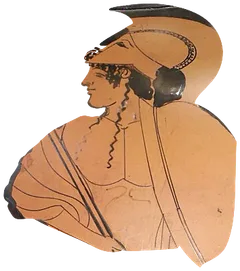
Son · Sources
But Antilochus, son of great-souled Nestor, beheld him, and strode through the foremost fighters; for greatly did he fear for the shepherd of the host, lest aught befall him, and he utterly thwart them of their toil. Now the twain were holding forth their hands and their sharp spears each against the other, fain to do battle,
and Odysseus with his spear of bronze laid low Pidytes of Percote, and Teucer goodly Aretaon. And Antilochus, son of Nestor, slew Ablerus with his bright spear, and the king of men, Agamemnon, slew Elatus that dwelt in steep Pedasus by the banks of fair-flowing Satnioeis.
and the horses Antilochus, son of great-souled Nestor, drave forth from the Trojans into the host of the well-greaved Achaeans. Then Deïphobus in sore grief for Asius drew very nigh to Idomeneus, and cast at him with his bright spear. Howbeit Idomeneus, looking steadily at him, avoided the spear of bronze,
Il. 5.565 · Il. 6.32 · Il. 13.400 · Il. 13.545 · Il. 14.513 · Il. 18.16 · Il. 23.305 · Il. 23.350 · Il. 23.402 · Il. 23.541 · Il. 23.597 · Il. 23.755–756 · Il. 23.785
Son · Sources
Forth hasted the sentinels in their harness around Nestor's son Thrasymedes, shepherd of the host, and Ascalaphus and Ialmenus, sons of Ares, and Meriones and Aphareus and Deïpyrus, and the son of Creon, goodly Lycomedes.
and bid him arise, if so be he will be minded to go to the sacred company of the sentinels and give them charge. To him would they hearken as to no other, for his son is captain over the guard, he and Meriones, comrade of Idomeneus; for to them above all we entrusted this charge.
the kings of the Argives, even all that had been called to the council. But with them went Meriones and the glorious son of Nestor; for of themselves they bade these share in their counsel. So they went through and out from the digged ditch and sate them down in an open space, where the ground shewed clear of dead men fallen,
Il. 9.81 · Il. 10.57–58 · Il. 10.196 · Il. 14.10
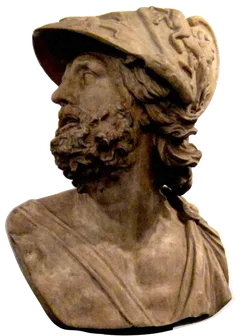
Friend · Sources
and the swift Aias, and the valiant son of Phyleus. And I would that one should go and summon these also, the godlike Aias and lord Idomeneus, for their ships are furthest of all and nowise nigh at hand. But Menelaus will I chide, dear though he be and honoured,aye, though thou shouldest be angry with me, nor will I hide my thought, for that he sleepeth thus, and hath suffered thee to toil alone. Now had it been meet that he laboured among all the chieftains, beseeching them, for need has come upon them that may no longer be borne. And to him did the king of men, Agamemnon, make answer, saying:
Il. 10.114–115
Assuming Nestor’s likeness · Sources
And when he had called them together, he contrived a cunning plan, and said: Hearken, my friends, a Dream from heaven came to me in my sleep through the ambrosial night, and most like was it to goodly Nestor, in form and in stature and in build. It took its stand above my head, and spake to me, saying:
Il. 2.57–58
Connection · Sources
Стих 23.634 прямо говорит: «На кулаках я побил Клитомеда, Енопова сына»; устойчивое отношение поединка.
as on the day when the Epeians were burying lord Amarynceus at Buprasium, and his sons appointed prizes in honour of the king. Then was there no man that proved himself my peer, neither of the Epeians nor of Pylians themselves nor of the great-souled Aetolians. In boxing I overcame Clytomedes, son of Enops,
Il. 23.630–634
Connection · Sources
she that old Nestor had taken from out of Tenedos, when Achilles sacked it, the daughter of great-hearted Arsinous; for the Achaeans had chosen her out for him, for that in counsel he was ever best of all. She first drew before the twain a table, fair, with feet of cyanus, and well-polished, and set thereon
Il. 11.625–627
See all 15
In art

Michel Martin Drolling. Wrath of Achilles2. собрание не указано. Public domain. https://commons.wikimedia.org/wiki/File%3AWrath_of_Achilles2.jpg
Photograph / reproduction: Michel Martin Drolling
Photograph / reproduction date: 1810
Michel Martin Drolling. Wrath of Achilles2. собрание не указано. Public domain. https://commons.wikimedia.org/wiki/File%3AWrath_of_Achilles2.jpg
Photograph / reproduction: Michel Martin Drolling
Photograph / reproduction date: 1810

Peter Paul Rubens. The Wrath of Achilles. Museum Boijmans Van Beuningen. Public domain. https://www.wikidata.org/wiki/Q19925629
Peter Paul Rubens. The Wrath of Achilles. Museum Boijmans Van Beuningen. Public domain. https://www.wikidata.org/wiki/Q19925629

Charles-Philippe Larivière. Achilles presenting the prize of Wisdom to Nestor during the Funeral Games. собрание не указано. Public domain. https://commons.wikimedia.org/wiki/File%3ACharles-Philippe_Larivi%C3%A8re_-_Achilles_-_Google_Art_Project.jpg
Photograph / reproduction: Charles-Philippe Larivière

Charles-Philippe Larivière. Achilles presenting the prize of Wisdom to Nestor during the Funeral Games. собрание не указано. Public domain. https://commons.wikimedia.org/wiki/File%3ACharles-Philippe_Larivi%C3%A8re_-_Achilles_-_Google_Art_ProjectFXD.jpg
Photograph / reproduction: Charles-Philippe Larivière

Joseph-Désiré Court. Achilles Introduced to Nestor. Musée des Beaux-Arts de Rouen. Public domain. https://www.wikidata.org/wiki/Q27030944
Photograph / reproduction: Joseph-Désiré Court
Photograph / reproduction date: 1820
Joseph-Désiré Court. Achilles Introduced to Nestor. Musée des Beaux-Arts de Rouen. Public domain. https://www.wikidata.org/wiki/Q27030944
Photograph / reproduction: Joseph-Désiré Court
Photograph / reproduction date: 1820

Michel Martin Drolling. Michel Martin Drolling - La colère d'Achille. собрание не указано. Public domain. https://commons.wikimedia.org/wiki/File%3AMichel_Martin_Drolling_-_La_col%C3%A8re_d%27Achille.jpg
Photograph / reproduction: Michel Martin Drolling
Photograph / reproduction date: 1810
Michel Martin Drolling. Michel Martin Drolling - La colère d'Achille. собрание не указано. Public domain. https://commons.wikimedia.org/wiki/File%3AMichel_Martin_Drolling_-_La_col%C3%A8re_d%27Achille.jpg
Photograph / reproduction: Michel Martin Drolling
Photograph / reproduction date: 1810


Joseph-Désiré Court. Achilles Introduced to Nestor label QS:Lfr,"Achille présenté à Nestor" label QS:Len,"Achilles Introduced to Nestor". собрание не указано. Public domain. https://commons.wikimedia.org/wiki/File%3AJoseph_D%C3%A9sir%C3%A9_Court_Achille_donne_%C3%A0_Nestor_le_prix_de_la_sagesse.jpg
Photograph / reproduction: Joseph-Désiré Court
Photograph / reproduction date: 1820
See all 27
Sources and verification
The character is matched to the catalogue.
- Wikipedia · Nestor (mythology) · CC BY-SA 4.0
Excerpt; remaining sentences omitted.
Reference material remains distinct from the poem’s assertions. Characters who share a name retain separate pages.