Menelaus
Mortal man
In Greek mythology, Menelaus (; Ancient Greek: Μενέλαος, romanized: Menélaos) was a king of Sparta. According to the Iliad, the Trojan War began as a result of Menelaus' wife, Helen, fleeing to Troy with the Trojan prince Paris.
Explore on the graph- Mentions
- 90
- Connected characters
- 18
- Books
- 16


Mentions in the Iliad
A. T. Murray, Loeb Classical Library, Harvard University Press, 1924 · Homer, Iliad with an English Translation · CC BY-SA 3.0 US
“did they lay waste the harvest, for many things lie between us—shadowy mountains and sounding sea. But you, shameless one, we followed, so that you might rejoice, seeking to win recompense for Menelaus and for yourself, dog-face, from the Trojans. This you disregard, and take no heed of.”
“Nestor, first of all, and king Idomeneus, and thereafter the twain Aiantes and the son of Tydeus, and as the sixth Odysseus, the peer of Zeus in counsel. And unbidden came to him Menelaus, good at the war-cry, for he knew in his heart wherewith his brother was busied.”
“and that held Laas, and dwelt about Oetylus,—these were led by Agamemnon's brother, even Menelaus, good at the war-cry, with sixty ships; and they were marshalled apart. And himself he moved among them, confident in his zeal, urging his men to battle; and above all others was his heart fain”
“to fight with him face to face in dread combat. But when Menelaus, dear to Ares, was ware of him as he came forth before the throng with long strides, then even as a lion is glad when he lighteth on a great carcase, having found a horned stag or a wild goat”
“but to thy father and city and all the people a grievous bane—to thy foes a joy, but to thine own self a hanging down of the head? Wilt thou indeed not abide Menelaus, dear to Ares? Thou wouldest learn what manner of warrior he is whose lovely wife thou hast. Then will thy lyre help thee not, neither the gifts of Aphrodite,”
“Not to be flung aside, look you, are the glorious gifts of the gods, even all that of themselves they give, whereas by his own will could no man win them. But now, if thou wilt have me war and do battle, make the other Trojans to sit down and all the Achaeans, but set ye me in the midst and Menelaus, dear to Ares,”
“and himself in the midst and Menelaus, dear to Ares, to do battle for Helen and all her possessions. And whichsoever of the twain shall win, and prove him the better man, let him duly take all the wealth and the woman, and bear them to his home; but for us others, let us swear friendship and oaths of faith with sacrifice.”
See all 90
Connections
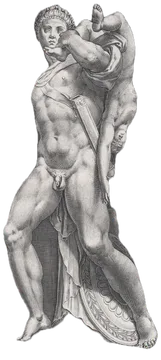
Father · Sources
and he withdraweth back again and pallor layeth hold of his cheeks; even so did godlike Alexander, seized with fear of Atreus' son, shrink back into the throng of the lordly Trojans. But Hector saw him, and chid him with words of shame: Evil Paris, most fair to look upon, thou that art mad after women, thou beguiler,
when they stood Menelaus overtopped him with his broad shoulders; howbeit when the twain were seated Odysseus was the more royal. But when they began to weave the web of speech and of counsel in the presence of all, Menelaus in truth spake fluently, with few words, but very clearly, seeing he was not a man of lengthy speech
brandishing their spears in wrath one at the other. First Alexander hurled his far-shadowing spear, and smote upon the son of Atreus' shield that was well balanced on every side ; howbeit the bronze brake not through but its point was turned in the stout shield. Next Atreus' son, Menelaus, rushed upon him with his spear,
Il. 3.37 · Il. 3.213 · Il. 3.347 · Il. 3.361 · Il. 3.449 · Il. 4.205 · Il. 5.50 · Il. 5.207 · Il. 5.552 · Il. 5.570 · Il. 5.578 · Il. 7.470 · Il. 8.261 · Il. 13.581 · Il. 17.69 · Il. 17.553 · Il. 23.355 · Il. 23.594
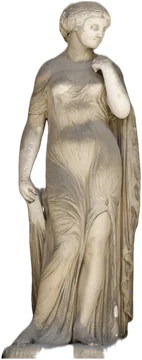
Wife · Sources
but to thy father and city and all the people a grievous bane—to thy foes a joy, but to thine own self a hanging down of the head? Wilt thou indeed not abide Menelaus, dear to Ares? Thou wouldest learn what manner of warrior he is whose lovely wife thou hast. Then will thy lyre help thee not, neither the gifts of Aphrodite,
neither be left here to be a bane to us and to our children after us. So they said, but Priam spake, and called Helen to him: Come hither, dear child, and sit before me, that thou mayest see thy former lord and thy kinsfolk and thy people—thou art nowise to blame in my eyes; it is the gods, methinks, that are to blame,
whether we shall again rouse evil war and the dread din of battle, or put friendship between the hosts. If this might in any wise be welcome to all and their good pleasure, then might the city of king Priam still be an habitation, and Menelaus take back Argive Helen.
Il. 3.52–53 · Il. 3.163 · Il. 4.19 · Il. 7.392 · Il. 13.626
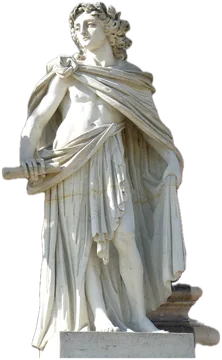
Brother through father · Sources
Квалификация братства/сестринства: Илиада: Общий отец подтверждён; сведения о матерях неполны. Различие матерей не установлено. Общие родители: Атрей.
Wikidata: Атрей — роль родителя · P22 Wikidata: Атрей — роль родителя · P22Квалификация братства/сестринства: Илиада: Общий отец подтверждён; сведения о матерях неполны. Различие матерей не установлено. Общие родители: Атрей.
Wikidata: Атрей — роль родителя · P22 Wikidata: Атрей — роль родителя · P22Nestor, first of all, and king Idomeneus, and thereafter the twain Aiantes and the son of Tydeus, and as the sixth Odysseus, the peer of Zeus in counsel. And unbidden came to him Menelaus, good at the war-cry, for he knew in his heart wherewith his brother was busied.
and that held Laas, and dwelt about Oetylus,—these were led by Agamemnon's brother, even Menelaus, good at the war-cry, with sixty ships; and they were marshalled apart. And himself he moved among them, confident in his zeal, urging his men to battle; and above all others was his heart fain
alike an ornament for his horse and to its driver a glory; even in such wise, Menelaus, were thy thighs stained with blood, thy shapely thighs and thy legs and thy fair ankles beneath. Thereat shuddered the king of men, Agamemnon, as he saw the black blood flowing from the wound,
Il. 2.408–409 · Il. 2.586 · Il. 4.148 · Il. 4.184 · Il. 4.189 · Il. 5.552 · Il. 6.61 · Il. 7.107–108 · Il. 7.120–121 · Il. 8.261 · Il. 10.32–34 · Il. 10.60 · Il. 10.72 · Il. 11.136–140 · Il. 17.249–250 · Il. 23.522
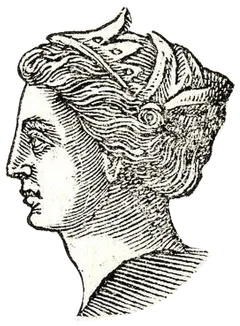
Daughter · Sources
Описание прямо называет Гермиону дочерью Менелая; сохранённая внешняя запись (Apollodorus 3.11.1) подтверждает: «Menelaus had daughter Hermione by Helen».
Apollodorus, Library 3.11.1, Perseus Digital Library · Apollodorus, Library 3.11.1 (Perseus)
Patron · Sources
to go forth alone and spy upon the foemen, through the immortal night; right hardy of heart must that man be. Then in answer to him spake lord Agamemnon: Need have we, both thou and I, O Menelaus, fostered of Zeus, of shrewd counsel that shall save and deliver
and the sun shone forth upon them and all the battle was made plain to view. Then Aias spake unto Menelaus, good at the war-cry: Look forth now, Menelaus, nurtured of Zeus, if so be thou mayest have sight of Antilochus yet alive, son of great-souled Nestor, and bestir thou him to go with speed unto Achilles, wise of heart,
Il. 10.43 · Il. 17.651
Patron · Sources
but to thy father and city and all the people a grievous bane—to thy foes a joy, but to thine own self a hanging down of the head? Wilt thou indeed not abide Menelaus, dear to Ares? Thou wouldest learn what manner of warrior he is whose lovely wife thou hast. Then will thy lyre help thee not, neither the gifts of Aphrodite,
Not to be flung aside, look you, are the glorious gifts of the gods, even all that of themselves they give, whereas by his own will could no man win them. But now, if thou wilt have me war and do battle, make the other Trojans to sit down and all the Achaeans, but set ye me in the midst and Menelaus, dear to Ares,
and himself in the midst and Menelaus, dear to Ares, to do battle for Helen and all her possessions. And whichsoever of the twain shall win, and prove him the better man, let him duly take all the wealth and the woman, and bear them to his home; but for us others, let us swear friendship and oaths of faith with sacrifice.
Il. 3.52 · Il. 3.69 · Il. 3.90 · Il. 3.136 · Il. 3.206 · Il. 3.232 · Il. 3.253 · Il. 3.307 · Il. 3.431 · Il. 4.115 · Il. 5.561 · Il. 17.1
Opponent · Sources
and himself in the midst and Menelaus, dear to Ares, to do battle for Helen and all her possessions. And whichsoever of the twain shall win, and prove him the better man, let him duly take all the wealth and the woman, and bear them to his home; but for us others, let us swear friendship and oaths of faith with sacrifice.
I verily will go my way back to windy Ilios, since I can in no wise bear to behold with mine eyes my dear son doing battle with Menelaus, dear to Ares. But this, I ween, Zeus knoweth, and the other immortal gods, for which of the twain the doom of death is ordained.
Il. 3.90–91 · Il. 3.307
See all 18
Under the protection of Menelaus · Sources
В 17.6–7 Менелай с пикой и щитом ходит вокруг тела Патрокла, защищая его; отношение защиты прямо названо.
her first-born, ere then knowing naught of motherhood; even so over Patroclus strode fair-haired Menelaus, and before him he held his spear and his shield that was well-balanced upon every side, eager to slay the man who should come to seize the corpse. Then was Panthous' son, of the good spear of ash, not unheedful
Il. 17.6–7
Ally · Sources
Ally · Sources
Friend · Sources
and the swift Aias, and the valiant son of Phyleus. And I would that one should go and summon these also, the godlike Aias and lord Idomeneus, for their ships are furthest of all and nowise nigh at hand. But Menelaus will I chide, dear though he be and honoured,aye, though thou shouldest be angry with me, nor will I hide my thought, for that he sleepeth thus, and hath suffered thee to toil alone. Now had it been meet that he laboured among all the chieftains, beseeching them, for need has come upon them that may no longer be borne. And to him did the king of men, Agamemnon, make answer, saying:
Il. 10.114–115
Connection · Sources
Антенор сам говорит, что принимал Менелая и Одиссея как гостей и угощал их — прямое гостеприимство.
for erstwhile on a time goodly Odysseus came hither also on an embassy concerning thee, together with Menelaus, dear to Ares; and it was I that gave them entertainment and welcomed them in my halls, and came to know the form and stature of them both and their cunning devices. Now when they mingled with the Trojans, as they were gathered together,
Il. 3.205–208
Killed by Menelaus · Sources
В стихах 17.59–60 Менелай, «смерти предавши» Евфорба, обнажает его от доспехов; описание прямо называет Евфорба погибшим от руки Менелая.
a goodly sapling and a fair-growing; and the blasts of all the winds make it to quiver, and it burgeoneth out with white blossoms; but suddenly cometh the wind with a mighty tempest, and teareth it out of its trench, and layeth it low upon the earth; even in such wise didMenelaus, son of Atreus, slay Panthous' son, Euphorbus of the good ashen spear, and set him to spoil him of his armour. And as when a mountain-nurtured lion, trusting in his might, hath seized from amid a grazing herd the heifer that is goodliest: her neck he seizeth first in his strong jaws, and breaketh it, and thereafter devoureth the blood and all the inward parts in his fury;
Il. 17.59–60
Killed by Menelaus · Sources
Описание прямо называет Гиперенора убитым Менелаем; 14.515–519: Атреид (Менелай) ударяет Гиперенора пикой в пах, и из раны выходит душа.
and Teucer laid low Prothoön and Periphetes,; thereafter Atreus' son smote with a thrust in the flank Hyperenor, shepherd of the host, and the bronze let forth the bowels, as it clove through, and his soul sped hastening through the stricken wound, and darkness enfolded his eyes.
Il. 14.515–519
Killed by Menelaus · Sources
В стихах 15.539–543 Менелай приходит на помощь Мегесу и пронзает Долопа копьём, после чего тот свалился на землю.
Then Meges thrust with his sharp spear upon the topmost socket of the helm of bronze with horse-hair plume which Dolops wore, and shore therefrom the plume of horse-hair, and all the plume, bright with its new scarlet dye, fell in the dust. Now while Meges abode and fought with Dolops, and yet hoped for victory,meanwhile warlike Menelaus came to bear him aid, and he took his stand on one side with his spear, unmarked of Dolops, and cast and smote him on the shoulder from behind; and the spear in its fury sped through his breast, darting eagerly onward, and he fell upon his face; and the twain made for him to strip from his shoulders his armour wrought of bronze.
Il. 15.539–543
Killed by Menelaus · Sources
Стихи 17.578–580 прямо описывают, как Менелай пронзил Подеса пикой в пояс и тот с шумом пал на землю.
Now among the Trojans was one Podes, son of Eetion, a rich man and a valiant, and Hector honoured him above all the people, for that he was his comrade, a welcome companion at the feast. Him, fair-haired Menelaus smote upon the belt with a spear cast as he started to flee, and drave the bronze clean through;and he fell with a thud. But Menelaus, son of Atreus, dragged the dead body from amid the Trojans into the throng of his comrades. Then unto Hector did Apollo draw nigh, and urged him on, in the likeness of Asius' son Phaenops, that of all his guest-friends was dearest to him, and had his house at Abydus.
Il. 17.575–580
Killed by Menelaus · Sources
Стихи 5.49–50 прямо говорят, что Скамандрий был убит пикой Менелая Атрида.
Him even as he was mounting his chariot Idomeneus, famed for his spear, pierced with a thrust of his long spear through the right shoulder; and he fell from his car, and hateful darkness gat hold of him. Him then the squires of Idomeneus stripped of his armour; and Scamandrius, son of Strophius, cunning in the chase,did Atreus' son Menelaus slay with his sharp spear, even him the mighty hunter; for Artemis herself had taught him to smite all wild things that the mountain forest nurtureth. Yet in no wise did the archer Artemis avail him now, neither all that skill in archery wherein of old he excelled;
Il. 5.49–50
Connection · Sources
Стих прямо говорит, что Адраст был взят живьём Менелаем могучеголосым.
And the warrior Leïtus slew Phylacus, as he fled before him; and Eurypylus laid Melanthius low. But Adrastus did Menelaus, good at the warcry, take alive; for his two horses, coursing in terror over the plain, became entangled in a tamarisk bough, and breaking the curved car at the end of the pole,
Il. 6.37
In art

Michel Martin Drolling. Wrath of Achilles2. собрание не указано. Public domain. https://commons.wikimedia.org/wiki/File%3AWrath_of_Achilles2.jpg
Photograph / reproduction: Michel Martin Drolling
Photograph / reproduction date: 1810
Michel Martin Drolling. Wrath of Achilles2. собрание не указано. Public domain. https://commons.wikimedia.org/wiki/File%3AWrath_of_Achilles2.jpg
Photograph / reproduction: Michel Martin Drolling
Photograph / reproduction date: 1810

Michel Martin Drolling. Michel Martin Drolling - La colère d'Achille. собрание не указано. Public domain. https://commons.wikimedia.org/wiki/File%3AMichel_Martin_Drolling_-_La_col%C3%A8re_d%27Achille.jpg
Photograph / reproduction: Michel Martin Drolling
Photograph / reproduction date: 1810
Michel Martin Drolling. Michel Martin Drolling - La colère d'Achille. собрание не указано. Public domain. https://commons.wikimedia.org/wiki/File%3AMichel_Martin_Drolling_-_La_col%C3%A8re_d%27Achille.jpg
Photograph / reproduction: Michel Martin Drolling
Photograph / reproduction date: 1810

Alexander Rothaug. Alexander Rothaug Menelaos findet Helena. собрание не указано. Public domain. https://commons.wikimedia.org/wiki/File%3AAlexander_Rothaug_Menelaos_findet_Helena.jpg
Photograph / reproduction: Alexander Rothaug
Photograph / reproduction date: before 1946
Alexander Rothaug. Alexander Rothaug Menelaos findet Helena. собрание не указано. Public domain. https://commons.wikimedia.org/wiki/File%3AAlexander_Rothaug_Menelaos_findet_Helena.jpg
Photograph / reproduction: Alexander Rothaug
Photograph / reproduction date: before 1946

Alexander Rothaug. Alexander Rothaug Menelaos findet HelenaFXD. собрание не указано. Public domain. https://commons.wikimedia.org/wiki/File%3AAlexander_Rothaug_Menelaos_findet_HelenaFXD.jpg
Photograph / reproduction: Alexander Rothaug
Photograph / reproduction date: before 1946
Alexander Rothaug. Alexander Rothaug Menelaos findet HelenaFXD. собрание не указано. Public domain. https://commons.wikimedia.org/wiki/File%3AAlexander_Rothaug_Menelaos_findet_HelenaFXD.jpg
Photograph / reproduction: Alexander Rothaug
Photograph / reproduction date: before 1946

Simon Vouet. Vouet Simon Hélène offrant à Ménélas la potion de la reine Polydamne. Musée Carnavalet. Public domain. https://www.wikidata.org/wiki/Q18785915
Simon Vouet. Vouet Simon Hélène offrant à Ménélas la potion de la reine Polydamne. Musée Carnavalet. Public domain. https://www.wikidata.org/wiki/Q18785915

Robert Fagan. Pasquino (Menelaus supporting the Body of Patroclus). National Trust. Public domain. https://www.wikidata.org/wiki/Q52145610
Robert Fagan. Pasquino (Menelaus supporting the Body of Patroclus). National Trust. Public domain. https://www.wikidata.org/wiki/Q52145610


Johann Heinrich Tischbein. German: Menelaos im Zweikampf mit Paris The Duel of Menelaus and Paris title QS:P1476,de:"Menelaos im Zweikampf mit Paris" label QS:Lde,"Menelaos im Zweikampf mit Paris" label QS:Len,"The Duel of Menelaus and Paris". собрание не указано. Public domain. https://commons.wikimedia.org/wiki/File%3AMenelaos_im_Zweikampf_mit_Paris_%28Tischbein%29.jpg
Photograph / reproduction: Johann Heinrich Tischbein
Photograph / reproduction date: 1757
See all 18
Sources and verification
The character is matched to the catalogue.
- Wikipedia · Menelaus · CC BY-SA 4.0
Excerpt; remaining sentences omitted.
Reference material remains distinct from the poem’s assertions. Characters who share a name retain separate pages.