Leto
Goddess
In ancient Greek mythology and religion, Leto (; Ancient Greek: Λητώ, romanized: Lētṓ, pronounced [lεːˈtɔː]) is the mother of Apollo and Artemis. She is the daughter of the Titans Coeus and Phoebe, and the sister of Asteria.
Explore on the graph- Mentions
- 10
- Connected characters
- 4
- Books
- 8


Mentions in the Iliad
A. T. Murray, Loeb Classical Library, Harvard University Press, 1924 · Homer, Iliad with an English Translation · CC BY-SA 3.0 US
“from the time when first they parted in strife Atreus' son, king of men, and brilliant Achilles. Who then of the gods was it that brought these two together to contend? The son of Leto and Zeus; for he in anger against the king roused throughout the host an evil pestilence, and the people began to perish,”
“to the lord Apollo, whom fair-haired Leto bore: Hear me, god of the silver bow, who stand over Chryse and holy Cilla, and rule mightily over Tenedos, Sminthian god, if ever I roofed over a temple to your pleasing, or if ever I burned to you fat thigh-pieces of bulls and goats,”
“Aeneas then did Apollo set apart from the throng in sacred Pergamus where was his temple builded. There Leto and the archer Artemis healed him in the great sanctuary, and glorified him; but Apollo of the silver bow fashioned a wraith”
“and Semele bare Dionysus, the joy of mortals; nor of Demeter, the fair-tressed queen; nor of glorious Leto; nay, nor yet of thine own self, as now I love thee, and sweet desire layeth hold of me. Then with crafty mind the queenly Hera spake unto him:”
“Zeus, the son of Cronos, and Apollo, vouchsafed victory, they that subdued me full easily, for of themselves they took the harness from my shoulders. But if twenty such as thou had faced me, here would all have perished, slain by my spear. Nay, it was baneful Fate and the son of Leto that slew me,”
“but a mighty god and overpowering Fate. For it was not through sloth or slackness of ours that the Trojans availed to strip the harness from the shoulders of Patroclus, but one, far the best of gods, even he that fair-haired Leto bare, slew him amid the foremost fighters and gave glory to Hector.”
“and Leto and Xanthus and laughter-loving Aphrodite. Now as long as the gods were afar from the mortal men, even for so long triumphed the Achaeans mightily, seeing Achilles was come forth, albeit he had long kept him aloof from grievous battle; but upon the Trojans came dread trembling on the limbs of every man”
See all 10
Connections
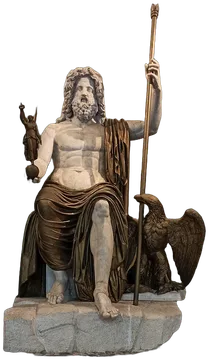
Beloved · Sources
Лето — возлюбленная Зевса: прямо подтверждено словами Зевса в Илиаде; связь не обозначена как супружество.
Homer, Iliad 14, trans. A. T. Murray (Theoi Classical Texts Library) · Iliad 14.327–327and Semele bare Dionysus, the joy of mortals; nor of Demeter, the fair-tressed queen; nor of glorious Leto; nay, nor yet of thine own self, as now I love thee, and sweet desire layeth hold of me. Then with crafty mind the queenly Hera spake unto him:
Il. 14.327
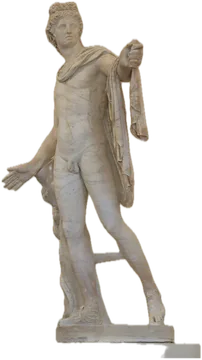
Son · Sources
from the time when first they parted in strife Atreus' son, king of men, and brilliant Achilles. Who then of the gods was it that brought these two together to contend? The son of Leto and Zeus; for he in anger against the king roused throughout the host an evil pestilence, and the people began to perish,
to the lord Apollo, whom fair-haired Leto bore: Hear me, god of the silver bow, who stand over Chryse and holy Cilla, and rule mightily over Tenedos, Sminthian god, if ever I roofed over a temple to your pleasing, or if ever I burned to you fat thigh-pieces of bulls and goats,
Zeus, the son of Cronos, and Apollo, vouchsafed victory, they that subdued me full easily, for of themselves they took the harness from my shoulders. But if twenty such as thou had faced me, here would all have perished, slain by my spear. Nay, it was baneful Fate and the son of Leto that slew me,
Il. 1.9 · Il. 1.36 · Il. 16.849 · Il. 19.413 · Il. 24.607–608
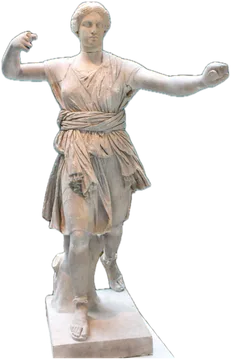
Daughter · Sources
The sons Apollo slew with shafts from his silver bow, being wroth against Niobe, and the daughters the archer Artemis, for that Niobe had matched her with fair-cheeked Leto, saying that the goddess had borne but twain, while herself was mother to many; wherefore they, for all they were but twain, destroyed them all.
Il. 24.607–608
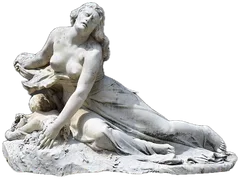
Poetic resemblance · Sources
The sons Apollo slew with shafts from his silver bow, being wroth against Niobe, and the daughters the archer Artemis, for that Niobe had matched her with fair-cheeked Leto, saying that the goddess had borne but twain, while herself was mother to many; wherefore they, for all they were but twain, destroyed them all.
Il. 24.607
See all 4
In art

Cobija. Birth of Apollo. собрание не указано. CC0. https://commons.wikimedia.org/wiki/File%3ABirth_of_Apollo.jpg
Photograph / reproduction: Cobija
Photograph / reproduction date: 2015-05-18 17:42:56
Cobija. Birth of Apollo. собрание не указано. CC0. https://commons.wikimedia.org/wiki/File%3ABirth_of_Apollo.jpg
Photograph / reproduction: Cobija
Photograph / reproduction date: 2015-05-18 17:42:56

Andrea Locatelli. Letô turns peasants into Frogs. Musée d'art et d'histoire de Narbonne. Public domain. https://www.wikidata.org/wiki/Q107316653
Andrea Locatelli. Letô turns peasants into Frogs. Musée d'art et d'histoire de Narbonne. Public domain. https://www.wikidata.org/wiki/Q107316653

Jan Brueghel the Elder. Latona and the Lycian Peasants. Rijksmuseum. Public domain. https://www.wikidata.org/wiki/Q17319735
Jan Brueghel the Elder. Latona and the Lycian Peasants. Rijksmuseum. Public domain. https://www.wikidata.org/wiki/Q17319735

Anonymous Unknown author. Othea's Epistle (Queen's Manuscript) 20. собрание не указано. Public domain. https://commons.wikimedia.org/wiki/File%3AOthea%27s_Epistle_%28Queen%27s_Manuscript%29_20.jpg
Photograph / reproduction: AnonymousUnknown author
Photograph / reproduction date: 15th century
Anonymous Unknown author. Othea's Epistle (Queen's Manuscript) 20. собрание не указано. Public domain. https://commons.wikimedia.org/wiki/File%3AOthea%27s_Epistle_%28Queen%27s_Manuscript%29_20.jpg
Photograph / reproduction: AnonymousUnknown author
Photograph / reproduction date: 15th century

Blackcat. Roma Museo Etrusco Statua Latona. собрание не указано. CC BY-SA 4.0. https://commons.wikimedia.org/wiki/File%3ARoma_Museo_Etrusco_Statua_Latona.jpg
Photograph / reproduction: Blackcat
Photograph / reproduction date: 2017-09-30 17:58:27
Blackcat. Roma Museo Etrusco Statua Latona. собрание не указано. CC BY-SA 4.0. https://commons.wikimedia.org/wiki/File%3ARoma_Museo_Etrusco_Statua_Latona.jpg
Photograph / reproduction: Blackcat
Photograph / reproduction date: 2017-09-30 17:58:27

Jean-Joseph Balechou / Louis-Jacques Cathelin / After Filippo Lauri. Latone vengée. собрание не указано. Public domain. https://commons.wikimedia.org/wiki/File%3ALatone_Veng%C3%A9e_Bal%C3%A9chou_Jean-Joseph_Cathelin.jpg
Photograph / reproduction: Jean-Joseph Balechou / Louis-Jacques Cathelin / After Filippo Lauri
Photograph / reproduction date: 1787


Nicolas de Launay / After Charles Monnet. Jupiter métamorphose en grenouilles des paysans qui avaient insulté Latone. собрание не указано. Public domain. https://commons.wikimedia.org/wiki/File%3AOvide_-_M%C3%A9tamorphoses_-_II_-_Jupiter_et_Latone.jpg
Photograph / reproduction: Nicolas de Launay / After Charles Monnet
See all 37
Sources and verification
The character is matched to the catalogue.
- Wikipedia · Leto · CC BY-SA 4.0
Excerpt; remaining sentences omitted.
Reference material remains distinct from the poem’s assertions. Characters who share a name retain separate pages.