Hephaestus
God
Hephaestus (UK: hih-FEE-stəs, US: hih-FES-təs; eight spellings; Ancient Greek: Ἥφαιστος, romanized: Hḗphaistos) is the Greek god of artisans, blacksmiths, carpenters, craftsmen, fire, metallurgy, metalworking, sculpture, and volcanoes. In Greek mythology, Hephaestus was the son of Hera, either on her own or by her husband Zeus.
Explore on the graph- Mentions
- 33
- Connected characters
- 27
- Books
- 11


Mentions in the Iliad
A. T. Murray, Loeb Classical Library, Harvard University Press, 1924 · Homer, Iliad with an English Translation · CC BY-SA 3.0 US
“and among them Hephaestus, the famed craftsman, was first to speak, doing pleasure to his dear mother, white-armed Hera: Surely this will be sorry work, that is no longer bearable, if you two are to wrangle thus for mortals' sakes, and set the gods in tumult; neither will there be any joy in the excellent feast,”
“and smiling took in her hand the cup from her son. Then he poured wine for all the other gods from left to right, drawing forth sweet nectar from the bowl. And unquenchable laughter arose among the blessed gods, as they saw Hephaestus puffing through the palace.”
“ceasing from their clamour. Then among them lord Agamemnon uprose, bearing in his hands the sceptre which Hephaestus had wrought with toil. Hephaestus gave it to king Zeus, son of Cronos, and Zeus gave it to the messenger Argeïphontes; and Hermes, the lord, gave it to Pelops, driver of horses,”
“These they burned on billets of wood stripped of leaves, and the inner parts they pierced with spits, and held them over the flame of Hephaestus. But when the thigh-pieces were wholly burned and they had tasted of the inner parts, they cut up the rest and spitted it, and roasted it carefully, and drew all off the spits.”
“a priest of Hephaestus; and he had two sons, Phegeus and Idaeus, both well skilled in all manner of fighting. These twain separated themselves from the host and went forth against Diomedes, they in their car, while he charged on foot upon the ground. And when they were come near, as they advanced against each other,”
“And Idaeus sprang back, and left the beauteous chariot, and had no heart to bestride his slain brother. Nay, nor would he himself have escaped black fate, had not Hephaestus guarded him, and saved him, enfolding him in darkness, that his aged priest might not be utterly fordone with grief.”
“his breastplate richly-dight, which Hephaestus wrought with toil. Could we but take these twain, then might I hope to make the Achaeans this very night embark upon their swift ships. So spake he vauntingly, and queenly Hera had indignation thereat; she shook herself on her throne and made high Olympus to quake,”
See all 31
“upon his eyelids and his cunning mind. So she went her way to her chamber, that her dear son Hephaestus had fashioned for her, and had fitted strong doors to the door-posts with a secret bolt, that no other god might open. Therein she entered, and closed the bright doors.”
“and I will owe thee thanks all my days. Lull me to sleep the bright eyes of Zeus beneath his brows, so soon as I shall have lain me by his side in love. And gifts will I give thee, a fair throne, ever imperishable, wrought of gold, that Hephaestus, mine own son,”
“Then verily could not I arise from the couch and go again to thy house; that were a shameful thing. But if thou wilt, and it is thy heart's good pleasure, thou hast a chamber, that thy dear son Hephaestus fashioned for thee, and fitted strong doors upon the door-posts.”
“one of like portion with himself, to whom fate hath decreed an equal share. Howbeit for this present will I yield, despite mine indignation; yet another thing will I tell thee, and make this threat in my wrath: if in despite of me, and of Athene, driver of the spoil,”
“Hephaestus gave to Zeus to bear for the putting to rout of warriors; this Apollo bare in his hands as he led on the host. And the Argives in close throng abode their coming, and the war-cry rose shrill from either side, and the arrows leapt from the bow-string, and many spears, hurled by bold hands,”
“until thine eyes shall behold me again coming hither. For in the morning will I return at the rising of the sun, bearing fair armour from the lord Hephaestus. So saying she turned her to go back from her son, and being turned she spake among her sisters of the sea:”
“Do ye now plunge beneath the broad bosom of the deep, to visit the old man of the sea, and the halls of our father, and tell him all. But I will get me to high Olympus to the house of Hephaestus, the famed craftsman, if so be he will give to my son glorious shining armour.”
“until such time as mine eyes should behold her again coming hither; for she pledged her to bring goodly armour from Hephaestus. No other man know I whose glorious armour I might don, except it were the shield of Aias, son of Telamon. Howbeit himself, I ween, hath dalliance amid the foremost fighters,”
“in twofold wise, for that I am eldest and am called thy wife, and thou art king among all the immortals—how was I not in my wrath against the Trojans to devise against them evil? On this wise spake they one to the other; but silver-footed Thetis came unto the house of Hephaestus,”
“a beautiful chair, richly-wrought, and beneath was a footstool for the feet; and she called to Hephaestus, the famed craftsman, and spake to him, saying: Hephaestus, come forth hither; Thetis hath need of thee. And the famous god of the two strong arms answered her: Verily then a dread and honoured goddess is within my halls,”
“an honoured guest and a welcome? Heretofore thou hast not been wont to come. Speak what is in thy mind; my heart bids me fulfill it, if fulfill it I can, and it is a thing that hath fulfillment. And Thetis made answer to him, shedding tears the while: Hephaestus, is there now any goddess, of all those that are in Olympus,”
“And the bellows, twenty in all, blew upon the melting-vats, sending forth a ready blast of every force, now to further him as he laboured hard, and again in whatsoever way Hephaestus might wish and his work go on. And on the fire he put stubborn bronze and tin”
“then wrought he for him a corselet brighter than the blaze of fire, and he wrought for him a heavy helmet, fitted to his temples, a fair helm, richly-dight, and set thereon a crest of gold; and he wrought him greaves of pliant tin. But when the glorious god of the two strong arms had fashioned all the armour,”
“But receive thou from Hephaestus glorious armour, exceeding fair, such as never yet a man bare upon his shoulders. So saying the goddess set down the arms in front of Achilles, and they all rang aloud in their splendour. Then trembling seized all the Myrmidons,”
“There was a gnashing of his teeth, and his two eyes blazed as it had been a flame of fire, and into his heart there entered grief that might not be borne. Thus in fierce wrath against the Trojans he clad him in the gifts of the god, that Hephaestus had wrought for him with toil. The greaves first he set about his legs:”
“fair and richly-dight. And he lifted the mighty helm and set it upon his head; and it shone as it were a star—the helm with crest of horse-hair, and around it waved the plumes of gold, that Hephaestus had set thick about the crest. And goodly Achilles made proof of himself in his armour,”
“And being come to the house of Zeus they sate them down within the polished colonnades which for father Zeus Hephaestus had builded with cunning skill. Thus were they gathered within the house of Zeus; nor did the Shaker of Earth fail to heed the call of the goddess, but came forth from the sea to join their company;”
“and together with these went Hephaestus, exulting in his might, halting, but beneath him his slender legs moved nimbly; but unto the Trojans went Ares, of the flashing helm, and with him Phoebus, of the unshorn locks, and Artemis, the archer,”
“against Hera stood forth the huntress of the golden arrows, and the echoing chase, even the archer Artemis, sister of the god that smiteth afar; against Leto stood forth the strong helper, Hermes, and against Hephaestus the great, deep-eddying river, that god called Xanthus, and men Scamander.”
“for five layers had the crook-foot god welded, two of bronze, and two within of tin, and one of gold, in which the spear of ash was stayed. Then Achilles in his turn hurled his far-shadowing spear and smote upon Aeneas' shield that was well-balanced upon every side,”
“And forthwith she spake unto Hephaestus, her dear son: Rouse thee, Crook-foot, my child! for it was against thee that we deemed eddying Xanthus to be matched in fight. Nay, bear thou aid with speed, and put forth thy flames unstintedly.”
“sore distressed by the blast of Hephaestus of many wiles. Burned too was the mighty River, and he spake and addressed the god: Hephaestus, there is none of the gods that can vie with thee, nor will I fight thee, ablaze with fire as thou art. Cease thou from strife,, and as touching the Trojans, let goodly Achilles forthwith”
“so burned in fire his fair streams, and the water boiled; nor had he any mind to flow further onward, but was stayed; for the blast of the might of wise-hearted Hephaestus distressed him. Then with instant prayer he spake winged words unto Hera: Hera, wherefore hath thy son beset my stream to afflict it”
“four-horned helm; and fair about it waved the plumes wrought of gold, that Hephaestus had set thick about the crest. As a star goeth forth amid stars in the darkness of night, the star of evening, that is set in heaven as the fairest of all; even so went forth a gleam from the keen spear that Achilles poised in his right hand,”
Connections
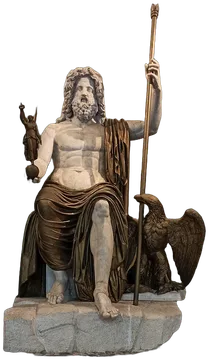
Father · Sources
since worse things prevail. And I give counsel to my mother, wise though she be herself, to do pleasure to our dear father Zeus, that the father upbraid her not again, and bring confusion upon our feast. What if the Olympian, the lord of the lightning, were minded
And being come to the house of Zeus they sate them down within the polished colonnades which for father Zeus Hephaestus had builded with cunning skill. Thus were they gathered within the house of Zeus; nor did the Shaker of Earth fail to heed the call of the goddess, but came forth from the sea to join their company;
Il. 1.578 · Il. 20.11–12
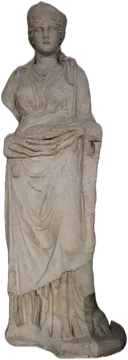
Mother · Sources
and among them Hephaestus, the famed craftsman, was first to speak, doing pleasure to his dear mother, white-armed Hera: Surely this will be sorry work, that is no longer bearable, if you two are to wrangle thus for mortals' sakes, and set the gods in tumult; neither will there be any joy in the excellent feast,
and smiling took in her hand the cup from her son. Then he poured wine for all the other gods from left to right, drawing forth sweet nectar from the bowl. And unquenchable laughter arose among the blessed gods, as they saw Hephaestus puffing through the palace.
upon his eyelids and his cunning mind. So she went her way to her chamber, that her dear son Hephaestus had fashioned for her, and had fitted strong doors to the door-posts with a secret bolt, that no other god might open. Therein she entered, and closed the bright doors.
Il. 1.571–572 · Il. 1.596 · Il. 14.167 · Il. 14.239 · Il. 14.339 · Il. 18.396 · Il. 21.330–331 · Il. 21.370–379
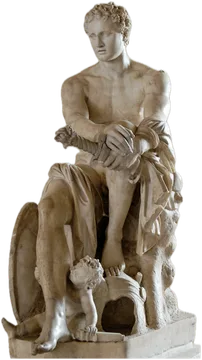
Brother · Sources
Братство или сестринство выведено из общего родителя: Гера, Зевс. Матери и отцы, не указанные в источнике, не предполагаются. Квалификация братства/сестринства: Илиада: Общие отец и мать подтверждены. Общие родители: Гера, Зевс.
Wikidata: Гера — роль родителя · P25 Wikidata: Зевс — роль родителя · P22 Wikidata: Гера — роль родителя · P25 Wikidata: Зевс — роль родителя · P22and among them Hephaestus, the famed craftsman, was first to speak, doing pleasure to his dear mother, white-armed Hera: Surely this will be sorry work, that is no longer bearable, if you two are to wrangle thus for mortals' sakes, and set the gods in tumult; neither will there be any joy in the excellent feast,
since worse things prevail. And I give counsel to my mother, wise though she be herself, to do pleasure to our dear father Zeus, that the father upbraid her not again, and bring confusion upon our feast. What if the Olympian, the lord of the lightning, were minded
and smiling took in her hand the cup from her son. Then he poured wine for all the other gods from left to right, drawing forth sweet nectar from the bowl. And unquenchable laughter arose among the blessed gods, as they saw Hephaestus puffing through the palace.
Il. 1.571–572 · Il. 1.578 · Il. 1.596 · Il. 5.33 · Il. 5.892 · Il. 5.896 · Il. 14.167 · Il. 14.239 · Il. 14.339 · Il. 18.396 · Il. 20.11–12 · Il. 21.330–331 · Il. 21.370–379 · Il. 21.412
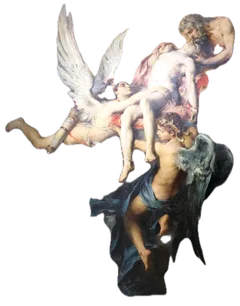
Brother through father · Sources
Братство или сестринство выведено из общего родителя: Зевс. Матери и отцы, не указанные в источнике, не предполагаются. Квалификация братства/сестринства: Илиада: Общий отец подтверждён; сведения о матерях неполны. Различие матерей не установлено. Общие родители: Зевс.
Wikidata: Гера — роль родителя · P25 Wikidata: Зевс — роль родителя · P22 Wikidata: Зевс — пол родителя · P21since worse things prevail. And I give counsel to my mother, wise though she be herself, to do pleasure to our dear father Zeus, that the father upbraid her not again, and bring confusion upon our feast. What if the Olympian, the lord of the lightning, were minded
And when they were come near as they advanced one against the other, the son and grandson of Zeus the cloud-gatherer, then Tlepolemus was first to speak, saying: Sarpedon, counsellor of the Lycians, why must thou be skulking here, that art a man unskilled in battle?They speak but a lie that say thou art sprung from Zeus that beareth the aegis, seeing thou art inferior far to those warriors that were sprung from Zeus in the days of men of old. Of other sort, men say, was mighty Heracles, my father, staunch in fight, the lionhearted,
And Tlepolemus smote Sarpedon upon the left thigh with his long spear, and the point sped through furiously and grazed the bone; howbeit his father as yet warded from him destruction. Then his goodly companions bare godlike Sarpedon forth from out the fight, and the long spear burdened him sore,as it trailed, but no man marked it or thought in their haste to draw forth from his thigh the spear of ash, that he might stand upon his feet; such toil had they in tending him. And on the other side the well-greaved Achaeans bare Tlepolemus from out the fight, and goodly Odysseusof the enduring soul was ware of it, and his spirit waxed furious within him; and he pondered then in heart and soul whether he should pursue further after the son of Zeus that thundereth aloud, or should rather take the lives of more Lycians. But not for great-hearted Odysseus was it ordained
Il. 1.578 · Il. 5.634–635 · Il. 5.662–672 · Il. 5.675 · Il. 6.198–199 · Il. 12.292 · Il. 12.402–403 · Il. 15.67 · Il. 16.522 · Il. 20.11–12
Paternal half-brother · Sources
Братство или сестринство выведено из общего родителя: Зевс. Матери и отцы, не указанные в источнике, не предполагаются. Квалификация братства/сестринства: Илиада: Общий отец; разные матери подтверждены. Общие родители: Зевс.
Wikidata: Гера — роль родителя · P25 Wikidata: Зевс — роль родителя · P22 Wikidata: Лето — роль родителя · P25 Wikidata: Зевс — роль родителя · P22from the time when first they parted in strife Atreus' son, king of men, and brilliant Achilles. Who then of the gods was it that brought these two together to contend? The son of Leto and Zeus; for he in anger against the king roused throughout the host an evil pestilence, and the people began to perish,
since worse things prevail. And I give counsel to my mother, wise though she be herself, to do pleasure to our dear father Zeus, that the father upbraid her not again, and bring confusion upon our feast. What if the Olympian, the lord of the lightning, were minded
to sacred Ilios. And Apollo sped forth to meet her, for he looked down from out of Pergamus and beheld her, and was fain to have victory for the Trojans. So the twain met one with the other by the oak-tree. Then to her spake first the king Apollo, son of Zeus: Wherefore art thou again come thus eagerly from Olympus, thou daughter of great Zeus,
Il. 1.9 · Il. 1.578 · Il. 7.23 · Il. 15.236 · Il. 20.11–12 · Il. 20.103 · Il. 21.229 · Il. 22.302
Paternal half-sister · Sources
Братство или сестринство выведено из общего родителя: Зевс. Матери и отцы, не указанные в источнике, не предполагаются. Квалификация братства/сестринства: Илиада: Общий отец; разные матери подтверждены. Общие родители: Зевс.
Гомер, Илиада — роль родителя · Ил. 3.236–238 Wikidata: Зевс — роль родителя · P22 Wikidata: Гера — роль родителя · P25 Wikidata: Зевс — роль родителя · P22since worse things prevail. And I give counsel to my mother, wise though she be herself, to do pleasure to our dear father Zeus, that the father upbraid her not again, and bring confusion upon our feast. What if the Olympian, the lord of the lightning, were minded
His battle-gear lieth upon the bounteous earth, but himself he rangeth like the bell-wether of a herd through the ranks of warriors. Like a ram he seemeth to me, a ram of thick fleece, that paceth through a great flock of white ewes. To him made answer Helen, sprung from Zeus:
and hate thee, even as now I love thee wondrously; and lest I devise grievous hatred between both, Trojans alike and Danaans; then wouldst thou perish of an evil fate. So spake she, and Helen, sprung from Zeus, was seized with fear; and she went, wrapping herself in her bright shining mantle,
Il. 1.578 · Il. 3.199 · Il. 3.418 · Il. 20.11–12
Paternal half-brother · Sources
Братство или сестринство выведено из общего родителя: Зевс. Матери и отцы, не указанные в источнике, не предполагаются. Квалификация братства/сестринства: Илиада: Общий отец; разные матери подтверждены. Общие родители: Зевс.
Wikidata: Гера — роль родителя · P25 Wikidata: Зевс — роль родителя · P22 Wikidata: Зевс — пол родителя · P21since worse things prevail. And I give counsel to my mother, wise though she be herself, to do pleasure to our dear father Zeus, that the father upbraid her not again, and bring confusion upon our feast. What if the Olympian, the lord of the lightning, were minded
And so suffered monstrous Hades even as the rest a bitter arrow, when this same man, the son of Zeus that beareth the aegis, smote him in Pylos amid the dead, and gave him over to pains. But he went to the house of Zeus and to high Olympus with grief at heart, pierced through with pains;
howbeit mine own father rageth with evil mind, cruel that he is, ever froward, a thwarter of my purposes; neither hath he any memory of this, that full often I saved his son when he was fordone by reason of Eurystheus' tasks. For verily he would make lament toward heaven and from heaven would Zeussend me forth to succour him. Had I but known all this in wisdom of my heart when Eurystheus sent him forth to the house of Hades the Warder, to bring from out of Erebus the hound of loathed Hades, then had he not escaped the sheer-falling waters of Styx.
Il. 1.578 · Il. 5.396 · Il. 8.363–365 · Il. 14.266 · Il. 14.324 · Il. 20.11–12
See all 27
In art

Anthony van Dyck. Thetis Receiving the Weapons of Achilles from Hephaestus. Kunsthistorisches Museum. Public domain. https://www.wikidata.org/wiki/Q22329840
Photograph / reproduction: Anthony van Dyck
Photograph / reproduction date: circa 1630/1632
Anthony van Dyck. Thetis Receiving the Weapons of Achilles from Hephaestus. Kunsthistorisches Museum. Public domain. https://www.wikidata.org/wiki/Q22329840
Photograph / reproduction: Anthony van Dyck
Photograph / reproduction date: circa 1630/1632

Giulio Romano. Thetis Giving Achilles His Arms. собрание не указано. Public domain. https://commons.wikimedia.org/wiki/File%3AThetis_Giving_Achilles_His_Arms.jpg
Photograph / reproduction: Giulio Romano
Photograph / reproduction date: 16th century
Giulio Romano. Thetis Giving Achilles His Arms. собрание не указано. Public domain. https://commons.wikimedia.org/wiki/File%3AThetis_Giving_Achilles_His_Arms.jpg
Photograph / reproduction: Giulio Romano
Photograph / reproduction date: 16th century

Giulio Romano (ca. 1492-1546). Hephaistos forging Achilles' Armor by Giulio Romano ca. 1492-1546 from the Sala di Troia Palazzo Ducale Mantua390b838898909863f455a7027d99affb. собрание не указано. Public domain. https://commons.wikimedia.org/wiki/File%3AHephaistos_forging_Achilles%27_Armor_by_Giulio_Romano_ca._1492-1546_from_the_Sala_di_Troia_Palazzo_Ducale_Mantua390b838898909863f455a7027d99affb.jpg
Photograph / reproduction: Giulio Romano (ca. 1492-1546)
Photograph / reproduction date: between circa 1492 and circa 1546

Unknown author Unknown author. Thetis consoles Achilles red figure pelike 470 BCE from Kamiros Rhodes BM E363. собрание не указано. CC0. https://commons.wikimedia.org/wiki/File%3AThetis_consoles_Achilles_red_figure_pelike_470_BCE_from_Kamiros_Rhodes_BM_E363.jpg
Photograph / reproduction: Unknown authorUnknown author
Photograph / reproduction date: circa 470 BCE

Mary Harrsch. Fresco of Vulcun presenting the armor of Achilles to Thetis in the House of Sirico excavated in 1851 Pompeii Prowalk. собрание не указано. CC BY-SA 4.0. https://commons.wikimedia.org/wiki/File%3AFresco_of_Vulcun_presenting_the_armor_of_Achilles_to_Thetis_in_the_House_of_Sirico_excavated_in_1851_Pompeii_Prowalk.jpg
Photograph / reproduction: Mary Harrsch
Photograph / reproduction date: 1st century BCE - 1st century CE

Peter Paul Rubens. Thetis receiving armour for Achilles from Hephaestus. Ducal Palace of Vila Viçosa. Public domain. https://www.wikidata.org/wiki/Q111907752
Peter Paul Rubens. Thetis receiving armour for Achilles from Hephaestus. Ducal Palace of Vila Viçosa. Public domain. https://www.wikidata.org/wiki/Q111907752


Maarten van Heemskerck. Vulcan hands Thetis the shield for Achilles. Kunsthistorisches Museum. Public domain. https://www.wikidata.org/wiki/Q27982100
Photograph / reproduction: Maarten van Heemskerck
Photograph / reproduction date: 1540
Maarten van Heemskerck. Vulcan hands Thetis the shield for Achilles. Kunsthistorisches Museum. Public domain. https://www.wikidata.org/wiki/Q27982100
Photograph / reproduction: Maarten van Heemskerck
Photograph / reproduction date: 1540
See all 123
Sources and verification
The character is matched to the catalogue.
- Wikipedia · Hephaestus · CC BY-SA 4.0
Excerpt; remaining sentences omitted.
Reference material remains distinct from the poem’s assertions. Characters who share a name retain separate pages.