Boreas
God
Boreas (, UK: , UK: ; Ancient Greek: Βορέας, romanized: Boréas; also Βορρᾶς, Borrhâs) is the Greek god of the cold north wind, storms, and winter. Although he was normally taken as the north wind, the Roman writers Aulus Gellius and Pliny the Elder both took Boreas as a northeast wind, equivalent to the Roman god Aquilo or Septentrio.
Explore on the graph- Mentions
- 11
- Connected characters
- 1
- Books
- 8


Mentions in the Iliad
A. T. Murray, Loeb Classical Library, Harvard University Press, 1924 · Homer, Iliad with an English Translation · CC BY-SA 3.0 US
“that blow with shrill blasts and scatter this way and that the shadowy clouds; even so the Danaans withstood the Trojans steadfastly, and fled not. And the son of Atreus ranged throughout the throng with many a word of command: My friends, be men, and take to you hearts of valour, and have shame each of the other in the fierce conflict. Of men that have shame more are saved than are slain, but from them that flee cometh neither glory nor any avail. He spake, and hurled his spear swiftly and smote a foremost warrior, a comrade of great-souled Aeneas, Deïcoön,”
“and forth from his thigh valiant Pelagon, that was his dear comrade, thrust the spear of ash; and his spirit failed him, and down over his eyes a mist was shed. Howbeit he revived, and the breath of the North Wind as it blew upon him made him to live again after in grievous wise he had breathed forth his spirit. But the Argives before the onset of Ares and Hector harnessed in bronze”
“the North Wind and the West Wind that blow from Thrace, coming suddenly, and forthwith the dark wave reareth itself in crests and casteth much tangle out along the sea; even so were the hearts of the Achaeans rent within their breasts. But the son of Atreus, stricken to the heart with sore grief,”
“driven up from the deep by the dread blast of the North Wind, nor so loud is the roar of blazing fire in the glades of a nuountain when it leapeth to burn the forest, nor doth the wind shriek so loud amid the high crests of the oaks—the wind that roareth the loudest in its rage—”
“eased of its ceaseless pain for godlike Heracles, whom thou when thou hadst leagued thee with the North Wind and suborned his blasts, didst send over the unresting sea, by thine evil devising, and thereafter didst bear him away unto well-peopled Cos. Him did I save from thence, and brought again”
“And as when from the clouds there flieth snow or chill hail, driven by the blast of the North Wind that is born in the bright heaven, even so fleetly sped in her eagerness swift Iris; and she drew nigh, and spake to the glorious Shaker of Earth, saying: A message for thee, O Earth-Enfolder, thou dark-haired god,”
“and then herself was gone to the stout-builded house of her mighty sire, and the Achaeans poured forth from the swift ships. As when thick and fast the snowflakes flutter down from Zeus chill beneath the blast of the North Wind, born in the bright heaven; even so then thick and fast from the ships were borne the helms, bright-gleaming,”
See all 11
Connections
Ally · Sources
23.208–217: Зефир и Борей прилетают на молитву Ахиллеса и вместе раздувают погребальный костёр.
I may not sit, for I must go back unto the streams of Oceanus, unto the land of the Ethiopians, where they are sacrificing hecatombs to the immortals, that I too may share in the sacred feast. But Achilles prayeth the North Wind and the noisy West Wind to come, and promiseth them fair offerings, that so ye may rouse the pyre to burn whereon liethPatroclus, for whom all the Achaeans groan aloud. When she had thus departed, and they arose with a wondrous din, driving the clouds tumultuously before them. And swiftly they came to the sea to blow thereon, and the wave swelledbeneath the shrill blast; and they came to deep-soiled Troyland, and fell upon the pyre, and mightily roared the wordrous blazing fire. So the whole night long as with one blast they beat upon the flame of the pyre, blowing shrill; and the whole night long swift Achilles, taking a two-handled cup in hand,
Il. 23.208–217
See all 1
In art

Sebastiano Conca. Boreas Abducting Oreithyia. Department of Paintings of the Louvre. Public domain. https://www.wikidata.org/wiki/Q18573817
Sebastiano Conca. Boreas Abducting Oreithyia. Department of Paintings of the Louvre. Public domain. https://www.wikidata.org/wiki/Q18573817

John William Waterhouse. Северный ветер (картина Уотерхауса). Public domain. https://www.wikidata.org/wiki/Q4944794
John William Waterhouse. Северный ветер (картина Уотерхауса). Public domain. https://www.wikidata.org/wiki/Q4944794

Peter Paul Rubens. Boreas Abducting Oreithyia. Academy of Fine Arts Vienna. Public domain. https://www.wikidata.org/wiki/Q8253935
Peter Paul Rubens. Boreas Abducting Oreithyia. Academy of Fine Arts Vienna. Public domain. https://www.wikidata.org/wiki/Q8253935

Joseph-Ferdinand Lancrenon. Boreas Abducting Oreithyia. Musée Girodet. Public domain. https://www.wikidata.org/wiki/Q97925760
Joseph-Ferdinand Lancrenon. Boreas Abducting Oreithyia. Musée Girodet. Public domain. https://www.wikidata.org/wiki/Q97925760

Giovanni Antonio Pellegrini. Boreas and Orithyia. Department of Paintings of the Louvre. Public domain. https://www.wikidata.org/wiki/Q18611898
Giovanni Antonio Pellegrini. Boreas and Orithyia. Department of Paintings of the Louvre. Public domain. https://www.wikidata.org/wiki/Q18611898

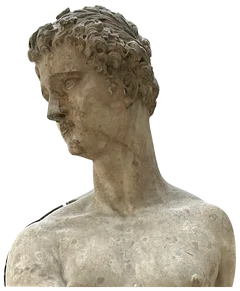
Original uploader was Per Honor et Gloria at en.wikipedia. WindGod2. собрание не указано. CC BY-SA 3.0. https://commons.wikimedia.org/wiki/File%3AWindGod2.JPG
Photograph / reproduction: Original uploader was Per Honor et Gloria at en.wikipedia
Photograph / reproduction date: 19 February 2006 (original upload date)


Xocolatl ( talk ) 21:17, 12 November 2019 (UTC). AIMG 6529 M Stadtmuseum Boreas. собрание не указано. CC BY-SA 4.0. https://commons.wikimedia.org/wiki/File%3AAIMG_6529_M_Stadtmuseum_Boreas.jpg
Photograph / reproduction: Xocolatl (talk) 21:17, 12 November 2019 (UTC)
Photograph / reproduction date: 2019
See all 17
Sources and verification
The character is matched to the catalogue.
- Wikipedia · Boreas · CC BY-SA 4.0
Excerpt; remaining sentences omitted.
Reference material remains distinct from the poem’s assertions. Characters who share a name retain separate pages.