Hera
Goddess
In ancient Greek religion, Hera (; Ancient Greek: Ἥρα, romanized: Hḗrā; Ἥρη, Hḗrē in Ionic and Homeric Greek) is the goddess of marriage, women, and family, and the protector of women during childbirth. In Greek mythology, she is queen among the twelve Olympians on Mount Olympus, sister and wife of Zeus, and daughter of the Titans Cronus and Rhea.
Explore on the graph- Mentions
- 89
- Connected characters
- 18
- Books
- 18


Mentions in the Iliad
A. T. Murray, Loeb Classical Library, Harvard University Press, 1924 · Homer, Iliad with an English Translation · CC BY-SA 3.0 US
“since she pitied the Danaans, when she saw them dying. When they were assembled and gathered together, among them arose and spoke swift-footed Achilles: Son of Atreus, now I think we shall return home, beaten back again, should we even escape death,”
“for in her heart she loved and cared for both men alike. She stood behind him, and seized the son of Peleus by his fair hair, appearing to him alone. No one of the others saw her. Achilles was seized with wonder, and turned around, and immediately recognized Pallas Athene. Terribly her eyes shone.”
“But you came, goddess, and freed him from his bonds, when you had quickly called to high Olympus him of the hundred hands, whom the gods call Briareus, but all men Aegaeon; for he is mightier than his father. He sat down by the side of the son of Cronos, exulting in his glory,”
“how far I among all the gods am honoured the least. Then, greatly troubled, Zeus, the cloud-gatherer spoke to her: Surely this will be sorry work, since you will set me on to engage in strife with Hera, when she shall anger me with taunting words. Even now she always upbraids me among the immortal gods,”
“So he sat down there upon his throne; but Hera saw, and failed not to note how silver-footed Thetis, daughter of the old man of the sea, had taken counsel with him. Forthwith then she spoke to Zeus, son of Cronos, with mocking words: Who of the gods, crafty one, has now again taken counsel with you?”
“In answer to him spoke the ox-eyed lady Hera: Most dread son of Cronos, what a word you have said! Truly, in the past I have not been accustomed to inquire nor ask you, but at your ease you devise all things whatever you wish. But now I have wondrous dread at heart, lest”
“lest all the gods that are in Olympus avail you not against my drawing near, when I put forth upon you my irresistible hands. He spoke, and ox-eyed lady Hera was seized with fear, and sat down in silence, curbing her heart. Then troubled were the gods of heaven throughout the palace of Zeus,”
See all 87
Connections
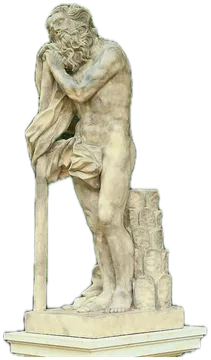
Father · Sources
For even though I grudge thee, and am fain to thwart their overthrow, I avail naught by my grudging, for truly thou art far the mightier. Still it beseemeth that my labour too be not made of none effect; for I also am a god, and my birth is from the stock whence is thine own, and crooked-counselling Cronos begat me as the most honoured of his daughters
Then Hera, the queenly goddess, daughter of great Cronos, went to and fro harnessing the horses of golden frontlets. and Hebe quickly put to the car on either side the curved wheels of bronze, eight-spoked, about the iron axle-tree. Of these the felloe verily is of gold imperishable,
with his fat and flesh, when he is fallen at the ships of the Achaeans. So spake she, and the goddess, white-armed Hera, failed not to hearken. She then went to and fro harnessing the horses of golden frontlets, even Hera, the queenly goddess, daughter of great Cronos; but Athene, daughter of Zeus that beareth the aegis,
Il. 4.59 · Il. 5.721 · Il. 8.383 · Il. 14.194 · Il. 14.243
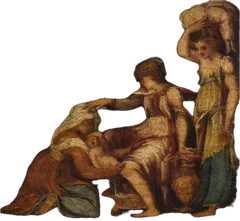
Mother · Sources
Происхождение по Гесиоду. Гестия также названа дочерью, но в Илиаде не упоминается и в её граф здесь не добавляется.
Hesiod, Theogony (H. G. Evelyn-White) · Hesiod, Theogony 453–458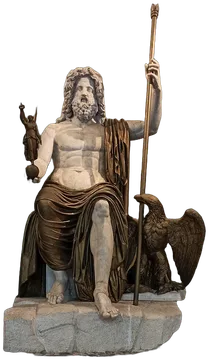
Husband · Sources
how far I among all the gods am honoured the least. Then, greatly troubled, Zeus, the cloud-gatherer spoke to her: Surely this will be sorry work, since you will set me on to engage in strife with Hera, when she shall anger me with taunting words. Even now she always upbraids me among the immortal gods,and declares that I give aid to the Trojans in battle. But for the present, depart again, lest Hera note something; and I will take thought for these things to bring all to pass. Come, I will bow my head to you, that thou may be certain, for this from me is the surest token among the immortals;
hard will they prove for you, though you are my wife. Whatever it is fitting for you to hear, this none other shall know before you, whether of gods or men; but what I wish to devise apart from the gods, of all this do not in any way inquire nor ask.
There went he up and slept, and beside him lay Hera of the golden throne.
Il. 1.519–522 · Il. 1.546 · Il. 1.611 · Il. 4.5–6 · Il. 4.60–61 · Il. 7.411 · Il. 8.461 · Il. 10.5 · Il. 10.329 · Il. 14.155 · Il. 14.213 · Il. 14.295 · Il. 14.346 · Il. 15.5 · Il. 15.33 · Il. 15.34 · Il. 15.48 · Il. 15.91 · Il. 15.156 · Il. 16.432 · Il. 18.184 · Il. 18.356 · Il. 19.97 · Il. 21.479 · Il. 21.498–499 · Il. 21.512 · Il. 24.64
Brother through father · Sources
Квалификация братства/сестринства: Илиада: Общий отец подтверждён; сведения о матерях неполны. Различие матерей не установлено. Общие родители: Кронос.
Wikidata: Кронос — роль родителя · P22 Wikidata: Рея — роль родителя · P25 Wikidata: Кронос — роль родителя · P22For even though I grudge thee, and am fain to thwart their overthrow, I avail naught by my grudging, for truly thou art far the mightier. Still it beseemeth that my labour too be not made of none effect; for I also am a god, and my birth is from the stock whence is thine own, and crooked-counselling Cronos begat me as the most honoured of his daughters
even so with cries rushed they one against the other. And the son of crooked-counselling Cronos took pity when he saw them, and spake to Hera, his sister and his wife: Ah, woe is me, for that it is fated that Sarpedon, dearest of men to me, be slain by Patroclus, son of Menoetius!
the Myrmidons made moan in lamentation for Patroclus; but Zeus spake unto Hera, his sister and his wife: Thou hast then had thy way, O ox-eyed, queenly Hera; thou hast aroused Achilles, swift of foot. In good sooth must the long-haired Achaeans be children of thine own womb.
Il. 4.58 · Il. 16.432 · Il. 18.356
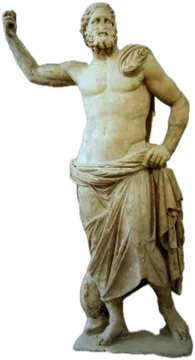
Brother through father · Sources
Квалификация братства/сестринства: Илиада: Общий отец подтверждён; сведения о матерях неполны. Различие матерей не установлено. Общие родители: Кронос.
Wikidata: Кронос — роль родителя · P22as he went busily about in the battle where men win glory, her own brother and her lord's withal; and she was glad at heart. And Zeus she marked seated on the topmost peak of many-fountained Ida, and hateful was he to her heart. Then she took thought, the ox-eyed, queenly Hera,
Il. 14.155
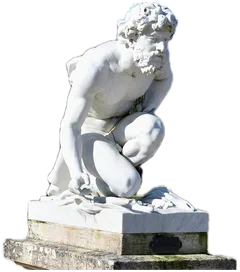
Brother through father · Sources
Братство или сестринство выведено из общего родителя: Рея, Кронос. Матери и отцы, не указанные в источнике, не предполагаются. Квалификация братства/сестринства: Илиада: Общий отец подтверждён; сведения о матерях неполны. Различие матерей не установлено. Общие родители: Кронос.
Hesiod, Theogony (H. G. Evelyn-White) · Hesiod, Theogony 453–458 Wikidata: Кронос — роль родителя · P22 Wikidata: Рея — роль родителя · P25 Wikidata: Кронос — роль родителя · P22For even though I grudge thee, and am fain to thwart their overthrow, I avail naught by my grudging, for truly thou art far the mightier. Still it beseemeth that my labour too be not made of none effect; for I also am a god, and my birth is from the stock whence is thine own, and crooked-counselling Cronos begat me as the most honoured of his daughters
Then Hera, the queenly goddess, daughter of great Cronos, went to and fro harnessing the horses of golden frontlets. and Hebe quickly put to the car on either side the curved wheels of bronze, eight-spoked, about the iron axle-tree. Of these the felloe verily is of gold imperishable,
with his fat and flesh, when he is fallen at the ships of the Achaeans. So spake she, and the goddess, white-armed Hera, failed not to hearken. She then went to and fro harnessing the horses of golden frontlets, even Hera, the queenly goddess, daughter of great Cronos; but Athene, daughter of Zeus that beareth the aegis,
Il. 4.59 · Il. 5.721 · Il. 8.383 · Il. 14.194 · Il. 14.243 · Il. 15.187
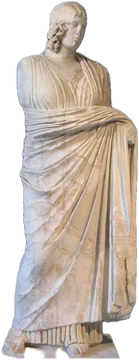
Sister through mother · Sources
Братство или сестринство выведено из общего родителя: Рея, Кронос. Матери и отцы, не указанные в источнике, не предполагаются. Квалификация братства/сестринства: Отдельный внешний источник: Общая мать подтверждена; сведения об отцах неполны. Различие отцов не установлено. Общие родители: Рея.
Hesiod, Theogony (H. G. Evelyn-White) · Hesiod, Theogony 453–458For even though I grudge thee, and am fain to thwart their overthrow, I avail naught by my grudging, for truly thou art far the mightier. Still it beseemeth that my labour too be not made of none effect; for I also am a god, and my birth is from the stock whence is thine own, and crooked-counselling Cronos begat me as the most honoured of his daughters
Then Hera, the queenly goddess, daughter of great Cronos, went to and fro harnessing the horses of golden frontlets. and Hebe quickly put to the car on either side the curved wheels of bronze, eight-spoked, about the iron axle-tree. Of these the felloe verily is of gold imperishable,
with his fat and flesh, when he is fallen at the ships of the Achaeans. So spake she, and the goddess, white-armed Hera, failed not to hearken. She then went to and fro harnessing the horses of golden frontlets, even Hera, the queenly goddess, daughter of great Cronos; but Athene, daughter of Zeus that beareth the aegis,
Il. 4.59 · Il. 5.721 · Il. 8.383 · Il. 14.194 · Il. 14.243
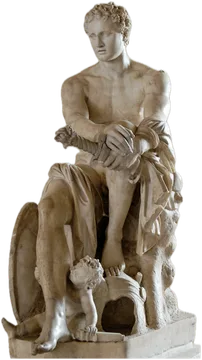
Son · Sources
Most hateful to me art thou of all gods that hold Olympus, for ever is strife dear to thee and wars and fightings. Thou hast the unbearable, unyielding spirit of thy mother, even of Hera; her can I scarce control by my words. Wherefore it is by her promptings, meseems, that thou sufferest thus.
Fool, not even yet hast thou learned how much mightier than thou I avow me to be, that thou matchest thy strength with mine. On this wise shalt thou satisfy to the full the Avengers invoked of thy mother, who in her wrath deviseth evil against thee, for that thou hast deserted the Achaeans and bearest aid to the overweening Trojans.
Il. 5.892 · Il. 21.412
See all 18
In art

Hans von Aachen. Суд Париса. Musée de la Chartreuse de Douai. Public domain. https://www.wikidata.org/wiki/Q105688151
Hans von Aachen. Суд Париса. Musée de la Chartreuse de Douai. Public domain. https://www.wikidata.org/wiki/Q105688151

François Boucher. The Judgement of Paris. Musée des beaux-arts de Mulhouse. CC BY-SA 4.0. https://www.wikidata.org/wiki/Q110304528
François Boucher. The Judgement of Paris. Musée des beaux-arts de Mulhouse. CC BY-SA 4.0. https://www.wikidata.org/wiki/Q110304528

Enrique Simonet. El Juicio de Paris. Museo de Málaga. Public domain. https://www.wikidata.org/wiki/Q1194202
Enrique Simonet. El Juicio de Paris. Museo de Málaga. Public domain. https://www.wikidata.org/wiki/Q1194202

James Thornhill. The Judgement of Paris. Government Art Collection. Public domain. https://www.wikidata.org/wiki/Q119917950
James Thornhill. The Judgement of Paris. Government Art Collection. Public domain. https://www.wikidata.org/wiki/Q119917950

Charles Errard. Суд Париса. Public domain. https://www.wikidata.org/wiki/Q138498891
Charles Errard. Суд Париса. Public domain. https://www.wikidata.org/wiki/Q138498891

James Barry. Jupiter Beguiled by Juno on Mount Ida. Graves Art Gallery. Public domain. https://www.wikidata.org/wiki/Q17242710
James Barry. Jupiter Beguiled by Juno on Mount Ida. Graves Art Gallery. Public domain. https://www.wikidata.org/wiki/Q17242710

Antonio da Vendri. Judgment of Paris. Rijksmuseum. Public domain. https://www.wikidata.org/wiki/Q17323979
Antonio da Vendri. Judgment of Paris. Rijksmuseum. Public domain. https://www.wikidata.org/wiki/Q17323979
See all 176
Sources and verification
The character is matched to the catalogue.
- Wikipedia · Hera · CC BY-SA 4.0
Excerpt; remaining sentences omitted.
Reference material remains distinct from the poem’s assertions. Characters who share a name retain separate pages.