Epeigeus
Mortal man
In Greek mythology, Epigeus or Epeigeus (Ancient Greek: Ἐπειγεύς Epeigeus) is a Greek hero in the Iliad. He was one of the best soldiers in the Myrmidon army against Troy.
Explore on the graph- Mentions
- 1
- Connected characters
- 3
- Books
- 1


Mentions in the Iliad
A. T. Murray, Loeb Classical Library, Harvard University Press, 1924 · Homer, Iliad with an English Translation · CC BY-SA 3.0 US
“for smitten was a man in no wise the worst among the Myrmidons, even the son of great-souled Agacles, goodly Epeigeus, that was king in well-peopled Budeum of old, but when he had slain a goodly man of his kin, to Peleus he came as a suppliant, and to silver-footed Thetis;”
See all 1
Connections
Father · Sources
for smitten was a man in no wise the worst among the Myrmidons, even the son of great-souled Agacles, goodly Epeigeus, that was king in well-peopled Budeum of old, but when he had slain a goodly man of his kin, to Peleus he came as a suppliant, and to silver-footed Thetis;
Il. 16.571
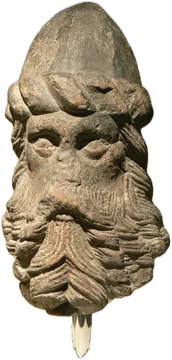
Killer · Sources
В стихах 16.577–580 Гектор ударяет Епигея камнем в голову, тот падает, и смерть разливается вокруг него; описание прямо называет Епигея убитым Гектором.
and they sent him to follow with Achilles, breaker of the ranks of men, to Ilios, famed for its horses, that he might fight with the Trojans. Him, as he was laying hold of the corpse, glorious Hector smote upon the head with a stone; and his head was wholly cloven asunder within the heavy helmet,and he fell headlong upon the corpse, and death, that slayeth the spirit, was shed about him. Then over Patroclus came grief for his slain comrade, and he charged through the foremost fighters like a fleet falcon that driveth in flight daws and starlings; even so straight against the Lycians, O Patroclus, master of horsemen,
Il. 16.577–580
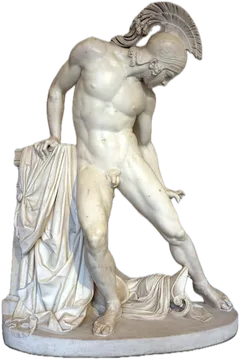
Master · Sources
В стихах 16.570–576 Епигей назван «не из худших среди мирмидонцев», которого Пелей и Фетида послали в Трою с Ахиллесом; описание прямо называет его мирмидонцем, пришедшим с Ахиллом.
for smitten was a man in no wise the worst among the Myrmidons, even the son of great-souled Agacles, goodly Epeigeus, that was king in well-peopled Budeum of old, but when he had slain a goodly man of his kin, to Peleus he came as a suppliant, and to silver-footed Thetis;and they sent him to follow with Achilles, breaker of the ranks of men, to Ilios, famed for its horses, that he might fight with the Trojans. Him, as he was laying hold of the corpse, glorious Hector smote upon the head with a stone; and his head was wholly cloven asunder within the heavy helmet,
Il. 16.570–576
See all 3
In art
See all 0
There is nothing in this section yet.
Sources and verification
The character is matched to the catalogue.
- Wikipedia · Epigeus · CC BY-SA 4.0
Excerpt; remaining sentences omitted.
Reference material remains distinct from the poem’s assertions. Characters who share a name retain separate pages.