Peisander
Mortal man
A character named in Homer's Iliad. The English introduction is not yet available.
Explore on the graph- Mentions
- 1
- Connected characters
- 2
- Books
- 1


Mentions in the Iliad
A. T. Murray, Loeb Classical Library, Harvard University Press, 1924 · Homer, Iliad with an English Translation · CC BY-SA 3.0 US
“lead to his home, when he had given countless gifts of wooing, and Eudorus did old Phylas nurse and cherish tenderly, loving him dearly, as he had been his own son. And of the third company warlike Peisander was captain, son of Maemalus, a man pre-eminent among all the Myrmidons”
See all 1
Connections
Father · Sources
Father · Sources
lead to his home, when he had given countless gifts of wooing, and Eudorus did old Phylas nurse and cherish tenderly, loving him dearly, as he had been his own son. And of the third company warlike Peisander was captain, son of Maemalus, a man pre-eminent among all the Myrmidons
Il. 16.193
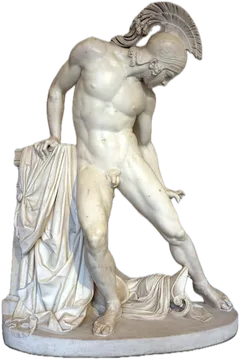
Master · Sources
Master · Sources
В 16.171–172 Ахиллес ставит пять начальников над мирмидонцами, сохраняя высшую власть; 16.193–195 называют Писандра вождём третьего отряда мирмидонцев. Служебная подчинённость Ахиллесу, тип serves.
lead to his home, when he had given countless gifts of wooing, and Eudorus did old Phylas nurse and cherish tenderly, loving him dearly, as he had been his own son. And of the third company warlike Peisander was captain, son of Maemalus, a man pre-eminent among all the Myrmidonsin fighting with the spear, after the comrade of the son of Peleus. And the fourth company did the old knight Phoenix lead, and the fifth Alcimedon, the peerless son of Laerces. But when at length Achilles had set them all in array with their leaders, duly parting company from company, he laid upon them a stern command:
Il. 16.193–195
See all 2
In art
See all 0
There is nothing in this section yet.
Sources and verification
The character is matched to the catalogue.
Wikidata Q1176882 (matched via ruwiki 'Писандр')
Reference material remains distinct from the poem’s assertions. Characters who share a name retain separate pages.