Odysseus
Mortal man
In Greek and Roman mythology, Odysseus ( , US also ; Ancient Greek: Ὀδυσσεύς, Ὀδυσεύς, romanized: Odysseús, Odyseús, IPA: [o.dy(s̠).s̠ěu̯s̠]), also known by the Latin variant Ulysses (, UK also ; Latin: Ulysses, Ulixes), is a legendary Greek king of Ithaca and the hero of Homer's epic poem, the Odyssey. Odysseus also plays a key role in Homer's Iliad and other works in that same epic cycle.
Explore on the graph- Mentions
- 90
- Connected characters
- 30
- Books
- 15


Mentions in the Iliad
A. T. Murray, Loeb Classical Library, Harvard University Press, 1924 · Homer, Iliad with an English Translation · CC BY-SA 3.0 US
“suiting it to my mind, so that it will be worth just as much—but if they do not, I myself will come and take your prize, or that of Aias, or that of Odysseus I will seize and bear away. Angry will he be, to whomever I come. But these things we will consider hereafter.”
“and Odysseus of many wiles went on board to take command. So these embarked and sailed over the watery ways; but the son of Atreus bade the people purify themselves. And they purified themselves, and cast the defilement into the sea, and offered to Apollo perfect hecatombs”
“came to Chryse bringing the holy hecatomb. When they had arrived within the deep harbour, they furled the sail, and stowed it in the black ship, and the mast they lowered by the forestays and brought it to the crutch with speed, and rowed her with oars to the place of anchorage.”
“So saying he placed her in his arms, and he joyfully took his dear child; but they made haste to set in array for the god the holy hecatomb around the well-built altar, and then they washed their hands and took up the barley grains. Then Chryses lifted up his hands, and prayed aloud for them:”
“neither suffer them to draw into the sea their curved ships. So spake she, and the goddess, flashing-eyed Athene, failed not to hearken. Down from the peaks of Olympus she went darting, and speedily came to the swift ships of the Achaeans. There she found Odysseus, the peer of Zeus in counsel,”
“But himself he went straight to Agamemnon, son of Atreus, and received at his hand the staff of his fathers, imperishable ever, and therewith went his way along the ships of the brazen-coated Achaeans. Whomsoever he met that was a chieftain or man of note, to his side would he come and with gentle words seek to restrain him, saying:”
“Hateful was he to Achilles above all, and to Odysseus, for it was they twain that he was wont to revile; but now again with shrill cries he uttered abuse against goodly Agamemnon. With him were the Achaeans exceeding wroth, and had indignation in their hearts. Howbeit with loud shoutings he spake and chid Agamemnon:”
See all 88
Connections
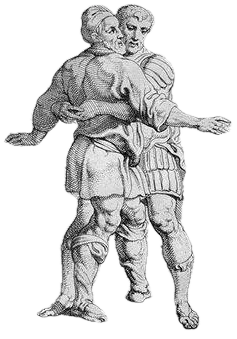
Father · Sources
as he stood. He laid no hand upon his benched, black ship, for that grief had come upon his heart and soul; and flashing-eyed Athene stood near him, and said: Son of Laërtes, sprung from Zeus, Odysseus of many wiles, is it thus indeed that ye will fling yourselves
This again is Laertes' son, Odysseus of many wiles, that was reared in the land of Ithaca, rugged though it be, and he knoweth all manner of craft and cunning devices. Then to her again made answer Antenor, the wise: Lady, this verily is a true word that thou hast spoken,
of the horse-taming Trojans. This that thou sayest is as empty wind. Then lord Agamemnon spake to him with a smile, when he knew that he was wroth, and took back his words: Zeus-born son of Laertes, Odysseus of many wiles, neither do I chide thee overmuch nor urge thee on,
Il. 2.173 · Il. 3.200 · Il. 4.358 · Il. 8.93 · Il. 9.307 · Il. 9.624 · Il. 10.144 · Il. 10.544 · Il. 10.570 · Il. 11.316
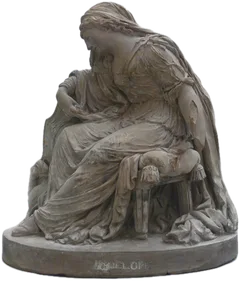
Wife · Sources
Odyssey calls Penelope Odysseus’ wife; external epic/reference evidence, not an Iliad passage.
Homer, Odyssey 23 · Homer, Odyssey 23.231–262
Son · Sources
Son of Atreus, what a word hath escaped the barrier of thy teeth! How sayest thou that we are slack in battle, whenso we Achaeans rouse keen war against the horse-taming Trojans? Thou shalt see, if so be thou wilt and if thou carest aught therefor, the father of Telemachus mingling with the foremost fighters
Il. 4.354
Ancestor · Sources
Описание прямо называет родство с Одиссеем; сохранённый внешний снимок (enwiki, со ссылкой на «Одиссею») подтверждает деда по матери.
Autolycus · English Wikipedia, 'Autolycus' (revision snapshot)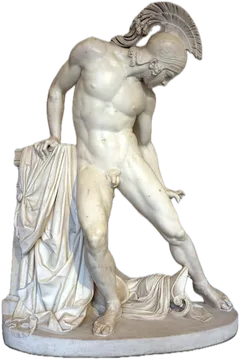
Friend · Sources
Hail, O Achilles, of the equal feast have we no stinting, either in the hut of Agamemnon, son of Atreus, or now in thine; for here is abundance that satisfies the heart to feast withal. Yet matters of the delicious feast are not in our thoughts, nay, Zeus-nurtured one, it is utter ruin that we behold, and are afraid;
Il. 9.225
Poetic resemblance · Sources
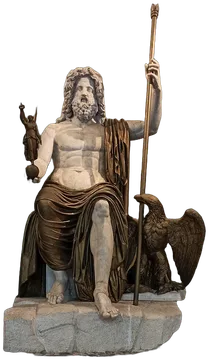
neither suffer them to draw into the sea their curved ships. So spake she, and the goddess, flashing-eyed Athene, failed not to hearken. Down from the peaks of Olympus she went darting, and speedily came to the swift ships of the Achaeans. There she found Odysseus, the peer of Zeus in counsel,
Nestor, first of all, and king Idomeneus, and thereafter the twain Aiantes and the son of Tydeus, and as the sixth Odysseus, the peer of Zeus in counsel. And unbidden came to him Menelaus, good at the war-cry, for he knew in his heart wherewith his brother was busied.
and held the mainland and dwelt on the shores over against the isles. Of these was Odysseus captain, the peer of Zeus in counsel. And with him there followed twelve ships with vermilion prows. And the Aetolians were led by Thoas, Andraemon's son, even they that dwelt in Pleuron and Olenus and Pylene and Chalcis, hard by the sea, and rocky Calydon. For the sons of great-hearted Oeneus were no more, neither did he himself still live, and fair-haired Meleager was dead, to whom had commands been given that he should bear full sway among the Aetolians. And with Thoas there followed forty black ships.
Il. 2.169 · Il. 2.407 · Il. 2.636
Connection · Sources
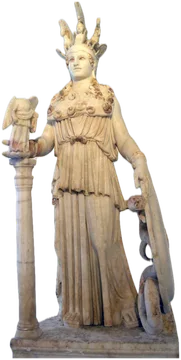
in all manner of toils; and Pallas Athene loveth him. If he but follow with me, even out of blazing fire might we both return, for wise above all is he in understanding. Then spake unto him much enduring goodly Odysseus: Son of Tydeus, praise me not over-much, neither blame me in aught:
Il. 10.245
Ally · Sources
Hear me, goddess, and come a goodly helper to my feet. So spake he in prayer, and Pallas Athene heard him, and made his limbs light, his feet and his hands above. But when they were now about to dart forth to win the prize, then Aias slipped as he ran—for Athene hampered him—
Il. 23.771–772
See all 30
In art

Odysseus (statue), Vathy. CC BY-SA 3.0. https://www.wikidata.org/wiki/Q114140399
Odysseus (statue), Vathy. CC BY-SA 3.0. https://www.wikidata.org/wiki/Q114140399

Jean-Auguste-Dominique Ingres. The Ambassadors of Agamemnon in the tent of Achilles. Beaux-Arts de Paris. Public domain. https://www.wikidata.org/wiki/Q16020875
Photograph / reproduction: Jean-Auguste-Dominique Ingres
Photograph / reproduction date: 1801
Jean-Auguste-Dominique Ingres. The Ambassadors of Agamemnon in the tent of Achilles. Beaux-Arts de Paris. Public domain. https://www.wikidata.org/wiki/Q16020875
Photograph / reproduction: Jean-Auguste-Dominique Ingres
Photograph / reproduction date: 1801

Jan Boeckhorst. Ulysses discovers Achilles dressed up as a girl. собрание не указано. Public domain. https://commons.wikimedia.org/wiki/File%3AJan_Boeckhorst_Ulysses_discovers_Achilles_dressed_up_as_a_girl.jpg
Photograph / reproduction: Jan Boeckhorst
Photograph / reproduction date: circa 1650
Jan Boeckhorst. Ulysses discovers Achilles dressed up as a girl. собрание не указано. Public domain. https://commons.wikimedia.org/wiki/File%3AJan_Boeckhorst_Ulysses_discovers_Achilles_dressed_up_as_a_girl.jpg
Photograph / reproduction: Jan Boeckhorst
Photograph / reproduction date: circa 1650

After Nicolas Poussin. The Return of Odysseus .. собрание не указано. Public domain. https://commons.wikimedia.org/wiki/File%3APoussin_Odyseus.JPG
Photograph / reproduction: After Nicolas Poussin
Photograph / reproduction date: 1650s
After Nicolas Poussin. The Return of Odysseus .. собрание не указано. Public domain. https://commons.wikimedia.org/wiki/File%3APoussin_Odyseus.JPG
Photograph / reproduction: After Nicolas Poussin
Photograph / reproduction date: 1650s

Guidoccio Cozzarelli. Guidoccio Cozzarelli Heimkehr des Odysseus. собрание не указано. Public domain. https://commons.wikimedia.org/wiki/File%3AGuidoccio_Cozzarelli_Heimkehr_des_Odysseus.jpg
Photograph / reproduction: Guidoccio Cozzarelli
Photograph / reproduction date: before 1517
Guidoccio Cozzarelli. Guidoccio Cozzarelli Heimkehr des Odysseus. собрание не указано. Public domain. https://commons.wikimedia.org/wiki/File%3AGuidoccio_Cozzarelli_Heimkehr_des_Odysseus.jpg
Photograph / reproduction: Guidoccio Cozzarelli
Photograph / reproduction date: before 1517

Angelika Kauffmann. Angelica Kauffmann (1741-1807) - Ulysses Discovering Achilles - 872174 - National Trust. собрание не указано. Public domain. https://commons.wikimedia.org/wiki/File%3AAngelica_Kauffmann_%281741-1807%29_-_Ulysses_Discovering_Achilles_-_872174_-_National_Trust.jpg
Photograph / reproduction: Angelika Kauffmann
Photograph / reproduction date: 1770/1771


Richard Geiger. Geiger Richárd - görög népek 017 Odüsszeusz beszél anyja árnyával az alivilágban. собрание не указано. Public domain. https://commons.wikimedia.org/wiki/File%3AGeiger_Rich%C3%A1rd_-_g%C3%B6r%C3%B6g_n%C3%A9pek_017_Od%C3%BCsszeusz_besz%C3%A9l_anyja_%C3%A1rny%C3%A1val_az_alivil%C3%A1gban.jpg
Photograph / reproduction: Richard Geiger
Photograph / reproduction date: 1900
See all 397
Sources and verification
The character is matched to the catalogue.
- Wikipedia · Odysseus · CC BY-SA 4.0
Excerpt; remaining sentences omitted.
Reference material remains distinct from the poem’s assertions. Characters who share a name retain separate pages.