Neoptolemus
Mortal man
In Greek mythology, Neoptolemus (; Ancient Greek: Νεοπτόλεμος, romanized: Neoptólemos, lit. 'new warrior or young warrior'), originally called Pyrrhus at birth (; Πύρρος, Pýrrhos, 'red'), was the son of the mythical warrior Achilles and the princess Deidamia, and the brother of Oneiros. He became the progenitor of the ruling dynasty of the Molossians of ancient Epirus.
Explore on the graph- Mentions
- 2
- Connected characters
- 2
- Books
- 2


Mentions in the Iliad
A. T. Murray, Loeb Classical Library, Harvard University Press, 1924 · Homer, Iliad with an English Translation · CC BY-SA 3.0 US
“for the sake of abhorred Helen am warring with the men of Troy; nay, nor though it were he that in Scyrus is reared for me, my son well-beloved —if so be godlike Neoptolemus still liveth. For until now the heart in my breast had hope that I alone should perish far from horse-pasturing Argos,”
“But go thou in, and clasp the knees of the son of Peleus and entreat him by his father and his fair-haired mother and his child, that thou mayest stir his soul. So spake Hermes, and departed unto high Olympus; and Priam leapt from his chariot to the ground,”
See all 2
Connections
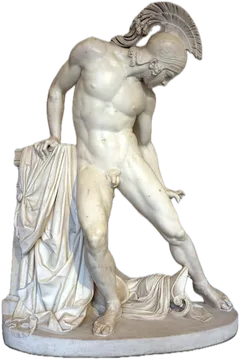
Father · Sources
for the sake of abhorred Helen am warring with the men of Troy; nay, nor though it were he that in Scyrus is reared for me, my son well-beloved —if so be godlike Neoptolemus still liveth. For until now the heart in my breast had hope that I alone should perish far from horse-pasturing Argos,
But go thou in, and clasp the knees of the son of Peleus and entreat him by his father and his fair-haired mother and his child, that thou mayest stir his soul. So spake Hermes, and departed unto high Olympus; and Priam leapt from his chariot to the ground,
Il. 19.326 · Il. 24.467
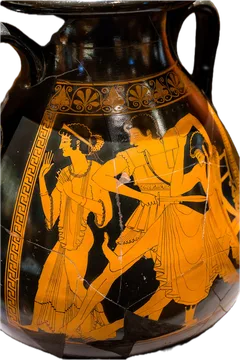
Sister · Sources
Братство или сестринство выведено из общего родителя: Ахиллес. Матери и отцы, не указанные в источнике, не предполагаются. Квалификация братства/сестринства: Илиада: Родительские основания противоречат друг другу; вид родства не уточняется. Общие родители: Ахиллес (сын Пелея).
Wikidata: Ахиллес (сын Пелея) — пол родителя · P21 Wikidata: Агамемнон — пол родителя · P21that be fairest after Argive Helen. And if we return to Achaean Argos, the richest of lands, he shall be my son, and I will honour him even as Orestes that is reared in all abundance, my son well-beloved. Three daughters have I in my well-builded hall,Chrysothemis, and Laodice, and Iphianassa; of these let him lead to the house of Peleus which one he will, without gifts of wooing, and I will furthermore give a dower full rich, such as no man ever yet gave with his daughter. And seven well-peopled cities will I give him,
for the sake of abhorred Helen am warring with the men of Troy; nay, nor though it were he that in Scyrus is reared for me, my son well-beloved —if so be godlike Neoptolemus still liveth. For until now the heart in my breast had hope that I alone should perish far from horse-pasturing Argos,
But go thou in, and clasp the knees of the son of Peleus and entreat him by his father and his fair-haired mother and his child, that thou mayest stir his soul. So spake Hermes, and departed unto high Olympus; and Priam leapt from his chariot to the ground,
Il. 9.142–146 · Il. 19.326 · Il. 24.467
See all 2
In art

Giambattista Pittoni. Polyxena in front of the Achilles' Tomb. Department of Paintings of the Louvre. Public domain. https://www.wikidata.org/wiki/Q18573887
Giambattista Pittoni. Polyxena in front of the Achilles' Tomb. Department of Paintings of the Louvre. Public domain. https://www.wikidata.org/wiki/Q18573887

Léon Bazille Perrault. The death of Priam. Beaux-Arts de Paris. Public domain. https://www.wikidata.org/wiki/Q104175800
Léon Bazille Perrault. The death of Priam. Beaux-Arts de Paris. Public domain. https://www.wikidata.org/wiki/Q104175800

Jules Lefebvre. The Death of Priam. Beaux-Arts de Paris. Public domain. https://www.wikidata.org/wiki/Q17613629
Jules Lefebvre. The Death of Priam. Beaux-Arts de Paris. Public domain. https://www.wikidata.org/wiki/Q17613629

Pierre-Narcisse Guérin. La Mort de Priam, par Pierre-Narcisse Guérin. Musée des Beaux-Arts d'Angers. Public domain. https://www.wikidata.org/wiki/Q122389396
Pierre-Narcisse Guérin. La Mort de Priam, par Pierre-Narcisse Guérin. Musée des Beaux-Arts d'Angers. Public domain. https://www.wikidata.org/wiki/Q122389396

Nicolas Poussin. Rescue of Young King Pyrrhus. Department of Paintings of the Louvre. Public domain. https://www.wikidata.org/wiki/Q19820170
Nicolas Poussin. Rescue of Young King Pyrrhus. Department of Paintings of the Louvre. Public domain. https://www.wikidata.org/wiki/Q19820170

François-Xavier Fabre. Ulysse et Néoptolème enlevant à Philoctète les flèches d'Hercule (esquisse). Musée Fabre. CC BY 3.0. https://www.wikidata.org/wiki/Q117378724
Photograph / reproduction: Sailko
Photograph / reproduction date: 2020-08-13 11:48:14
François-Xavier Fabre. Ulysse et Néoptolème enlevant à Philoctète les flèches d'Hercule (esquisse). Musée Fabre. CC BY 3.0. https://www.wikidata.org/wiki/Q117378724
Photograph / reproduction: Sailko
Photograph / reproduction date: 2020-08-13 11:48:14

Johan Ludwig Lund. Pyrrhus and Andromache at Hector's Tomb. Statens Museum for Kunst. Public domain. https://www.wikidata.org/wiki/Q20355167
Photograph / reproduction: Daderot
Johan Ludwig Lund. Pyrrhus and Andromache at Hector's Tomb. Statens Museum for Kunst. Public domain. https://www.wikidata.org/wiki/Q20355167
Photograph / reproduction: Daderot
See all 12
Sources and verification
The character is matched to the catalogue.
- Wikipedia · Neoptolemus · CC BY-SA 4.0
Excerpt; remaining sentences omitted.
Reference material remains distinct from the poem’s assertions. Characters who share a name retain separate pages.