Leda
Mortal woman
In Greek mythology, Leda (; Ancient Greek: Λήδα [lɛ́ːdaː]), also rendered as Lede, was an Aetolian princess who became queen consort of Sparta through her marriage to King Tyndareus. Zeus fell in love with Leda, and to avoid his wife Hera's jealousy, assaulted her while disguised as a swan.
Explore on the graph- Mentions
- 2
- Connected characters
- 3
- Books
- 2


Mentions in the Iliad
A. T. Murray, Loeb Classical Library, Harvard University Press, 1924 · Homer, Iliad with an English Translation · CC BY-SA 3.0 US
“whom I could well note, and tell their names; but two marshallers of the host can I not see, Castor, tamer of horses, and the goodly boxer, Polydeuces, even mine own brethren, whom the same mother bare. Either they followed not with the host from lovely Lacedaemon,”
“I would that on the day when first my mother gave me birth an evil storm-wind had borne me away to some mountain or to the wave of the loud-resounding sea, where the wave might have swept me away or ever these things came to pass. Howbeit, seeing the gods thus ordained these ills,”
See all 2
Connections
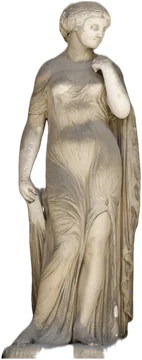
Daughter · Sources
whom I could well note, and tell their names; but two marshallers of the host can I not see, Castor, tamer of horses, and the goodly boxer, Polydeuces, even mine own brethren, whom the same mother bare. Either they followed not with the host from lovely Lacedaemon,
I would that on the day when first my mother gave me birth an evil storm-wind had borne me away to some mountain or to the wave of the loud-resounding sea, where the wave might have swept me away or ever these things came to pass. Howbeit, seeing the gods thus ordained these ills,
Il. 3.238 · Il. 6.345
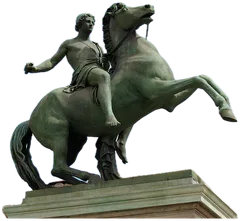
Son · Sources
whom I could well note, and tell their names; but two marshallers of the host can I not see, Castor, tamer of horses, and the goodly boxer, Polydeuces, even mine own brethren, whom the same mother bare. Either they followed not with the host from lovely Lacedaemon,
Il. 3.238
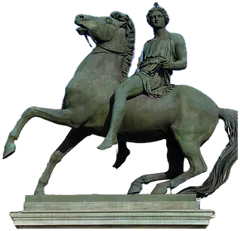
Son · Sources
whom I could well note, and tell their names; but two marshallers of the host can I not see, Castor, tamer of horses, and the goodly boxer, Polydeuces, even mine own brethren, whom the same mother bare. Either they followed not with the host from lovely Lacedaemon,
Il. 3.238
See all 3
In art

Lovis Corinth. Lovis Corinth Leda mit dem Schwan 1902. Public domain. https://www.wikidata.org/wiki/Q131702181
Lovis Corinth. Lovis Corinth Leda mit dem Schwan 1902. Public domain. https://www.wikidata.org/wiki/Q131702181

Lovis Corinth. Lovis Corinth Leda 1911. Public domain. https://www.wikidata.org/wiki/Q133850791
Lovis Corinth. Lovis Corinth Leda 1911. Public domain. https://www.wikidata.org/wiki/Q133850791

Lovis Corinth. Lovis Corinth Leda mit dem Schwan 1919. Public domain. https://www.wikidata.org/wiki/Q134293158
Lovis Corinth. Lovis Corinth Leda mit dem Schwan 1919. Public domain. https://www.wikidata.org/wiki/Q134293158

Gustave Moreau. Leda. collection du musée Gustave-Moreau. Public domain. https://www.wikidata.org/wiki/Q19388487
Gustave Moreau. Leda. collection du musée Gustave-Moreau. Public domain. https://www.wikidata.org/wiki/Q19388487

Franz Schrotzberg. Franz Schrotzberg - Leda mit dem Schwan - 3383 - Kunsthistorisches Museum. Belvedere. Public domain. https://www.wikidata.org/wiki/Q28001668
Franz Schrotzberg. Franz Schrotzberg - Leda mit dem Schwan - 3383 - Kunsthistorisches Museum. Belvedere. Public domain. https://www.wikidata.org/wiki/Q28001668

Jacopo Tintoretto. Leda and the Swan. Uffizi Gallery. Public domain. https://www.wikidata.org/wiki/Q114647547
Jacopo Tintoretto. Leda and the Swan. Uffizi Gallery. Public domain. https://www.wikidata.org/wiki/Q114647547

Jean-Baptiste Marie Pierre. Leda and the Swan. Museu Nacional de Belas Artes. Public domain. https://www.wikidata.org/wiki/Q116790418
Jean-Baptiste Marie Pierre. Leda and the Swan. Museu Nacional de Belas Artes. Public domain. https://www.wikidata.org/wiki/Q116790418
See all 214
Sources and verification
The character is matched to the catalogue.
- Wikipedia · Leda (mythology) · CC BY-SA 4.0
Excerpt; remaining sentences omitted.
Reference material remains distinct from the poem’s assertions. Characters who share a name retain separate pages.