Hecuba
Mortal woman
In Greek mythology, Hecuba (; also Hecabe; Ancient Greek: Ἑκάβη, romanized: Hekábē, pronounced [hekábɛ:]) was the wife of King Priam and queen of Troy during the Trojan War. With Priam, she was the mother of the warriors Hector and Troilus; Helen's suitor Paris; and the prophetess Cassandra.
Explore on the graph- Mentions
- 20
- Connected characters
- 9
- Books
- 5


Mentions in the Iliad
A. T. Murray, Loeb Classical Library, Harvard University Press, 1924 · Homer, Iliad with an English Translation · CC BY-SA 3.0 US
“sore wearied though we be, for necessity weighs hard upon us; but do thou, Hector, go thy way to the city and speak there to her that is thy mother and mine; let her gather the aged wives to the temple of flashing-eyed Athene in the citadel, and when she has opened with the key the doors of the holy house,”
“therein slept Priam's sons-in-law beside their chaste wives—there his bounteous mother came to meet him, leading in Laodice, fairest of her daughters to look upon; and she clasped him by the hand and spake and addressed him: My child, why hast thou left the fierce battle and come hither?”
“and then shalt thou thyself have profit thereof, if so be thou wilt drink. When a man is spent with toil wine greatly maketh his strength to wax, even as thou art spent with defending thy fellows. Then in answer to her spake great Hector of the flashing helm: Bring me no honey-hearted wine, honoured mother,”
“then might I deem that my heart had forgotten its woe. So spake he, and she went to the hall and called to her handmaidens; and they gathered together the aged wives throughout the city. But the queen herself went down to the vaulted treasurechamber wherein were her robes, richly broidered, the handiwork of Sidonian women,”
“Yet not so much doth the grief of the Trojans that shall be in the aftertime move me, neither Hecabe's own, nor king Priam's, nor my brethren's, many and brave, who then shall fall in the dust beneath the hands of their foemen, as doth thy grief, when some brazen-coated Achaean”
“Hector, seeing it is thy mind to blame one in whom is no blame, at some other time have I haply withdrawn me from war rather than now, for my mother bare not even me wholly a weakling. For from the time thou didst rouse the battle of thy comrades beside the ships, even from that time we abide here and have dalliance with the Danaans”
See all 20
Connections
Father · Sources
В стихах 16.717–719 Асий назван родным братом Гекубы и сыном Диманта; описание прямо называет Димаса отцом Асия и Гекубы, откуда Гекуба — дочь Димаса.
And while he pondered thus there drew nigh to him Phoebus Apollo in the likeness of a young man and a strong, even of Asius, that was uncle to horse-taming Hector, and own brother to Hecabe, but son of Dymas, that dwelt in Phrygia by the streams of Sangarius.
Il. 16.717–719
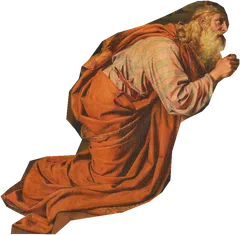
Husband · Sources
make ready the running mule waggon, and bind the wicker box thereon. And himself he went down to the vaulted treasure-chamber, fragrant of cedar wood and high of roof, that held jewels full many: and he called to him Hecabe his wife, and spake: Lady, from Zeus hath an Olympian messenger come to me,
Then, when he had washed his hands, he took the cup from his wife and then made prayer, standing in the midst of thie court, and poured forth the wine, with a look toward heaven, and spake ahoud, saying: Father Zeus, that rulest from Ida, most glorious, most great, grant that I may come unto Achilles' hut as one to be welcomed and to be pitied;
Il. 24.193 · Il. 24.305
Brother · Sources
Квалификация братства/сестринства: Илиада: Общий родитель подтверждён; роль отца или матери не установлена. Общие родители: Димас Фригийский.
And while he pondered thus there drew nigh to him Phoebus Apollo in the likeness of a young man and a strong, even of Asius, that was uncle to horse-taming Hector, and own brother to Hecabe, but son of Dymas, that dwelt in Phrygia by the streams of Sangarius.
Il. 16.718
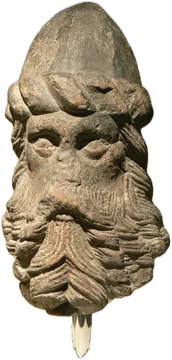
Son · Sources
sore wearied though we be, for necessity weighs hard upon us; but do thou, Hector, go thy way to the city and speak there to her that is thy mother and mine; let her gather the aged wives to the temple of flashing-eyed Athene in the citadel, and when she has opened with the key the doors of the holy house,
therein slept Priam's sons-in-law beside their chaste wives—there his bounteous mother came to meet him, leading in Laodice, fairest of her daughters to look upon; and she clasped him by the hand and spake and addressed him: My child, why hast thou left the fierce battle and come hither?
and then shalt thou thyself have profit thereof, if so be thou wilt drink. When a man is spent with toil wine greatly maketh his strength to wax, even as thou art spent with defending thy fellows. Then in answer to her spake great Hector of the flashing helm: Bring me no honey-hearted wine, honoured mother,
Il. 6.87 · Il. 6.254 · Il. 6.263–264 · Il. 22.82 · Il. 22.234 · Il. 22.341 · Il. 22.406 · Il. 22.428 · Il. 24.36 · Il. 24.213 · Il. 24.710–712 · Il. 24.748
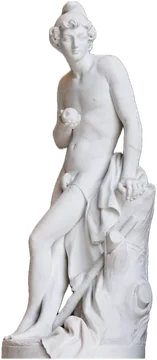
Son · Sources
Hector, seeing it is thy mind to blame one in whom is no blame, at some other time have I haply withdrawn me from war rather than now, for my mother bare not even me wholly a weakling. For from the time thou didst rouse the battle of thy comrades beside the ships, even from that time we abide here and have dalliance with the Danaans
Il. 13.777
Son · Sources
В стихах 22.233–234 Гектор говорит Деифобу, что он милее всех братьев, «которых родили Приам и Гекуба»: Гекуба прямо названа матерью Деифоба.
chasing thee with swift feet around the city of Priam. But come, let us stand, and abiding here ward off his onset. Then spake to her great Hector of the flashing helm: Deiphobus, verily in time past thou wast far the dearest of my brethren, that were born of Hecabe and Priam,
Il. 22.233–234
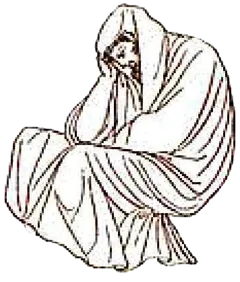
Son · Sources
sore wearied though we be, for necessity weighs hard upon us; but do thou, Hector, go thy way to the city and speak there to her that is thy mother and mine; let her gather the aged wives to the temple of flashing-eyed Athene in the citadel, and when she has opened with the key the doors of the holy house,
Il. 6.87
See all 9
Daughter · Sources
therein slept Priam's sons-in-law beside their chaste wives—there his bounteous mother came to meet him, leading in Laodice, fairest of her daughters to look upon; and she clasped him by the hand and spake and addressed him: My child, why hast thou left the fierce battle and come hither?
Il. 6.251–252
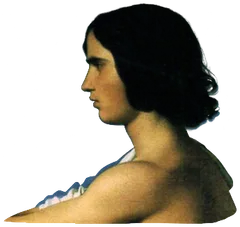
Son · Sources
Описание прямо называет Гекубу матерью Полита; сохранённый снимок статьи в базе содержит ту же фразу. По протоколу сын→мать — child_of.
Полит (сын Приама) · Русская Википедия, «Полит (сын Приама)»In art

Léon Bazille Perrault. The death of Priam. Beaux-Arts de Paris. Public domain. https://www.wikidata.org/wiki/Q104175800
Léon Bazille Perrault. The death of Priam. Beaux-Arts de Paris. Public domain. https://www.wikidata.org/wiki/Q104175800

Pierre-Narcisse Guérin. La Mort de Priam, par Pierre-Narcisse Guérin. Musée des Beaux-Arts d'Angers. Public domain. https://www.wikidata.org/wiki/Q122389396
Pierre-Narcisse Guérin. La Mort de Priam, par Pierre-Narcisse Guérin. Musée des Beaux-Arts d'Angers. Public domain. https://www.wikidata.org/wiki/Q122389396

Master of the Stories of Helen. The Reception of Helen at Troy by Priam and Hecuba. Walters Art Museum. Public domain. https://www.wikidata.org/wiki/Q18749290
Photograph / reproduction: Master of the Stories of Helen
Photograph / reproduction date: between 1445 and 1450
Master of the Stories of Helen. The Reception of Helen at Troy by Priam and Hecuba. Walters Art Museum. Public domain. https://www.wikidata.org/wiki/Q18749290
Photograph / reproduction: Master of the Stories of Helen
Photograph / reproduction date: between 1445 and 1450

Adam Elsheimer. Ceres in the House of Hecuba. Museo del Prado. Public domain. https://www.wikidata.org/wiki/Q11689659
Adam Elsheimer. Ceres in the House of Hecuba. Museo del Prado. Public domain. https://www.wikidata.org/wiki/Q11689659

Giuseppe Maria Crespi. Hecube blinds Polymestor. Royal Museums of Fine Arts of Belgium. CC0. https://www.wikidata.org/wiki/Q123476472
Giuseppe Maria Crespi. Hecube blinds Polymestor. Royal Museums of Fine Arts of Belgium. CC0. https://www.wikidata.org/wiki/Q123476472

Adam Elsheimer. The Mocking of Ceres. Agnes Etherington Art Centre. Public domain. https://www.wikidata.org/wiki/Q138665479
Adam Elsheimer. The Mocking of Ceres. Agnes Etherington Art Centre. Public domain. https://www.wikidata.org/wiki/Q138665479

Titian. The Legend of Polydoros. Civic Museums of Padua. Public domain. https://www.wikidata.org/wiki/Q3954943
Titian. The Legend of Polydoros. Civic Museums of Padua. Public domain. https://www.wikidata.org/wiki/Q3954943
See all 12
Sources and verification
The character is matched to the catalogue.
- Wikipedia · Hecuba · CC BY-SA 4.0
Excerpt; remaining sentences omitted.
Reference material remains distinct from the poem’s assertions. Characters who share a name retain separate pages.