Euchenor
Mortal man
A character named in Homer's Iliad. The English introduction is not yet available.
Explore on the graph- Mentions
- 1
- Connected characters
- 2
- Books
- 1


Mentions in the Iliad
A. T. Murray, Loeb Classical Library, Harvard University Press, 1924 · Homer, Iliad with an English Translation · CC BY-SA 3.0 US
“And for his slaying waxed Paris mightily wroth at heart, for among the many Paphlagonians Harpalion had been his host; and in wrath for his sake he let fly a bronze-tipped arrow. A certain Euchenor there was, son of Polyidus the seer, a rich man and a valiant, and his abode was in Corinth.”
See all 1
Connections
Father · Sources
Father · Sources
And for his slaying waxed Paris mightily wroth at heart, for among the many Paphlagonians Harpalion had been his host; and in wrath for his sake he let fly a bronze-tipped arrow. A certain Euchenor there was, son of Polyidus the seer, a rich man and a valiant, and his abode was in Corinth.
Il. 13.663
Killer · Sources
Killer · Sources
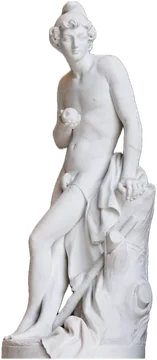
В стихах 13.660–672 Парис в гневе стреляет из лука, и Евхенор, сын Полиида, поражен под ухо и челюсть; дух его отлетает. Описание прямо называет его погибшим от руки Париса.
And for his slaying waxed Paris mightily wroth at heart, for among the many Paphlagonians Harpalion had been his host; and in wrath for his sake he let fly a bronze-tipped arrow. A certain Euchenor there was, son of Polyidus the seer, a rich man and a valiant, and his abode was in Corinth.He embarked upon his ship knowing full well the deadly fate to be, for often had his old sire, good Polyidus, told it him, to wit, that he must either perish of dire disease in his own halls, or amid the ships of the Achaeans be slain by the Trojans; wherefore he avoided at the same time the heavy fine of the Achaeansand the hateful disease, that he might not suffer woes at heart. Him Paris smote beneath the jaw, under the ear, and forthwith his spirit departed from his limbs, and hateful darkness gat hold of him. So fought they like unto blazing fire; but Hector, dear to Zeus, had not heard, nor wist at all
Il. 13.660–672
See all 2
In art
See all 0
There is nothing in this section yet.
Sources and verification
The character is matched to the catalogue.
Reference material remains distinct from the poem’s assertions. Characters who share a name retain separate pages.