Dionysus
God
In ancient Greek religion and myth, Dionysus ( ; Ancient Greek: Διόνυσος Diónysos) is the god of wine-making, orchards, fruit, vegetation, fertility, festivity, insanity, ritual madness, religious ecstasy, and theatre. He was also known as Bacchus ( or ; Ancient Greek: Βάκχος Bacchos) by the Greeks (a name later adopted by the Romans) for a frenzy he is said to induce called baccheia.
Explore on the graph- Mentions
- 2
- Connected characters
- 23
- Books
- 2


Mentions in the Iliad
A. T. Murray, Loeb Classical Library, Harvard University Press, 1924 · Homer, Iliad with an English Translation · CC BY-SA 3.0 US
“Nay, for even the son of Dryas, mighty Lycurgus, lived not long, seeing that he strove with heavenly gods—he that on a time drave down over the sacred mount of Nysa the nursing mothers of mad Dionysus; and they all let fall to the ground their wands, smitten with an ox-goad by man-slaying Lycurgus.”
See all 2
Connections
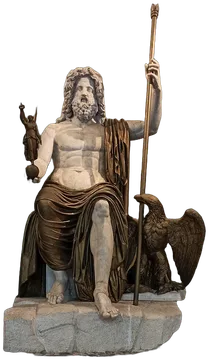
Father · Sources
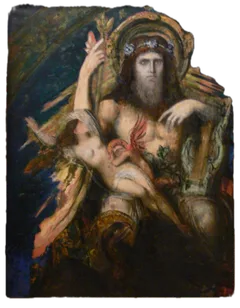
Mother · Sources
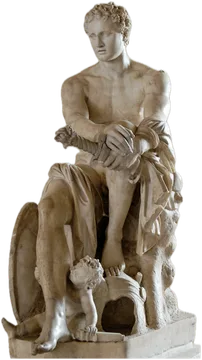
Paternal half-brother · Sources
Братство или сестринство выведено из общего родителя: Зевс. Матери и отцы, не указанные в источнике, не предполагаются. Квалификация братства/сестринства: Илиада: Общий отец; разные матери подтверждены. Общие родители: Зевс.
Wikidata: Гера — роль родителя · P25 Wikidata: Зевс — роль родителя · P22 Wikidata: Семела — роль родителя · P25took furious Ares by the hand and spake to him, saying: Ares, Ares, thou bane of mortals, thou blood-stained stormer of walls, shall we not now leave the Trojans and Achaeans to fight, to whichsoever of the two it be that father Zeus shall vouchsafe glory? But for us twain, let us give place, and avoid the wrath of Zeus.
Howbeit I will no longer endure that thou shouldest be in pain, for thou art mine offspring, and it was to me that thy mother bare thee; but wert thou born of any other god, thus pestilent as thou art, then long ere this hadst thou been lower than the sons of heaven. He spake, and bade Paeëon heal his hurt;
and Semele bare Dionysus, the joy of mortals; nor of Demeter, the fair-tressed queen; nor of glorious Leto; nay, nor yet of thine own self, as now I love thee, and sweet desire layeth hold of me. Then with crafty mind the queenly Hera spake unto him:
Il. 5.33 · Il. 5.896 · Il. 14.325
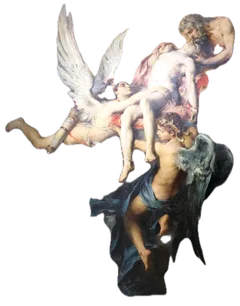
Brother through father · Sources
Братство или сестринство выведено из общего родителя: Зевс. Матери и отцы, не указанные в источнике, не предполагаются. Квалификация братства/сестринства: Илиада: Общий отец подтверждён; сведения о матерях неполны. Различие матерей не установлено. Общие родители: Зевс.
Wikidata: Зевс — пол родителя · P21 Wikidata: Семела — роль родителя · P25And when they were come near as they advanced one against the other, the son and grandson of Zeus the cloud-gatherer, then Tlepolemus was first to speak, saying: Sarpedon, counsellor of the Lycians, why must thou be skulking here, that art a man unskilled in battle?They speak but a lie that say thou art sprung from Zeus that beareth the aegis, seeing thou art inferior far to those warriors that were sprung from Zeus in the days of men of old. Of other sort, men say, was mighty Heracles, my father, staunch in fight, the lionhearted,
And Tlepolemus smote Sarpedon upon the left thigh with his long spear, and the point sped through furiously and grazed the bone; howbeit his father as yet warded from him destruction. Then his goodly companions bare godlike Sarpedon forth from out the fight, and the long spear burdened him sore,as it trailed, but no man marked it or thought in their haste to draw forth from his thigh the spear of ash, that he might stand upon his feet; such toil had they in tending him. And on the other side the well-greaved Achaeans bare Tlepolemus from out the fight, and goodly Odysseusof the enduring soul was ware of it, and his spirit waxed furious within him; and he pondered then in heart and soul whether he should pursue further after the son of Zeus that thundereth aloud, or should rather take the lives of more Lycians. But not for great-hearted Odysseus was it ordained
to slay with the sharp bronze the valiant son of Zeus; wherefore Athene turned his mind toward the host of the Lycians. Then slew he Coeranus and Alastor and Chromius and Alcandrus and Halius and Noëmon and Prytanis; and yet more of the Lycians would goodly Odysseus have slain,
Il. 5.634–635 · Il. 5.662–672 · Il. 5.675 · Il. 6.198–199 · Il. 12.292 · Il. 12.402–403 · Il. 14.325 · Il. 15.67 · Il. 16.522
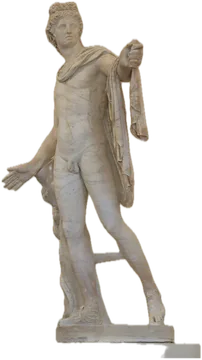
Paternal half-brother · Sources
Братство или сестринство выведено из общего родителя: Зевс. Матери и отцы, не указанные в источнике, не предполагаются. Квалификация братства/сестринства: Илиада: Общий отец; разные матери подтверждены. Общие родители: Зевс.
Wikidata: Семела — роль родителя · P25 Wikidata: Лето — роль родителя · P25 Wikidata: Зевс — роль родителя · P22from the time when first they parted in strife Atreus' son, king of men, and brilliant Achilles. Who then of the gods was it that brought these two together to contend? The son of Leto and Zeus; for he in anger against the king roused throughout the host an evil pestilence, and the people began to perish,
to sacred Ilios. And Apollo sped forth to meet her, for he looked down from out of Pergamus and beheld her, and was fain to have victory for the Trojans. So the twain met one with the other by the oak-tree. Then to her spake first the king Apollo, son of Zeus: Wherefore art thou again come thus eagerly from Olympus, thou daughter of great Zeus,
and Semele bare Dionysus, the joy of mortals; nor of Demeter, the fair-tressed queen; nor of glorious Leto; nay, nor yet of thine own self, as now I love thee, and sweet desire layeth hold of me. Then with crafty mind the queenly Hera spake unto him:
Il. 1.9 · Il. 7.23 · Il. 14.325 · Il. 15.236 · Il. 20.103 · Il. 21.229 · Il. 22.302
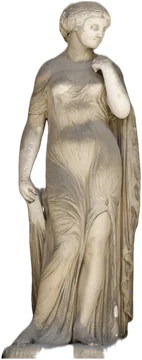
Paternal half-sister · Sources
Братство или сестринство выведено из общего родителя: Зевс. Матери и отцы, не указанные в источнике, не предполагаются. Квалификация братства/сестринства: Илиада: Общий отец; разные матери подтверждены. Общие родители: Зевс.
Гомер, Илиада — роль родителя · Ил. 3.236–238 Wikidata: Зевс — роль родителя · P22 Wikidata: Семела — роль родителя · P25His battle-gear lieth upon the bounteous earth, but himself he rangeth like the bell-wether of a herd through the ranks of warriors. Like a ram he seemeth to me, a ram of thick fleece, that paceth through a great flock of white ewes. To him made answer Helen, sprung from Zeus:
and hate thee, even as now I love thee wondrously; and lest I devise grievous hatred between both, Trojans alike and Danaans; then wouldst thou perish of an evil fate. So spake she, and Helen, sprung from Zeus, was seized with fear; and she went, wrapping herself in her bright shining mantle,
and Semele bare Dionysus, the joy of mortals; nor of Demeter, the fair-tressed queen; nor of glorious Leto; nay, nor yet of thine own self, as now I love thee, and sweet desire layeth hold of me. Then with crafty mind the queenly Hera spake unto him:
Il. 3.199 · Il. 3.418 · Il. 14.325
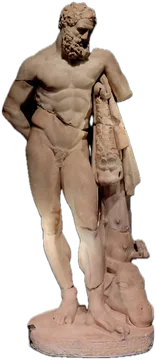
Paternal half-brother · Sources
Братство или сестринство выведено из общего родителя: Зевс. Матери и отцы, не указанные в источнике, не предполагаются. Квалификация братства/сестринства: Илиада: Общий отец; разные матери подтверждены. Общие родители: Зевс.
Wikidata: Зевс — пол родителя · P21 Wikidata: Семела — роль родителя · P25And so suffered monstrous Hades even as the rest a bitter arrow, when this same man, the son of Zeus that beareth the aegis, smote him in Pylos amid the dead, and gave him over to pains. But he went to the house of Zeus and to high Olympus with grief at heart, pierced through with pains;
howbeit mine own father rageth with evil mind, cruel that he is, ever froward, a thwarter of my purposes; neither hath he any memory of this, that full often I saved his son when he was fordone by reason of Eurystheus' tasks. For verily he would make lament toward heaven and from heaven would Zeussend me forth to succour him. Had I but known all this in wisdom of my heart when Eurystheus sent him forth to the house of Hades the Warder, to bring from out of Erebus the hound of loathed Hades, then had he not escaped the sheer-falling waters of Styx.
Deemest thou that Zeus, whose voice is borne afar, will aid the Trojans, even as he waxed wroth for the sake of Heracles, his own son? Nay, come, I will give thee one of the youthful Graces to wed to be called thy wife, even Pasithea, for whom thou ever longest all thy days.
Il. 5.396 · Il. 8.363–365 · Il. 14.266 · Il. 14.324 · Il. 14.325
See all 23
In art

Diego Velázquez. Триумф Бахуса. Museo del Prado. Public domain. https://www.wikidata.org/wiki/Q123935
Diego Velázquez. Триумф Бахуса. Museo del Prado. Public domain. https://www.wikidata.org/wiki/Q123935

William-Adolphe Bouguereau. The Youth of Bacchus. CC BY 2.0. https://www.wikidata.org/wiki/Q18710500
William-Adolphe Bouguereau. The Youth of Bacchus. CC BY 2.0. https://www.wikidata.org/wiki/Q18710500

Caravaggio. Вакх (картина Караваджо). Uffizi Gallery. Public domain. https://www.wikidata.org/wiki/Q2011510
Caravaggio. Вакх (картина Караваджо). Uffizi Gallery. Public domain. https://www.wikidata.org/wiki/Q2011510

Piero di Cosimo. Misfortunes of Silenus by Piero di Cosimo. Fogg Museum. Public domain. https://www.wikidata.org/wiki/Q3709265
Piero di Cosimo. Misfortunes of Silenus by Piero di Cosimo. Fogg Museum. Public domain. https://www.wikidata.org/wiki/Q3709265

Gerard van Honthorst. Smiling Young Man Squeezing Grapes. Worcester Art Museum. Public domain. https://www.wikidata.org/wiki/Q38419706
Gerard van Honthorst. Smiling Young Man Squeezing Grapes. Worcester Art Museum. Public domain. https://www.wikidata.org/wiki/Q38419706

Lorenzo Costa. The Reign of Comus. Department of Paintings of the Louvre. Public domain. https://www.wikidata.org/wiki/Q3932055
Lorenzo Costa. The Reign of Comus. Department of Paintings of the Louvre. Public domain. https://www.wikidata.org/wiki/Q3932055

Piero di Cosimo. Discovery of Honey by Piero di Cosimo. Worcester Art Museum. Public domain. https://www.wikidata.org/wiki/Q3952722
Piero di Cosimo. Discovery of Honey by Piero di Cosimo. Worcester Art Museum. Public domain. https://www.wikidata.org/wiki/Q3952722
See all 191
Sources and verification
The character is matched to the catalogue.
- Wikipedia · Dionysus · CC BY-SA 4.0
Excerpt; remaining sentences omitted.
Reference material remains distinct from the poem’s assertions. Characters who share a name retain separate pages.