Andromache
Mortal woman
In Greek mythology, Andromache (; Ancient Greek: Ἀνδρομάχη, Andromákhē [andromákʰɛ:]) was the wife of Hector, daughter of Eetion, and sister to Podes. She was born and raised in the city of Cilician Thebe, over which her father ruled.
Explore on the graph- Mentions
- 17
- Connected characters
- 3
- Books
- 5


Mentions in the Iliad
A. T. Murray, Loeb Classical Library, Harvard University Press, 1924 · Homer, Iliad with an English Translation · CC BY-SA 3.0 US
“For I shall go to my home, that I may behold my housefolk, my dear wife, and my infant son; for I know not if any more I shall return home to them again, or if even now the gods will slay me beneath the hands of the Achaeans. So saying, Hector of the flashing helm departed,”
“fair-tressed women of Troy are seeking to propitiate he dread goddess? Then a busy house-dame spake to him, saying: Hector, seeing thou straitly biddest us tell thee true, neither is she gone to any of thy sisters or thy brothers' fair-robed wives, nor yet to the temple of Athene, where the other”
“but Andromache came close to his side weeping, and clasped his hand and spake to him, saying: Ah, my husband, this prowess of thine will be thy doom, neither hast thou any pity for thine infant child nor for hapless me that soon shall be thy widow; for soon will the Achaeans”
“And my mother, that was queen beneath wooded Placus, her brought he hither with the rest of the spoil, but thereafter set her free, when he had taken ransom past counting; and in her father's halls Artemis the archer slew her. Nay, Hector, thou art to me father and queenly mother,”
“Then spake to her great Hector of the flashing helm: Woman, I too take thought of all this, but wondrously have I shame of the Trojans, and the Trojans' wives, with trailing robes, if like a coward I skulk apart from the battle. Nor doth mine own heart suffer it, seeing I have learnt to be valiant”
“Lo, the wife of Hector, that was pre-eminent in war above all the horse-taming Trojans, in the day when men fought about Ilios. So shall one say; and to thee shall come fresh grief in thy lack of a man like me to ward off the day of bondage. But let me be dead, and let the heaped-up earth cover me,”
“and may he bear the blood-stained spoils of the foeman he hath slain, and may his mother's heart wax glad. So saying, he laid his child in his dear wife's arms, and she took him to her fragrant bosom, smiling through her tears; and her husband was touched with pity at sight of her,”
See all 17
“he overtook goodly Hector, his brother, even as he was about to turn back from the place where he had dallied with his wife. Then godlike Alexander was first to speak to him, saying: My brother, full surely I delay thee in thine haste by my long tarrying, and came not in due season, as thou badest me.”
“now pay me back your tending wherewith in abundance Andromache, daughter of great-hearted Eëtion, set before you honey-hearted wheat, and mingled wine for you to drink when your souls bade you,”
“and in unseemly wise hast stripped the armour from his head and shoulders. Howbeit for this present will I vouch-safe thee great might, in recompense for this—that in no wise shalt thou return from out the battle for Andromache to receive from thee the glorious armour of the son of Peleus. The son of Cronos spake and bowed thereto with his dark brows,”
“were dragging him ruthlessly toward the hollow ships of the Achaeans. Then down over her eyes came the darkness of night, and enfolded her, and she fell backward and gasped forth her spirit. Far from off her head she cast the bright attiring thereof, the frontlet and coif and kerchief and woven band,”
“But when she revived, and her spirit was returned into her breast,then she lifted up her voice in wailing, and spake among the women of Troy: Ah Hector, woe is me! to one fate, it seemeth, were we born, both of us twain, thou in Troy in the house of Priam, and I in Thebe beneath wooded Placus”
“his hips he wetteth, but his palate he wetteth not. And one whose father and mother yet live thrusteth him from the feast with smiting of the hand, and chideth him with words of reviling:‘Get thee gone, even as thou art! No father of thine feasteth in our company.’ Then in tears unto his widowed mother cometh back the child—”
“Him now have ye not the heart to save, a corpse though he be, for his wife to look upon and his mother and his child, and his father Priam and his people, who would forthwith burn him in the fire and pay him funeral rites. Nay, it is the ruthless Achilles, O ye gods, that ye are fain to succour,”
“First Hector's dear wife and queenly mother flung themselves upon the light-running waggon, and clasping his head the while, wailed and tore their hair; and the folk thronged about and wept. And now the whole day long until set of sun had they made lament for Hector with shedding of tears there without the gates,”
“laid him on a corded bedstead, and by his side set singers, leaders of the dirge, who led the song of lamentation—they chanted the dirge, and thereat the women made lament. And amid these white-armed Andromache led the wailing, holding in her arms the while the head of man-slaying Hector:”
“I might have pondered night and day with shedding of tears. So spake she wailing, and thereat the women made lament. And among them Hecabe in turns led the vehement wailing: Hector, far dearest to my heart of all my children, lo, when thou livedst thou wast dear to the gods,”
Connections
Father · Sources
Andromache, daughter of great-hearted Eëtion, Eëtion that dwelt beneath wooded Placus, in Thebe under Placus, and was lord over the men of Cilicia; for it was his daughter that bronze-harnessed Hector had to wife. She now met him, and with her came a handmaid bearing in her bosom
all set upon thee and slay thee. But for me it were better to go down to the grave if I lose thee, for nevermore shall any comfort be mine, when thou hast met thy fate, but only woes. Neither father have I nor queenly mother. My father verily goodly Achilles slew,for utterly laid he waste the well-peopled city of the Cilicians, even Thebe of lofty gates. He slew Eëtion, yet he despoiled him not, for his soul had awe of that; but he burnt him in his armour, richly dight, and heaped over him a barrow; and all about were elm-trees planted by nymphs of the mountain, daughters of Zeus that beareth the aegis.
And my mother, that was queen beneath wooded Placus, her brought he hither with the rest of the spoil, but thereafter set her free, when he had taken ransom past counting; and in her father's halls Artemis the archer slew her. Nay, Hector, thou art to me father and queenly mother,
Il. 6.395 · Il. 6.413–416 · Il. 6.428 · Il. 8.187
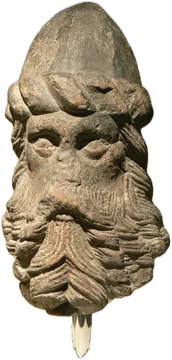
Foster-father · Sources
in the house of Eetion, who reared me when I was a babe, hapless father of a cruel-fated child; would God he had never begotten me. Now thou unto the house of Hades beneath the deeps of earth art departing, but me thou leavest in bitter grief, a widow in thy halls,
Il. 22.480
Husband · Sources
For I shall go to my home, that I may behold my housefolk, my dear wife, and my infant son; for I know not if any more I shall return home to them again, or if even now the gods will slay me beneath the hands of the Achaeans. So saying, Hector of the flashing helm departed,
So spake the house-dame, and Hector hasted from the house back over the same way along the well-built streets. When now he was come to the gate, as he passed through the great city, the Scaean gate, whereby he was minded to go forth to the plain, there came running to meet him his bounteous wife,
but Andromache came close to his side weeping, and clasped his hand and spake to him, saying: Ah, my husband, this prowess of thine will be thy doom, neither hast thou any pity for thine infant child nor for hapless me that soon shall be thy widow; for soon will the Achaeans
Il. 6.366 · Il. 6.394 · Il. 6.405 · Il. 6.429–432 · Il. 6.440–441 · Il. 6.463 · Il. 6.482 · Il. 6.516 · Il. 8.187–190 · Il. 22.471 · Il. 22.483 · Il. 24.36 · Il. 24.710 · Il. 24.725
Patron · Sources
Lo, the wife of Hector, that was pre-eminent in war above all the horse-taming Trojans, in the day when men fought about Ilios. So shall one say; and to thee shall come fresh grief in thy lack of a man like me to ward off the day of bondage. But let me be dead, and let the heaped-up earth cover me,
Il. 6.463
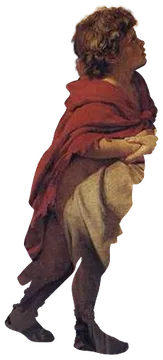
Son · Sources
and came speedily to his well-built house. But he found not white-armed Andromache in his halls; she with her child and a fair-robed handmaiden had taken her stand upon the wall, weeping and wailing. So Hector when he found not his peerless wife within,
the tender boy, a mere babe, the well-loved son of Hector, like to a fair star. Him Hector was wont to call Scamandrius, but other men Astyanax; for only Hector guarded Ilios. Then Hector smiled, as he glanced at his boy in silence,
but Andromache came close to his side weeping, and clasped his hand and spake to him, saying: Ah, my husband, this prowess of thine will be thy doom, neither hast thou any pity for thine infant child nor for hapless me that soon shall be thy widow; for soon will the Achaeans
Il. 6.371–372 · Il. 6.400–401 · Il. 6.407–408 · Il. 6.431–432 · Il. 6.471 · Il. 6.483 · Il. 22.484 · Il. 22.499 · Il. 24.727
See all 3
In art

Johan Ludwig Lund. Andromache in Despair at the Sight of Hector's Body. Statens Museum for Kunst. Public domain. https://www.wikidata.org/wiki/Q20355703
Johan Ludwig Lund. Andromache in Despair at the Sight of Hector's Body. Statens Museum for Kunst. Public domain. https://www.wikidata.org/wiki/Q20355703

Jacques-Louis David. Andromache Mourning Hector. Department of Paintings of the Louvre. Public domain. https://www.wikidata.org/wiki/Q3208369
Photograph / reproduction: Jacques-Louis David
Photograph / reproduction date: 1783
Jacques-Louis David. Andromache Mourning Hector. Department of Paintings of the Louvre. Public domain. https://www.wikidata.org/wiki/Q3208369
Photograph / reproduction: Jacques-Louis David
Photograph / reproduction date: 1783
Charles Roberts; Sir Frederick Leighton. 'Captive Andromache' RMG PY6105. собрание не указано. Public domain. https://commons.wikimedia.org/wiki/File%3A%27Captive_Andromache%27_RMG_PY6105.tiff
Photograph / reproduction: Charles Roberts; Sir Frederick Leighton
Photograph / reproduction date: 23 May 1891

Lambiotte. Abschied von Andromache. собрание не указано. Public domain. https://commons.wikimedia.org/wiki/File%3AAbschied_von_Andromache.jpg
Photograph / reproduction: Lambiotte
Photograph / reproduction date: 1740
Lambiotte. Abschied von Andromache. собрание не указано. Public domain. https://commons.wikimedia.org/wiki/File%3AAbschied_von_Andromache.jpg
Photograph / reproduction: Lambiotte
Photograph / reproduction date: 1740

Johann Heinrich Wilhelm Tischbein. Hector's Departure from Andromache. собрание не указано. Public domain. https://commons.wikimedia.org/wiki/File%3AHektors_Abschied_von_Andromache_%28Tischbein%29.jpg
Photograph / reproduction: Johann Heinrich Wilhelm Tischbein
Photograph / reproduction date: 1812
Johann Heinrich Wilhelm Tischbein. Hector's Departure from Andromache. собрание не указано. Public domain. https://commons.wikimedia.org/wiki/File%3AHektors_Abschied_von_Andromache_%28Tischbein%29.jpg
Photograph / reproduction: Johann Heinrich Wilhelm Tischbein
Photograph / reproduction date: 1812

workshop of Johann Heinrich Tischbein d. Ä.. Tischbein Werkstatt Abschied Hektors von Andromache. собрание не указано. Public domain. https://commons.wikimedia.org/wiki/File%3ATischbein_Werkstatt_Abschied_Hektors_von_Andromache.jpg
Photograph / reproduction: workshop of Johann Heinrich Tischbein d. Ä.
Photograph / reproduction date: 18th century


Louis de Silvestre. Louis de Silvestre Odysseus verlangt von Andromache den Knaben Astyanax 1708. собрание не указано. Public domain. https://commons.wikimedia.org/wiki/File%3ALouis_de_Silvestre_Odysseus_verlangt_von_Andromache_den_Knaben_Astyanax_1708.jpg
Photograph / reproduction: Louis de Silvestre
Photograph / reproduction date: 1708
See all 55
Sources and verification
The character is matched to the catalogue.
- Wikipedia · Andromache · CC BY-SA 4.0
Excerpt; remaining sentences omitted.
Reference material remains distinct from the poem’s assertions. Characters who share a name retain separate pages.