Agamemnon
Mortal man
In Greek mythology, Agamemnon ( ; Ancient Greek: Ἀγαμέμνων Agamémnōn) was a king of Mycenae who commanded the Achaeans during the Trojan War. He was the son (or grandson) of King Atreus and Queen Aerope, the brother of Menelaus, the husband of Clytemnestra, and the father of Iphigenia, Iphianassa, Electra, Laodike, Orestes and Chrysothemis.
Explore on the graph- Mentions
- 172
- Connected characters
- 29
- Books
- 19


Mentions in the Iliad
A. T. Murray, Loeb Classical Library, Harvard University Press, 1924 · Homer, Iliad with an English Translation · CC BY-SA 3.0 US
“from the time when first they parted in strife Atreus' son, king of men, and brilliant Achilles. Who then of the gods was it that brought these two together to contend? The son of Leto and Zeus; for he in anger against the king roused throughout the host an evil pestilence, and the people began to perish,”
“out of reverence for the son of Zeus, Apollo who strikes from afar. Then all the rest of the Achaeans shouted assent, to reverence the priest and accept the glorious ransom, yet the thing did not please the heart of Agamemnon, son of Atreus, but he sent him away harshly, and laid upon him a stern command:”
“since she pitied the Danaans, when she saw them dying. When they were assembled and gathered together, among them arose and spoke swift-footed Achilles: Son of Atreus, now I think we shall return home, beaten back again, should we even escape death,”
“not even if you name Agamemnon, who now claims to be far the best of the Achaeans. Then the blameless seer took heart, and spoke: It is not then because of a vow that he finds fault, nor because of a hecatomb, but because of the priest whom Agamemnon dishonoured, and did not release his daughter nor accept the ransom.”
“In answer to him spoke swift-footed brilliant Achilles: Most glorious son of Atreus, most covetous of all, how shall the great-hearted Achaeans give you a prize? We know nothing of a hoard of wealth in common store, but whatever we took by pillage from the cities has been apportioned,”
“did they lay waste the harvest, for many things lie between us—shadowy mountains and sounding sea. But you, shameless one, we followed, so that you might rejoice, seeking to win recompense for Menelaus and for yourself, dog-face, from the Trojans. This you disregard, and take no heed of.”
“while I am here dishonoured to pile up riches and wealth for you. Then the king of men, Agamemnon, answered him: Flee then, if your heart urges you; I do not beg you to remain for my sake. With me are others who will honour me, and above all Zeus, the lord of counsel.”
See all 164
Connections
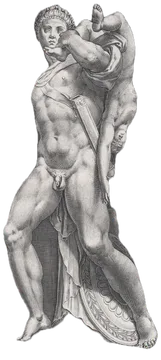
Father · Sources
from the time when first they parted in strife Atreus' son, king of men, and brilliant Achilles. Who then of the gods was it that brought these two together to contend? The son of Leto and Zeus; for he in anger against the king roused throughout the host an evil pestilence, and the people began to perish,
When he had thus spoken he sat down, and among them arose the warrior, son of Atreus, wide-ruling Agamemnon, deeply troubled. With rage his black heart was wholly filled, and his eyes were like blazing fire. To Calchas first of all he spoke, and his look threatened evil:
In answer to him spoke swift-footed brilliant Achilles: Most glorious son of Atreus, most covetous of all, how shall the great-hearted Achaeans give you a prize? We know nothing of a hoard of wealth in common store, but whatever we took by pillage from the cities has been apportioned,
Il. 1.7 · Il. 1.102 · Il. 1.122 · Il. 1.191 · Il. 1.282 · Il. 1.308 · Il. 1.355 · Il. 1.387 · Il. 2.6 · Il. 2.23 · Il. 2.54 · Il. 2.85 · Il. 2.185 · Il. 2.249 · Il. 2.434 · Il. 2.477 · Il. 2.578 · Il. 2.772 · Il. 3.120 · Il. 3.178 · Il. 4.223 · Il. 4.255 · Il. 4.311 · Il. 4.326 · Il. 4.356 · Il. 4.403 · Il. 5.528 · Il. 5.552 · Il. 7.176 · Il. 7.312 · Il. 7.470 · Il. 8.227 · Il. 8.261 · Il. 8.292 · Il. 9.69 · Il. 9.96 · Il. 9.163 · Il. 9.226 · Il. 9.300 · Il. 9.315 · Il. 9.331 · Il. 9.368 · Il. 9.388 · Il. 9.672–676 · Il. 9.697 · Il. 10.3 · Il. 10.81 · Il. 10.88 · Il. 10.102–103 · Il. 10.128 · Il. 11.94 · Il. 11.233 · Il. 11.766 · Il. 13.112 · Il. 14.22 · Il. 14.137 · Il. 19.35 · Il. 19.146 · Il. 19.241 · Il. 23.36 · Il. 23.156 · Il. 23.233 · Il. 23.486 · Il. 23.890 · Il. 24.654
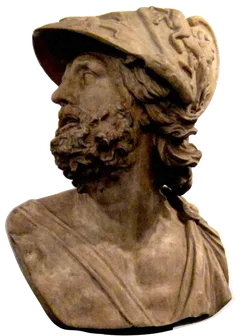
Brother through father · Sources
Квалификация братства/сестринства: Илиада: Общий отец подтверждён; сведения о матерях неполны. Различие матерей не установлено. Общие родители: Атрей.
Wikidata: Атрей — роль родителя · P22 Wikidata: Атрей — роль родителя · P22Квалификация братства/сестринства: Илиада: Общий отец подтверждён; сведения о матерях неполны. Различие матерей не установлено. Общие родители: Атрей.
Wikidata: Атрей — роль родителя · P22 Wikidata: Атрей — роль родителя · P22Nestor, first of all, and king Idomeneus, and thereafter the twain Aiantes and the son of Tydeus, and as the sixth Odysseus, the peer of Zeus in counsel. And unbidden came to him Menelaus, good at the war-cry, for he knew in his heart wherewith his brother was busied.
and that held Laas, and dwelt about Oetylus,—these were led by Agamemnon's brother, even Menelaus, good at the war-cry, with sixty ships; and they were marshalled apart. And himself he moved among them, confident in his zeal, urging his men to battle; and above all others was his heart fain
alike an ornament for his horse and to its driver a glory; even in such wise, Menelaus, were thy thighs stained with blood, thy shapely thighs and thy legs and thy fair ankles beneath. Thereat shuddered the king of men, Agamemnon, as he saw the black blood flowing from the wound,
Il. 2.408–409 · Il. 2.586 · Il. 4.148 · Il. 4.184 · Il. 4.189 · Il. 5.552 · Il. 6.61 · Il. 7.107–108 · Il. 7.120–121 · Il. 8.261 · Il. 10.32–34 · Il. 10.60 · Il. 10.72 · Il. 11.136–140 · Il. 17.249–250 · Il. 23.522
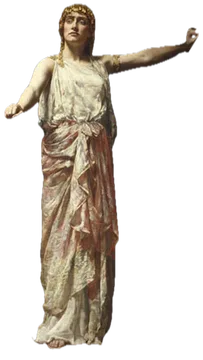
Wife · Sources
that I would not accept the glorious ransom for the girl, the daughter of Chryses, since I much prefer to keep her in my home. For certainly I prefer her to Clytemnestra, my wedded wife, since she is not inferior to her, either in form or in stature, or in mind, or in any handiwork.
Il. 1.113
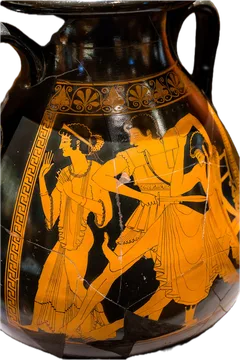
Daughter · Sources
that be fairest after Argive Helen. And if we return to Achaean Argos, the richest of lands, he shall be my son, and I will honour him even as Orestes that is reared in all abundance, my son well-beloved. Three daughters have I in my well-builded hall,Chrysothemis, and Laodice, and Iphianassa; of these let him lead to the house of Peleus which one he will, without gifts of wooing, and I will furthermore give a dower full rich, such as no man ever yet gave with his daughter. And seven well-peopled cities will I give him,
that is reared in all abundance, his son well-beloved. Three daughters has he in his well-builded hall, Chrysothemis, and Laodice, and Ophianassa; of these mayest thou lead to the house of Peleus which one thou wilt, without gifts of wooing; and he will furthermore give a dower
Il. 9.144–145 · Il. 9.286–287
Son · Sources
that be fairest after Argive Helen. And if we return to Achaean Argos, the richest of lands, he shall be my son, and I will honour him even as Orestes that is reared in all abundance, my son well-beloved. Three daughters have I in my well-builded hall,
what time we Achaeans be dividing the spoil, and heap up thy ship with store of gold and bronze, and thyself choose twenty Trojan women that be fairest after Argive Helen. And if we return to Achaean Argos, richest of lands, thou shalt be his son, and he will honour thee even as Orestes,that is reared in all abundance, his son well-beloved. Three daughters has he in his well-builded hall, Chrysothemis, and Laodice, and Ophianassa; of these mayest thou lead to the house of Peleus which one thou wilt, without gifts of wooing; and he will furthermore give a dower
Il. 9.142–143 · Il. 9.284–285
See all 29
In art

Charles-Antoine Coypel. Fury of Achilles. собрание не указано. Public domain. https://commons.wikimedia.org/wiki/File%3ACoypel%2C_Charles-Antoine_-_Fury_of_Achilles_-_1737.jpg
Photograph / reproduction: Charles-Antoine Coypel
Photograph / reproduction date: 1737
Charles-Antoine Coypel. Fury of Achilles. собрание не указано. Public domain. https://commons.wikimedia.org/wiki/File%3ACoypel%2C_Charles-Antoine_-_Fury_of_Achilles_-_1737.jpg
Photograph / reproduction: Charles-Antoine Coypel
Photograph / reproduction date: 1737

Peter Paul Rubens. The wrath of Achilles .. собрание не указано. CC BY-SA 2.0. https://commons.wikimedia.org/wiki/File%3AWLANL_-_Quistnix%21_-_Museum_Boijmans_van_Beuningen_-_Achilles_vertoornd_op_Agamemnon%2C_Rubens.jpg
Photograph / reproduction: Peter Paul Rubens
Photograph / reproduction date: between 1630 and 1635

Askelladd. Achilles' Sacrifice of Trojan Prisoners. собрание не указано. CC0. https://commons.wikimedia.org/wiki/File%3AAchilles%27_Sacrifice_of_Trojan_Prisoners.jpg
Photograph / reproduction: Askelladd
Photograph / reproduction date: 350-330 BC
Askelladd. Achilles' Sacrifice of Trojan Prisoners. собрание не указано. CC0. https://commons.wikimedia.org/wiki/File%3AAchilles%27_Sacrifice_of_Trojan_Prisoners.jpg
Photograph / reproduction: Askelladd
Photograph / reproduction date: 350-330 BC

Michel Martin Drolling. Wrath of Achilles2. собрание не указано. Public domain. https://commons.wikimedia.org/wiki/File%3AWrath_of_Achilles2.jpg
Photograph / reproduction: Michel Martin Drolling
Photograph / reproduction date: 1810
Michel Martin Drolling. Wrath of Achilles2. собрание не указано. Public domain. https://commons.wikimedia.org/wiki/File%3AWrath_of_Achilles2.jpg
Photograph / reproduction: Michel Martin Drolling
Photograph / reproduction date: 1810

Peter Paul Rubens. The wrath of Achilles .. собрание не указано. Public domain. https://commons.wikimedia.org/wiki/File%3APeter_Paul_Rubens_164.jpg
Photograph / reproduction: Peter Paul Rubens
Photograph / reproduction date: between 1630 and 1635
Peter Paul Rubens. The wrath of Achilles .. собрание не указано. Public domain. https://commons.wikimedia.org/wiki/File%3APeter_Paul_Rubens_164.jpg
Photograph / reproduction: Peter Paul Rubens
Photograph / reproduction date: between 1630 and 1635

Anonymous Unknown author. Streit des Agamemnon mit Achilles um die schöne Briseis. собрание не указано. Public domain. https://commons.wikimedia.org/wiki/File%3AStreit_des_Agamemnon_mit_Achilles_um_die_sch%C3%B6ne_Briseis.png
Photograph / reproduction: AnonymousUnknown author
Photograph / reproduction date: 18th century


Peter Paul Rubens. The Wrath of Achilles. Museum Boijmans Van Beuningen. Public domain. https://www.wikidata.org/wiki/Q19925629
Peter Paul Rubens. The Wrath of Achilles. Museum Boijmans Van Beuningen. Public domain. https://www.wikidata.org/wiki/Q19925629
See all 171
Sources and verification
The character is matched to the catalogue.
- Wikipedia · Agamemnon · CC BY-SA 4.0
Excerpt; remaining sentences omitted.
Reference material remains distinct from the poem’s assertions. Characters who share a name retain separate pages.